


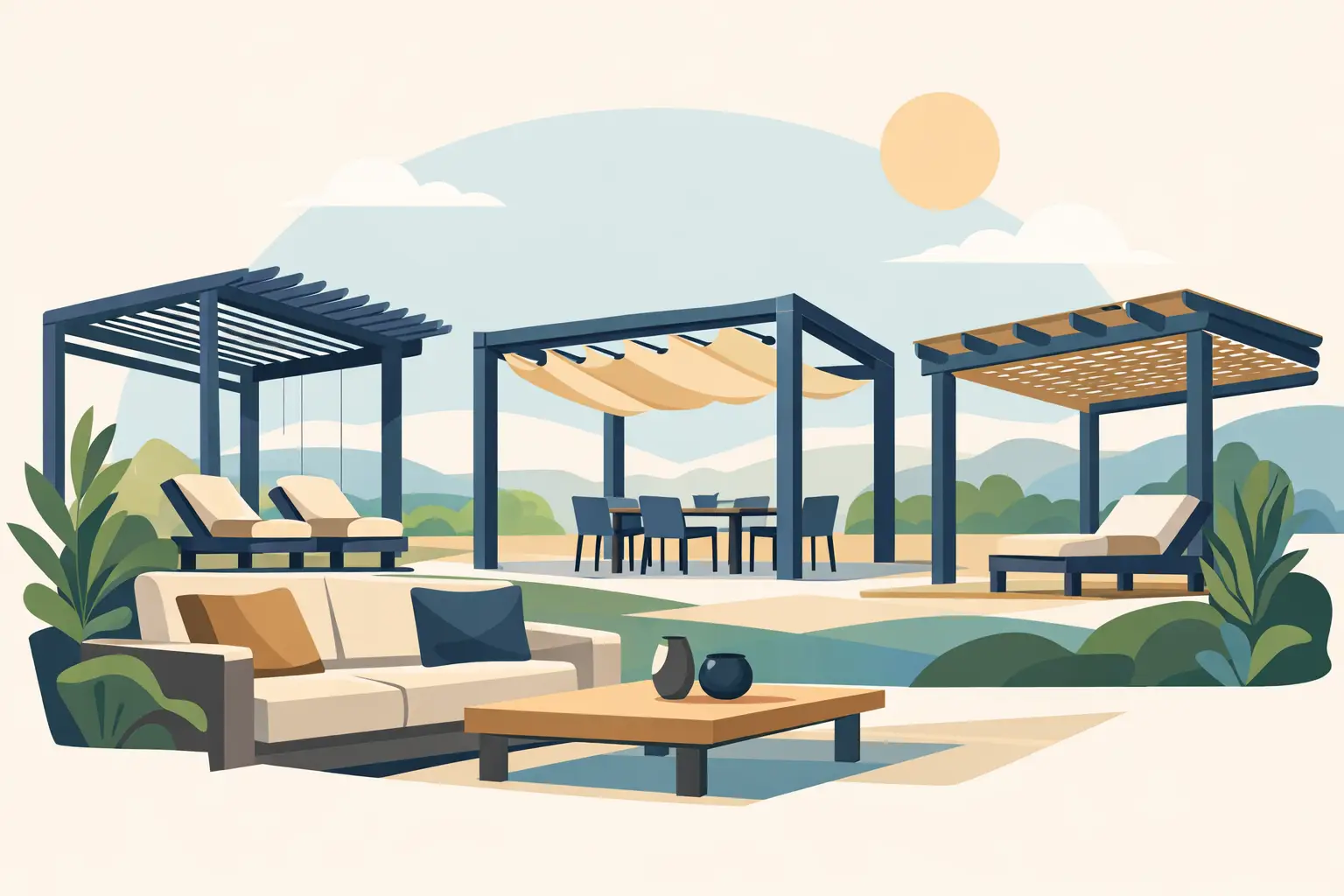
By 2 p.m. in Florida, an uncovered patio can feel less like outdoor living and more like a surface test for the sun. That is why modern pergola shade solutions have become a practical upgrade for homeowners and property managers who want to use their outdoor space more often, with less heat, less glare, and better protection from changing weather.
The right shade system does more than make a patio look finished. In coastal areas, it needs to stand up to humidity, salt air, strong sun, and seasonal storms while still giving you the flexibility to enjoy the space day to day. A pergola that looks good in a showroom but performs poorly in Florida conditions will not deliver much value over time.
What modern pergola shade solutions really need to do
A shade system should solve several problems at once. It should reduce direct sun, improve comfort, and help define the outdoor area as a place for dining, relaxing, or entertaining. For many property owners, it should also support better durability and easier maintenance than traditional fabric-only setups or temporary shade products.
In Florida, performance matters as much as appearance. Materials need to resist corrosion, fading, and warping. The structure should be engineered for local conditions. Just as important, the shade solution should match how the space is actually used. A poolside pergola has different demands than a restaurant patio, and a backyard gathering area has different needs than a condo amenity space.
That is where the conversation shifts from simply adding shade to choosing the right type of control. Some owners want full sun when the weather is mild and complete cover during peak heat. Others want filtered light all day without needing to adjust anything. The best solution depends on how much flexibility, protection, and maintenance you are comfortable with.
Fixed shade versus adjustable systems
One of the first decisions is whether you want a fixed pergola shade design or an adjustable one. Fixed systems are simpler and often more budget-friendly. They can provide consistent filtered shade and a clean architectural look. Depending on the design, they may use slats, insulated panels, or integrated materials that block a meaningful amount of sun throughout the day.
The trade-off is limited control. If the sun shifts or the weather changes, the structure does not adapt with it. That can be perfectly acceptable for some applications, especially when the pergola is positioned carefully and the goal is basic daytime comfort.
Adjustable systems offer more control and, in many cases, greater value for owners who use the space regularly. A louvered roof system is one of the strongest examples. With adjustable louvers, you can open the roof for sunlight and airflow or close it for shade and rain protection. That flexibility makes the outdoor area usable in more conditions, which matters when afternoon weather can change quickly.
The main consideration is investment. Adjustable systems typically cost more than simple fixed covers, and they should be installed by skilled professionals who understand drainage, structural support, and local code requirements. For many Florida property owners, though, the extra performance justifies the cost.
Why louvered roofs stand out in modern pergola shade solutions
For customers who want both shade and control, louvered roof pergolas have become a leading option. They offer a more refined answer than basic patio covers because they allow the space to respond to the weather instead of remaining static.
On a bright morning, the louvers can be angled to admit light while reducing glare. During a summer shower, they can close to create overhead protection. In the evening, they can open again to improve airflow and give the space a more open feel. That level of adjustability is especially useful in Florida, where heat, humidity, and rain often show up in the same afternoon.
There is also a strong design advantage. Modern aluminum systems have a clean profile that works well with both contemporary homes and more traditional properties. They do not carry the heavy, bulky appearance that some older patio structures can create. For commercial settings, that clean look helps outdoor seating or amenity areas feel intentional and upgraded rather than improvised.
Not every louvered system is equal, though. The quality of the aluminum, finish, fasteners, drainage design, and motorized components all matter. In coastal environments, shortcuts tend to show up faster. A dependable system needs premium materials and precise installation to perform the way it should.
Material choice matters more than many owners expect
When comparing pergola shade options, material selection is one of the biggest factors in long-term satisfaction. Wood can be attractive, but in Florida it often demands more maintenance than owners expect. Moisture, sun exposure, insects, and repeated refinishing can turn a beautiful structure into an ongoing chore.
Aluminum is often the stronger fit for coastal applications because it combines durability with lower maintenance. It resists many of the problems that affect wood, and when finished properly, it holds its appearance well over time. That does not mean every aluminum pergola is automatically a good investment. Thickness, coating quality, hardware, and installation standards still make a major difference.
Fabric-based shade additions such as retractable canopies also have a place, especially when softness or seasonal flexibility is a priority. But they come with their own trade-offs. Fabric can require more cleaning, may have a shorter service life than structural aluminum components, and may not offer the same level of storm-ready durability. For some homeowners, that is acceptable. For others, a more permanent system is the better long-term answer.
Matching the shade solution to the property
A pergola should not be chosen in isolation. It needs to fit the architecture, the site conditions, and the daily use of the space. That is why a good consultation matters.
For a single-family home, the priority may be creating comfortable backyard living near a pool, outdoor kitchen, or lanai. In that case, factors like sun orientation, proximity to the house, and how much weather protection the family wants should guide the design. A pergola attached to the home may help extend living space more directly, while a freestanding pergola can define a separate destination within the yard.
For an investment property or commercial site, the decision is often more operational. Property managers may need a system that improves tenant appeal, expands usable outdoor seating, and minimizes maintenance demands. In those cases, ease of operation, product durability, and service support matter just as much as appearance.
This is also where local experience counts. Coastal construction is not a generic category. Wind exposure, permitting requirements, drainage planning, and material performance all need to be addressed with the local environment in mind.
Installation quality is part of the product
Even a premium pergola system can underperform if it is installed poorly. Shade structures have to do real work. They carry loads, manage water, and remain stable over years of sun, rain, and wind exposure. Precision matters.
That includes proper anchoring, correct pitch and drainage setup, clean integration with the surrounding structure, and attention to finish details. It also includes evaluating the location before installation starts. Surface conditions, slab integrity, attachment points, and clearances should all be part of the plan.
For that reason, many property owners are better served by choosing a contractor who can handle the project from design consultation through installation and after-market service. A pergola is not just a decorative purchase. It is a structural outdoor improvement, and it should be treated that way.
How to choose with confidence
If you are comparing modern pergola shade solutions, start by being honest about how you want the space to function. If you mainly need light shade and a visual upgrade, a fixed solution may be enough. If you want to use the area through more hours of the day and in more weather conditions, an adjustable louvered system often makes more sense.
Then look closely at three things: the material quality, the installation expertise, and the provider’s experience with Florida conditions. Those factors usually have more impact on long-term value than a low initial price. A well-built system should improve comfort, support property value, and hold up under coastal demands without becoming a maintenance burden.
For homeowners and property managers across the Treasure Coast, that is the real goal – not just adding shade, but creating outdoor space that works harder, lasts longer, and feels worth the investment. If you choose carefully, your pergola will not just help you escape the sun. It will give you a better reason to step outside.