


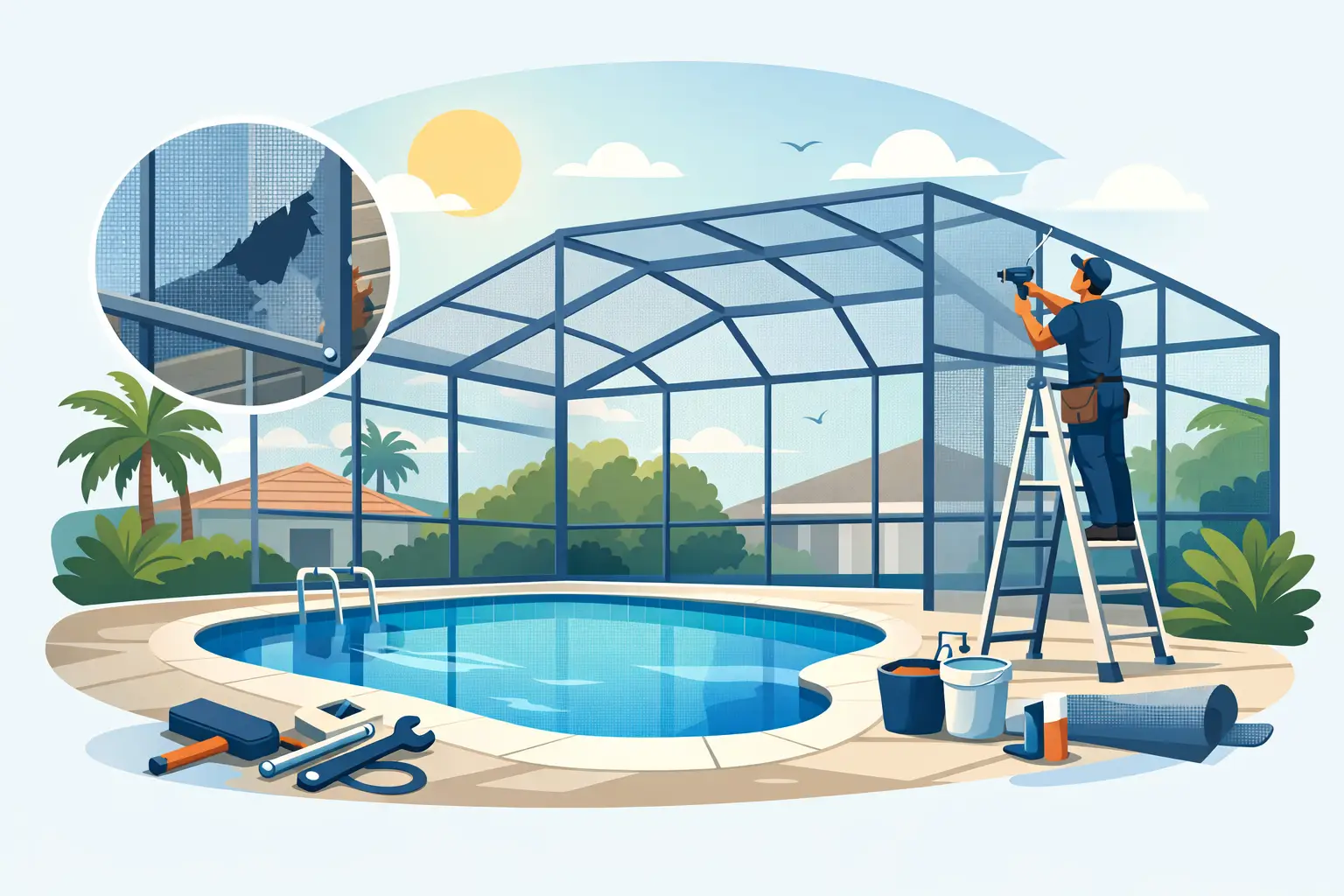
A pool cage can look fine from a distance and still be one storm season away from major repairs. Faded framing, corroded fasteners, loose panels, and torn screens usually start small, but they rarely stay that way in Florida. If you are trying to understand pool cage restoration cost, the real answer depends on the cage’s condition, age, size, and how much coastal exposure it has taken over the years.
For homeowners and property managers on the Treasure Coast, restoration is often the smarter move when the structure is still fundamentally sound. A well-planned restoration can extend service life, improve appearance, and help protect your outdoor living space without the higher price of a full replacement. The key is knowing what drives cost before minor issues become structural ones.
What affects pool cage restoration cost?
Pool cage restoration is not a one-price service because no two enclosures wear the same way. A newer cage with sun-faded paint and a few damaged screen panels will cost far less to restore than an older aluminum structure with corrosion at the base, failing anchors, and widespread screen damage.
Size is one of the biggest factors. A larger enclosure simply requires more labor, more screening material, more fasteners, and more prep work. Height matters too. Two-story cages and oversized lanais typically require more equipment, more setup time, and more safety planning, which increases labor cost.
Condition is the next major variable. Some cages need cosmetic improvements. Others need meaningful structural work before any rescreening or refinishing should begin. If the frame has rusted hardware, loose connections, or damaged members, those issues need to be addressed first. Skipping them may save money upfront, but it usually leads to more expensive failures later.
Location also plays a role. Coastal properties tend to see heavier salt exposure, which accelerates corrosion on screws, anchors, and connection points. A pool cage a few miles inland may age very differently than one exposed to years of ocean air and wind-driven rain.
Typical restoration work included in the cost
When people hear restoration, they sometimes think it means only replacing screen. In practice, restoration can involve several stages, and the scope directly affects pricing.
Rescreening damaged or worn panels
Screen replacement is one of the most common restoration services. If only a handful of panels are torn, a partial repair may be enough. If screens are brittle, faded, patched repeatedly, or failing across the enclosure, a full rescreen is usually the better long-term investment.
The type of screen material matters. Standard screen is more budget-friendly, while stronger or specialty options can cost more but may offer better durability and performance depending on your goals.
Fastener and hardware replacement
In Florida, old steel fasteners are a common weak point. Over time, they corrode, stain the frame, and lose holding strength. Replacing worn fasteners with more durable hardware is often one of the most important parts of restoration, especially for older cages.
This part of the job may not be the most visible, but it can be one of the most valuable. New fasteners help support structural integrity and reduce the risk of future connection failures.
Frame preparation and repainting
If the aluminum frame is chalky, oxidized, or stained, restoration may include pressure washing, surface preparation, and a fresh protective finish. Paint or specialty coatings improve appearance, but they also add a layer of protection against the elements.
Prep work is what separates a quick cosmetic job from a lasting result. If oxidation and surface contamination are not handled correctly, new coatings will not perform the way they should.
Structural and component repairs
Some projects require replacing damaged kick plates, bent members, door hardware, anchors, or base components. This is where costs can rise quickly, especially if corrosion has been left untreated for years.
That does not automatically mean replacement is the only option. In many cases, targeted repairs paired with rescreening and refinishing can restore both function and appearance at a more manageable cost.
Ballpark price ranges in Florida
A basic restoration with limited screen repair and minor hardware updates may fall on the lower end of the range. A more comprehensive project that includes full rescreening, fastener replacement, pressure cleaning, surface prep, and repainting will land higher. If structural repairs are involved, pricing can move up significantly.
For many Florida properties, homeowners might see smaller restoration projects start in the low thousands, while more complete restorations for larger cages can reach several thousand dollars or more. Two-story enclosures, custom shapes, and cages with extensive corrosion generally cost more because labor and material needs increase.
That said, broad price ranges only go so far. A quote based on measurements and actual condition is the only reliable way to understand what your project will cost. A cage that looks similar to your neighbor’s from the street may need very different work once the hardware, frame, and screen condition are inspected up close.
Restoration vs. replacement
This is where many property owners pause, and for good reason. If pool cage restoration cost starts climbing, it is fair to ask whether a full replacement makes more sense.
Restoration is often the right choice when the main structure is still sound and the issues are concentrated in the screening, hardware, finish, or isolated components. It can give the enclosure a refreshed appearance and renewed performance without starting from scratch.
Replacement becomes more likely when corrosion is widespread, key structural elements are compromised, or the existing design no longer meets your needs. If the cage has repeated repair history, outdated materials, or significant storm damage, replacement may provide better long-term value despite the higher upfront investment.
The smartest decision usually comes down to service life. If a restoration can reliably extend the cage for years at a reasonable cost, it is often worth doing. If repairs are only delaying a larger failure, replacement may be the more cost-effective path.
Why cheap restoration bids can cost more later
Low pricing gets attention, but it should also raise questions. Not all restoration proposals include the same level of prep, hardware replacement, screen quality, or workmanship. One contractor may quote a simple rescreen, while another includes frame cleaning, rusted fastener removal, and coating work. The numbers can look far apart because the scope is far apart.
Shortcuts usually show up later. Poorly installed screen can sag or pull loose. Incomplete surface prep can lead to premature coating failure. Reusing deteriorated fasteners may leave the enclosure looking improved while critical weak points remain in place.
For coastal properties, restoration should be approached as protection work as much as appearance work. Premium materials, skilled professionals, and precise installation matter because your enclosure deals with wind, moisture, sun, and salt on a daily basis.
How to budget for your project
If you are planning for restoration, start with a professional inspection before the damage spreads. The earlier issues are identified, the more options you usually have. A cage that needs only moderate work today may require far more expensive structural repairs a year or two from now.
Ask for a clear scope of work. You should understand whether the quote includes full or partial rescreening, fastener replacement, door repairs, painting, structural repairs, debris removal, and any required permitting. That clarity helps you compare proposals fairly.
It also helps to think in terms of value rather than just price. A restoration that improves durability, extends service life, and reduces future repair calls can be a better investment than a lower bid that addresses only the visible problems.
For Florida property owners, choosing an experienced local contractor makes a difference. Coastal conditions are hard on aluminum enclosures, and restoration methods should reflect that reality. Companies with deep regional experience understand what typically fails first, which materials hold up better near the coast, and how to build repairs around long-term performance.
When it is time to schedule an estimate
There are a few signs that should prompt a closer look. Torn screen is the obvious one, but it is not the only one. Rust stains around screws, loose frame connections, sticking doors, flaking finish, and soft spots at the base can all point to bigger restoration needs.
If your pool cage is aging and you are unsure whether to repair, restore, or replace, a site-specific estimate is the best next step. A qualified contractor can evaluate the frame, hardware, screen condition, and overall service life, then recommend the most practical option for your property and budget.
At Jensen Beach Aluminum & Windows, that kind of guidance matters because homeowners are not just paying for a quick fix. They are investing in protection, appearance, and the continued use of an outdoor space that adds real value to the property. The right restoration plan should give you confidence, not guesswork.
A pool cage does not have to be falling apart to deserve attention. If you address wear early and work with professionals who understand Florida conditions, restoration can be a smart way to protect your investment and keep your outdoor space looking the way it should.