


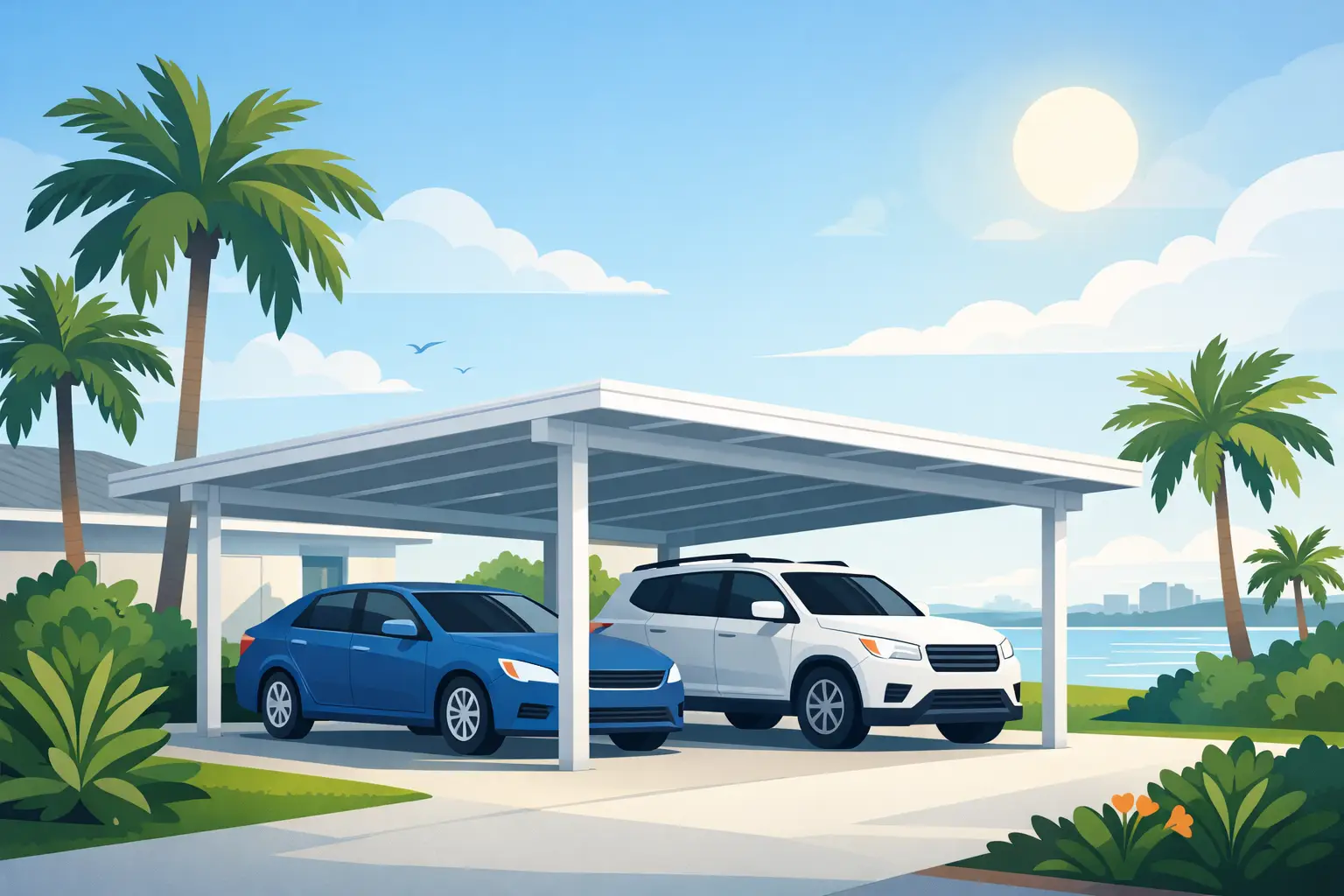
If you are pricing a new carport on the Treasure Coast, the biggest mistake is assuming every structure falls into the same price range. Aluminum carport installation cost depends on more than square footage. In Florida, wind-load requirements, site conditions, attachment method, and finish details can move a project from a basic coverage solution to a more engineered, higher-value upgrade.
For homeowners and property managers, that difference matters. A carport is not just a shade structure. In a coastal market, it is part of your property protection strategy, and the quality of the materials and installation has a direct impact on performance, lifespan, and long-term value.
What is the average aluminum carport installation cost?
A typical aluminum carport installation cost often falls between $4,500 and $15,000 or more, depending on size, design, and site requirements. Smaller single-vehicle structures with straightforward installation usually land on the lower end. Larger double carports, custom layouts, commercial applications, or projects that require slab work and engineering can climb well above that range.
That broad spread is normal. A simple freestanding carport installed over an existing, level concrete pad costs less than a custom attached structure built to meet stricter wind exposure conditions near the coast. If you compare estimates without looking at those details, the numbers can seem inconsistent when they are actually reflecting very different scopes of work.
Why aluminum carport installation cost varies so much
The first major cost driver is size. A one-car carport naturally uses fewer materials and less labor than a two-car or oversized RV-style structure. Width, depth, and height all affect aluminum framing, roof panel quantity, anchoring requirements, and fabrication time.
The second factor is whether the carport is attached or freestanding. Attached systems may require careful integration with the home or building facade, roofline, and drainage. That can improve function and appearance, but it may also require more detailed planning and installation time. Freestanding systems can be simpler in some cases, though they still need proper footings or slab anchoring to perform well in Florida weather.
Wind-load engineering is another major variable. In Florida, especially along coastal communities, structures must meet local code requirements designed for storm exposure. Higher wind ratings can mean heavier framing, stronger fasteners, additional bracing, and more engineering documentation. Those are not cosmetic upgrades. They are part of building a structure that is designed for the environment it will face.
Roof style also changes the price. A flat pan roof may be more economical than an insulated roof system or a more customized design. Some property owners prefer upgraded roof panels for better heat control, reduced noise, or a cleaner finished appearance. Those choices increase cost upfront but can improve comfort and durability over time.
Site conditions can raise or lower the total price
A clear, accessible installation area is usually the most efficient scenario. If the crew can work over an existing slab that is level and structurally suitable, that can reduce prep work. If the site needs demolition, grading, new concrete, or correction of drainage issues, the project cost goes up.
This is one reason on-site evaluation matters. What looks like a simple carport replacement may involve removing an old structure, repairing the mounting surface, or adjusting the layout to avoid utility conflicts. Trees, fences, easements, and narrow access points can also affect labor time.
For commercial properties or multifamily sites, coordination can add another layer. Tenant access, parking flow, and installation sequencing may influence how the project is staged. That does not always make the structure itself more expensive, but it can affect the installation cost.
Materials and finish options affect long-term value
Not all aluminum systems are equal. Premium-grade materials, better coatings, and stronger components often cost more than entry-level products, but they tend to perform better in harsh sun, salt air, and frequent rain. In coastal Florida, that difference matters.
A lower initial quote may exclude features that help the structure hold up over time. Thicker gauge members, higher-quality fasteners, and better finish protection can reduce maintenance issues and preserve appearance longer. Property owners who plan to stay in the home or protect a long-term investment property often find that material quality is worth careful attention.
Appearance also plays a role. Color selection, trim detail, integrated gutters, and architectural customization can raise the price, but they can also help the carport feel like a natural extension of the property rather than an afterthought. That is especially important for front-facing installations where curb appeal matters.
Permits, codes, and engineering are part of the real cost
One of the most overlooked parts of aluminum carport installation cost is the administrative side of the job. In Florida, permitting is not optional, and reputable contractors account for that process from the start. Permit fees, engineering documents, code review, and inspections all contribute to the final number.
Trying to compare a permitted professional installation to an informal quote that leaves those items out is not an apples-to-apples comparison. If a structure is not properly permitted or engineered, the savings can disappear quickly when problems arise during resale, insurance review, or storm recovery.
A professional installer should be able to explain what is included in the quote, what code requirements apply to your location, and whether any additional approvals are likely. That clarity protects the customer from surprises and usually leads to a smoother project overall.
Labor matters more than many buyers expect
Installation quality has a direct impact on how well a carport performs. Precise anchoring, proper flashing, correct panel installation, and attention to water management all matter. In a storm-prone market, shortcuts in labor can create expensive problems later.
Experienced installation crews may not offer the lowest price, but they bring value in other ways. They understand local code expectations, know how to handle site-specific challenges, and are better equipped to deliver a finished product that looks right and performs as intended. That matters whether you are protecting a personal vehicle, adding covered access to a home, or improving a commercial property.
For many buyers, the best quote is not the cheapest one. It is the one that clearly defines the scope, uses quality materials, and reflects skilled workmanship.
How to budget for an aluminum carport project
The smartest way to budget is to start with your actual use case. If you only need basic vehicle coverage, a standard-size structure with minimal customization may be the right fit. If you want a carport that complements the building, improves resale appeal, and stands up to coastal weather for years, your budget should reflect that higher standard.
It also helps to separate must-haves from nice-to-haves. Wind-rated construction, proper permitting, and sound installation are essentials. Premium finishes, upgraded panel systems, or added decorative features may be worthwhile, but they should be evaluated in the context of your goals and timeline.
A contingency budget is wise as well. Site conditions, concrete needs, and code-related adjustments can add cost after the initial visit if they are not fully visible at first glance. Leaving room in the budget helps avoid delays and rushed decisions.
Getting a quote that actually helps you decide
A useful quote should do more than give you one number. It should outline the size of the structure, material specifications, permit responsibility, anchoring method, and any site work included. If one estimate is significantly lower than another, ask why. Sometimes the reason is efficiency. Other times, important elements are missing.
This is where working with an established local contractor makes a difference. In a market like Florida, regional experience matters because weather exposure, municipal requirements, and product performance are all location-specific. A contractor familiar with coastal conditions can help you choose a carport system that makes sense for your property, not just one that looks affordable on paper.
At Jensen Beach Aluminum & Windows, that local understanding is part of the value. Property owners need clear guidance, dependable installation, and a structure built for real Florida conditions.
Is the investment worth it?
For many properties, yes. A well-built aluminum carport can protect vehicles, reduce sun exposure, improve convenience during heavy rain, and add functional covered space. It may also support property value when the design fits the home and the installation is professionally completed.
That said, the right investment level depends on the property. A rental unit, a primary residence, and a commercial building may all justify different design choices and budgets. The goal is not to buy the most expensive structure. It is to install one that matches the demands of the site, meets code, and delivers reliable performance over time.
If you are comparing options, focus less on the lowest advertised price and more on what the project truly includes. The best carport is the one that protects your property, fits your space, and is built to handle the weather you actually live with.