


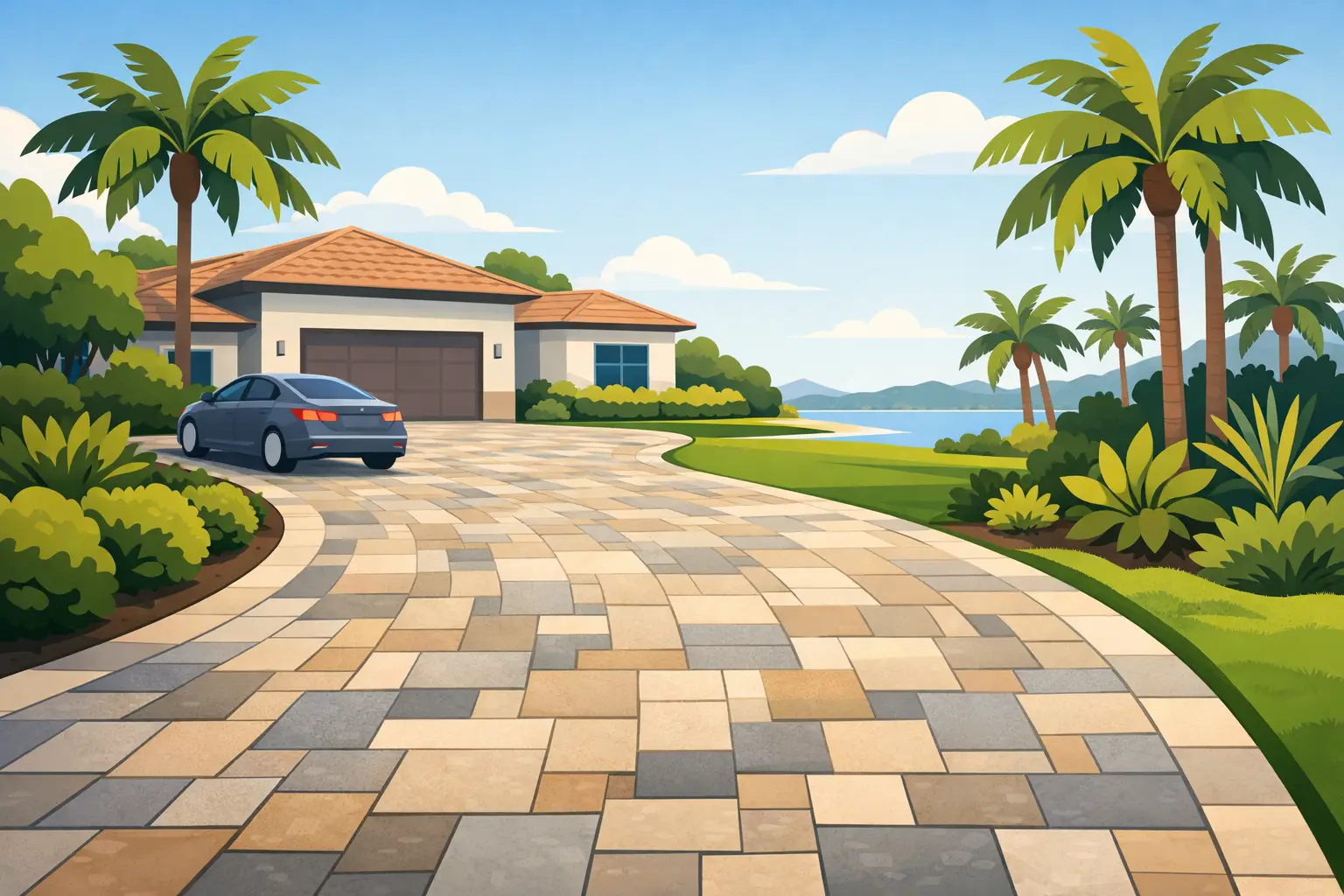
A driveway in Florida takes more abuse than many property owners expect. It deals with heat, heavy rain, shifting soils, salt air in coastal areas, and the daily weight of vehicles. That is why outdoor pavers for driveways have become a smart choice for homeowners and property managers who want more than a basic slab. Done right, a paver driveway delivers strength, drainage, easier repairs, and a more finished look at the front of the property.
For coastal homes and commercial properties, the appeal is not only visual. The real value is performance. A well-built paver system can handle movement better than traditional poured surfaces in many situations, and it gives you more flexibility if part of the driveway ever needs service or replacement.
Why outdoor pavers for driveways make sense in Florida
Concrete and asphalt still have their place, but Florida conditions tend to expose their weak points. Standing water, sun exposure, and ground movement can lead to cracking, discoloration, and patching that never quite blends in. Outdoor pavers for driveways offer a different approach because they are installed as an interlocking system rather than one continuous surface.
That matters when the ground shifts or the driveway expands and contracts. Individual pavers can move slightly within the system instead of forcing a large visible crack across the whole surface. If one section is damaged, repairs are usually more targeted. In many cases, the affected pavers can be removed and replaced without tearing out the entire driveway.
There is also the appearance factor. Driveways take up a large portion of the front elevation, so the material you choose has a direct effect on curb appeal. Pavers offer more control over color, pattern, border design, and texture, which makes it easier to complement the home, entry walkway, garage doors, and surrounding hardscape.
The best paver materials for driveways
Not every paver belongs in a driveway. The material has to handle vehicle loads, resist wear, and maintain its appearance under Florida weather.
Concrete pavers
Concrete pavers are one of the most common choices for residential driveways. They are available in a wide range of colors, shapes, and finishes, which makes them versatile for both traditional and modern homes. They also tend to offer a good balance of cost, appearance, and strength.
For many properties, concrete pavers are the practical middle ground. They can be engineered for vehicular traffic, and they give property owners plenty of design flexibility without pushing the project into the highest price tier.
Brick pavers
Brick pavers have a classic look and strong visual character. They work especially well on homes that lean historic, coastal traditional, or Mediterranean in style. True clay brick can be durable, but driveway applications require the right product and installation method.
The trade-off is that brick may offer fewer color options than concrete and can come at a higher cost depending on the product selected. Some owners choose brick for borders or accents rather than the full driveway to manage budget while keeping the style.
Natural stone pavers
Natural stone creates a premium appearance, but it is not always the most practical option for every driveway. Some stones perform very well under traffic, while others are better suited for walkways and patios. Slip resistance, thickness, and load capacity all need careful review.
For high-end homes, stone can deliver a standout result. Still, driveway use demands more than looks. The stone has to be selected specifically for vehicular applications, not just exterior use in general.
What matters more than the paver itself
Many driveway problems start below the surface. Even premium pavers will fail early if the base preparation is rushed or drainage is ignored. This is where professional installation makes a major difference.
A driveway system should begin with proper excavation, grading, and compaction. The base materials have to be suited to the soil conditions and expected vehicle traffic. Edge restraints, bedding sand, joint sand, and compaction all play a role in keeping the surface locked together over time.
Drainage is especially important in Florida. A driveway should move water away from the home and prevent pooling where possible. If the grade is wrong or runoff is not planned properly, the finished driveway may look good on day one but develop settlement or washout later.
This is also why a lower quote is not always the better value. Two driveways can look similar when first installed, but the one built with better site prep and installation standards is far more likely to hold up over the long term.
Choosing the right pattern and finish
The pattern is not just decorative. It affects strength, especially in areas with regular vehicle traffic. Interlocking patterns such as herringbone are often preferred for driveways because they distribute weight effectively and help reduce movement.
Running bond and basketweave can work well visually, but they may be better suited to lighter-use areas unless the paver and installation system are designed accordingly. Borders and banding can help define the driveway and tie the look into other exterior features on the property.
Color deserves practical consideration too. Very light tones may show tire marks more easily, while very dark tones can absorb more heat. Mixed-color blends often perform well visually because they hide dirt and wear better than flat, uniform shades.
Texture matters for safety and maintenance. A surface should provide enough traction in wet conditions without becoming difficult to clean. For coastal properties, that balance is worth paying attention to.
Maintenance expectations for driveway pavers
One reason property owners choose pavers is that maintenance is usually straightforward. That does not mean zero maintenance, but it is manageable.
Routine care includes sweeping, rinsing, and occasional cleaning to remove dirt, mildew, or stains. Joint sand may need replenishment over time, especially after heavy rains or pressure washing. Sealing can help enhance color and reduce staining, but whether it is necessary depends on the paver type, the desired finish, and site conditions.
Weeds are often brought up as a concern. In a properly installed driveway, weeds are less about growth from below and more about debris collecting in joints and allowing surface germination. Regular cleaning helps keep that under control.
Another long-term advantage is repairability. If utility work, root intrusion, or isolated damage affects part of the driveway, the affected section can often be lifted and reset. That is a meaningful benefit compared with patching a cracked slab and ending up with a mismatched repair.
Cost, value, and where the money goes
Driveway pavers usually cost more upfront than basic poured concrete, but that price difference needs context. You are paying for a system that includes excavation, base work, drainage planning, edge control, material selection, and labor-intensive installation.
The better question is not simply what costs less today. It is which option gives you the best mix of appearance, service life, repair flexibility, and property value over time. For many Florida owners, pavers justify the investment because they improve curb appeal immediately and hold their appearance well when installed correctly.
There are ways to manage cost without cutting performance. Material choice, pattern complexity, border details, site access, and driveway size all affect pricing. A straightforward layout with durable concrete pavers may deliver an excellent result without moving into a luxury budget.
When pavers are the right fit and when they may not be
Pavers are a strong option for many homes, but every project has trade-offs. If the main priority is the lowest possible initial cost, a basic concrete driveway may still win. If the site has unusual drainage challenges or poor subgrade conditions, the installation plan needs even more attention.
That said, for owners who care about long-term durability, easier localized repairs, and a more finished exterior, pavers are often the better fit. They are especially appealing when the driveway is part of a larger exterior upgrade that includes walkways, patios, pool areas, or entry features.
On the Treasure Coast, where weather exposure and curb appeal both matter, professional planning is what separates a driveway that lasts from one that starts shifting too soon. Companies like Jensen Beach Aluminum & Windows understand that exterior improvements in Florida need to do more than look good. They need to perform under real conditions year after year.
If you are considering outdoor pavers for driveways, start by looking at the full picture – not just color samples or square-foot pricing. Ask how the base will be built, how drainage will be handled, and what material is best for your traffic and property style. A driveway is one of the first things people see, but more importantly, it is one of the surfaces your property depends on every single day.