


A backyard addition can look perfect on paper and still feel wrong once Florida heat, humidity, rain, and storm season show up. When homeowners compare a sunroom vs screened porch, the real question is not just which one looks better. It is which one will hold up, stay comfortable, and make the best use of your property year after year.
For Treasure Coast homeowners, that decision deserves a practical look. A screened porch and a sunroom both expand living space, but they do it in very different ways. One keeps you closer to the outdoors. The other gives you a more enclosed, climate-controlled extension of the home. The right choice depends on how you want to use the space, how much protection you need, and what kind of long-term investment makes sense for your property.
Sunroom vs screened porch: the core difference
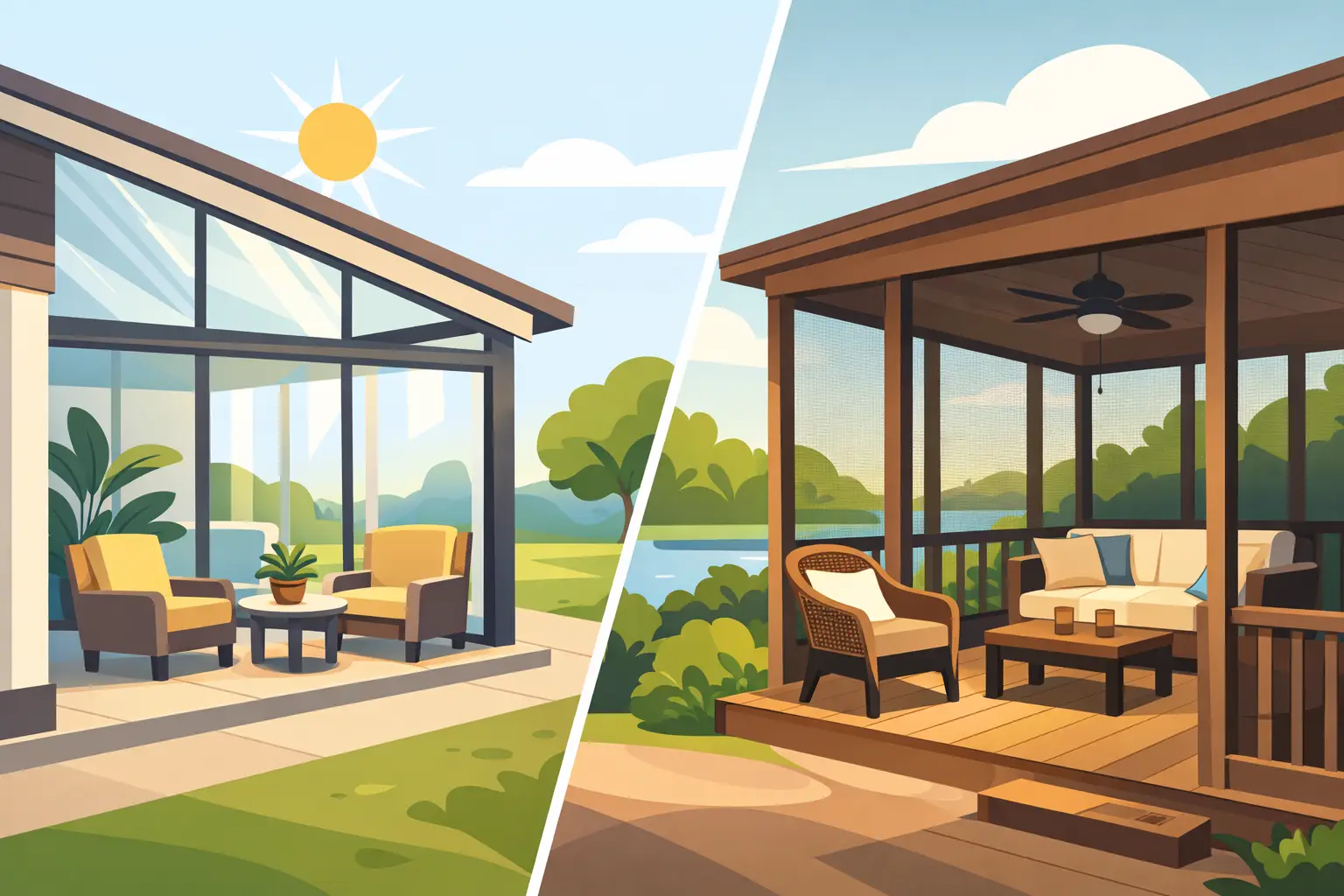
A screened porch is designed to give you fresh air and open views while keeping out insects and some outdoor debris. It usually has a roof, structural framing, and screen walls rather than glass windows. In Florida, this can be a great fit for homeowners who enjoy the breeze and want a casual outdoor living area for relaxing, dining, or entertaining.
A sunroom is a more enclosed structure, typically built with glass or window systems that create a finished room with stronger separation from the elements. Depending on the design, a sunroom may be used across more seasons and in more weather conditions. It often feels like a true expansion of the home’s interior rather than a covered patio.
That distinction matters in coastal areas. Salt air, heavy rains, strong sun exposure, and wind loads all affect how these spaces perform over time.
When a screened porch makes more sense
A screened porch usually appeals to property owners who want outdoor living without the full cost of a room addition. It keeps the experience lighter and more open. You still hear the rain, feel the breeze, and get that indoor-outdoor connection many Florida homeowners want.
This option often works well if your main goals are simple. Maybe you want a shaded place for morning coffee, a bug-protected area for outdoor meals, or a more comfortable transition space near a pool, patio, or backyard. For homes that already have good interior square footage, a screened porch can be the smarter use of budget.
It can also be a strong fit for rental and investment properties where durability and low maintenance matter, but a fully enclosed living area is not necessary. With the right framing, screening materials, and professional installation, a screened porch can add usable space without making the project overly complex.
Still, there are trade-offs. A screened porch does not block humidity, heat, wind-driven rain, or pollen the way a sunroom can. During peak summer conditions, comfort depends heavily on shade, airflow, fans, and the home’s orientation. If you plan to use the space daily, all year, those limits become more noticeable.
When a sunroom is the better investment
A sunroom is a stronger choice when comfort, protection, and extended use are top priorities. Because it is enclosed with windows or glass systems, it creates a more controlled environment. That matters in Florida, where afternoon storms can arrive fast and humidity can make open-air spaces less inviting for part of the year.
Homeowners often choose a sunroom when they want space that functions more like a sitting room, reading room, hobby room, home office, or entertaining area. It can give you outdoor views without exposing furniture, flooring, and finishes to the same level of moisture and debris.
For coastal properties, a sunroom may also support better long-term use when paired with quality materials and professional installation standards designed for local weather demands. Energy-efficient windows, durable framing, and code-compliant construction make a major difference. This is where experience matters. A well-built sunroom is not just glass added to a patio. It needs to perform as part of the structure.
The main consideration is cost. A sunroom generally requires a larger investment than a screened porch because of the enclosure system, window package, insulation considerations, and overall construction scope. But for homeowners who want more daily usability and a more finished appearance, that higher initial cost can be justified.
Cost, maintenance, and long-term value
If you are weighing sunroom vs screened porch strictly on price, the screened porch usually comes in lower. It uses fewer enclosed materials and less complex finishing work. That can make it attractive for homeowners who want to improve livability without taking on a major renovation budget.
Maintenance is a little more nuanced. Screened porches have fewer enclosed components, but screens can tear, loosen, or wear over time, especially in high-wind or debris-prone areas. Sunrooms have more glass and window components to maintain, but they also protect interior surfaces from direct exposure to weather.
In terms of value, both can improve a property’s appeal. A screened porch often adds lifestyle value with a lower upfront spend. A sunroom may carry stronger perceived value because it feels more substantial and versatile. The return depends on the quality of the build, local buyer expectations, and whether the addition suits the property.
For Florida homeowners, value should also include resilience. Materials that stand up to sun, moisture, corrosion, and storms are not optional details. They are part of whether the project remains an asset or turns into a maintenance issue.
Comfort in Florida weather
This is where many decisions become clear.
A screened porch performs best during mild mornings, cooler months, and days with steady airflow. It gives you the outdoor feel many people want from a Florida home. But in August, with high humidity and little breeze, it may be less comfortable than expected. Rain can also reduce how often you use it.
A sunroom gives you much more flexibility. With the right window system and cooling strategy, it can stay comfortable through hot afternoons, rainy days, and seasonal temperature changes. If anyone in the household is sensitive to pollen, insects, or heat, that enclosed environment can make a big difference in how often the space gets used.
That does not mean a sunroom is always the answer. Some homeowners do not want to feel separated from the outdoors. If the goal is a breezy, casual retreat rather than a finished living area, a screened porch may deliver exactly what you want without overbuilding.
Storm exposure and construction quality
On the Treasure Coast, outdoor structures cannot be judged on looks alone. Wind resistance, product quality, fastening methods, and code-compliant installation all matter.
A screened porch is more exposed by nature. Depending on the design, screens and framing may be more vulnerable to storm damage than an enclosed structure built with appropriate windows and engineering. A sunroom, when designed with high-quality materials and installed by skilled professionals, can offer a greater level of weather separation.
That said, no addition should be selected without understanding how it will be built for local conditions. Coastal construction is not a place for shortcuts. The right contractor should be able to explain the materials, structural requirements, and installation standards that support long-term performance.
For homeowners in this market, that is one reason to work with an experienced local company like Jensen Beach Aluminum & Windows. Product selection matters, but proper installation and regional knowledge are what turn a good design into a dependable one.
Which option is right for your property?
If you want a lower-cost, open-air extension of your outdoor space, a screened porch is often the better fit. It is ideal for homeowners who value breeze, simplicity, and a casual outdoor lifestyle.
If you want a more protected, finished space that feels like part of the home and works in a wider range of weather, a sunroom usually makes more sense. It is the better choice for comfort, versatility, and daily use.
The best decision often comes down to three questions. How often will you use the space? How much protection do you want from heat, rain, and insects? And are you trying to create an outdoor retreat or a true room addition?
Those answers are different for every property. A waterfront home, a seasonal residence, a family home with kids, and a managed rental property may all point in different directions.
Before you commit, look beyond the brochure version of the project. Think about storm season, maintenance, sun exposure, and how the space will actually perform in July, not just in January. The right addition should make your property easier to enjoy, easier to protect, and better suited to the way you live.