


A driveway that looks great in January can start showing its weaknesses by August in Florida. Heat, rain, shifting soil, salt air, and heavy use all test exterior surfaces fast. When property owners compare pavers vs poured concrete, the real question is not just which looks better on day one – it is which option will hold up, drain well, and make sense for the way the space is used.
For patios, walkways, pool decks, and driveways, both materials can be the right choice. The better fit depends on your budget, the size of the project, your maintenance expectations, and how much movement the surface is likely to see over time. In coastal environments, those details matter more than most people expect.
Pavers vs poured concrete: the core difference
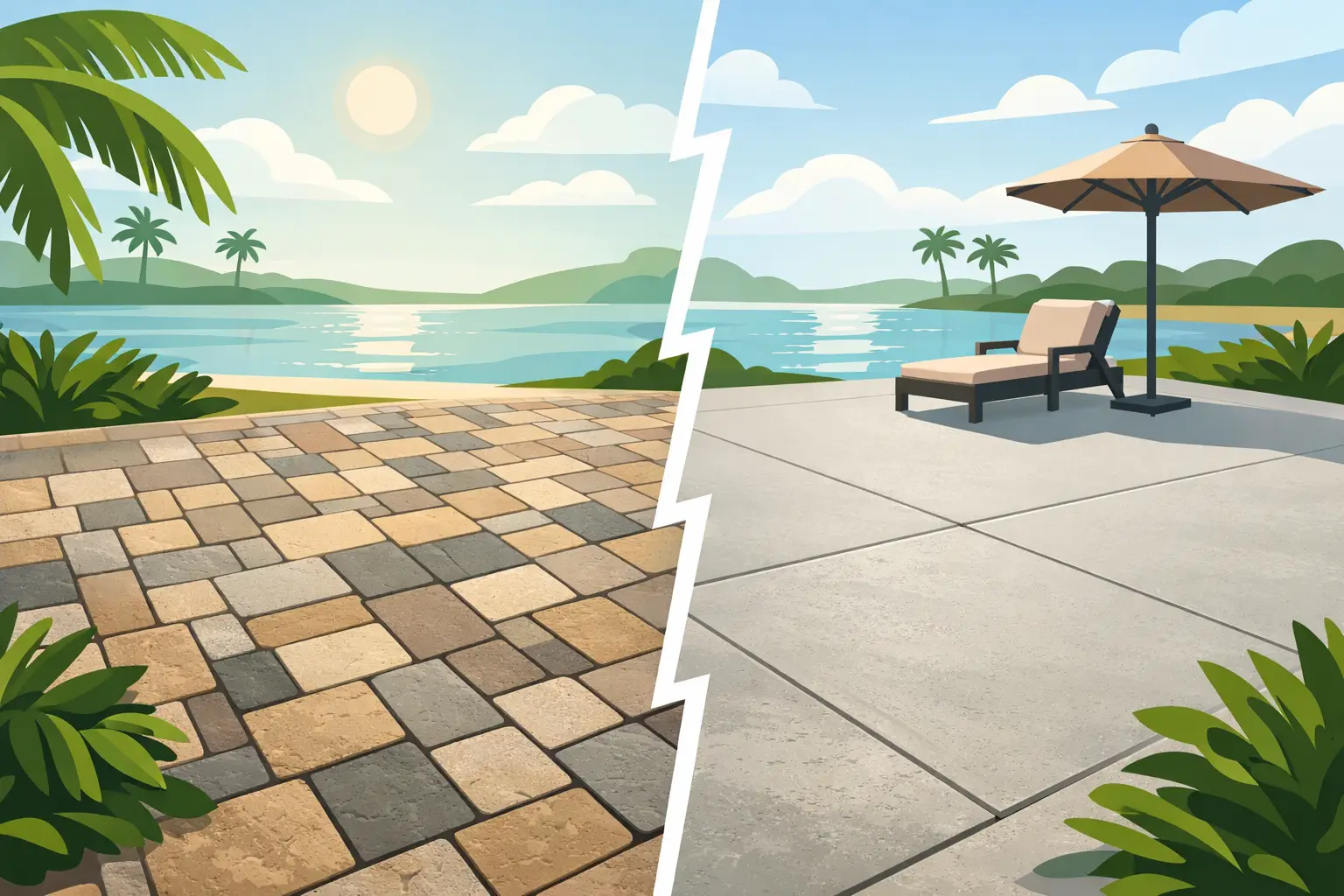
Pavers are individual units installed over a prepared base, then fitted together to create a finished surface. Poured concrete is installed as one continuous slab and finished in place. That basic difference affects almost everything else, including appearance, repairability, drainage, and long-term performance.
Pavers tend to offer more design flexibility. You can choose from a wide range of colors, shapes, textures, and laying patterns. That makes them a strong option when curb appeal is a priority or when you want a surface that complements a home, pool area, or outdoor living space.
Poured concrete usually gives you a cleaner, more uniform look. Some owners prefer that simplicity, especially for larger areas or more utilitarian spaces. Concrete can also be enhanced with stamping, scoring, or coloring, but it still behaves like a slab, and that affects how it ages.
Cost: upfront price vs long-term value
If your first question is price, poured concrete often wins on initial cost. In many cases, it is less expensive to install than pavers, especially for straightforward layouts with minimal detailing. For large commercial pads or standard residential installations, that lower upfront cost can be appealing.
Pavers generally cost more at the start because the material and labor are more intensive. Installation requires careful base preparation, leveling, edge restraints, and precise placement. That added labor is part of what gives pavers their finished look and repair advantages later.
The trade-off is long-term value. If one section of pavers settles or gets stained, damaged units can usually be removed and replaced without disturbing the entire surface. With poured concrete, repairs are often more visible. Crack filling, patching, or slab replacement may solve the problem structurally, but it rarely blends perfectly with the original finish.
For owners planning to stay in the property for years, that difference can shift the value equation.
How each material handles Florida weather
Florida is not gentle on exterior surfaces. Strong sun can fade finishes, heavy rain tests drainage, and seasonal storms put extra stress on everything around the home or building.
Pavers often perform well in these conditions because they are made of individual pieces with joints between them. That system allows a degree of flexibility. If the ground moves slightly, the surface can often absorb that movement better than a rigid slab. That does not mean pavers are maintenance-free, but it does mean they are less likely to show the kind of long visible cracking many owners worry about with concrete.
Poured concrete is strong, practical, and widely used, but it is also more vulnerable to cracking as a slab ages, settles, or responds to temperature changes. Control joints help manage where cracks may occur, but they do not eliminate the possibility.
Drainage is another important issue. In Florida, standing water is never a minor inconvenience. It can affect safety, appearance, and the performance of nearby structures. A properly installed paver system can support drainage well because water moves through the joints and away from the surface more effectively than on a flat slab. Concrete can also be sloped for drainage, but it requires precise planning during installation. If that slope is off, water tends to collect where you least want it.
Appearance and design flexibility
When visual impact matters, pavers usually offer more options. You can create borders, contrasting patterns, and custom layouts that help define a driveway, patio, or entry. For homes in coastal communities, that flexibility can make a noticeable difference in curb appeal.
Poured concrete is more limited, though not plain by default. Decorative finishes can improve the look significantly. Stamped concrete can mimic stone or brick, and color can be added to warm up the surface. Still, the finished appearance depends heavily on the quality of the pour and finish work. Once installed, changing the look later is not simple.
Pavers also tend to age in a way many owners find more forgiving. If one area experiences wear, the surface usually continues to look cohesive. Concrete can develop discoloration, surface wear, or patchy repairs that draw attention over time.
Repairs and maintenance
This is where pavers often stand out.
If tree roots, drainage issues, or settling affect part of a paver surface, the damaged area can typically be lifted, corrected, and reinstalled. That makes pavers especially attractive for driveways and patios where localized repairs may eventually be needed. It is a practical advantage, not just a design perk.
Concrete maintenance is usually simpler at first. There are no individual units to shift, and routine cleaning is straightforward. But once cracks, chips, or stains become an issue, repairs are often harder to disguise. In some cases, full replacement of a section is the only way to correct a problem properly.
Both materials benefit from sealing in the right conditions. Sealing can help protect color, reduce staining, and support surface life. The right schedule depends on the material, site conditions, and how much traffic the area gets.
Best uses for patios, pool decks, and driveways
Not every project asks the same thing from the material.
For patios and outdoor living areas, pavers are often a strong choice because they deliver a finished, high-end look and can tie different design elements together. If the patio sits near a pergola, screen enclosure, or pool area, pavers can help the whole space feel more intentional and refined.
Around pools, surface temperature and slip resistance matter. Some paver products stay more comfortable underfoot and provide better texture than standard concrete finishes. That can be a real benefit for homes where the pool deck gets regular use.
For driveways, the decision often comes down to budget, appearance, and expected wear. Pavers can create excellent curb appeal and support repairs better over time, but they require expert installation to perform well under vehicle loads. Poured concrete remains a reliable choice for many driveways, especially when the goal is a durable surface with lower upfront cost.
For commercial properties or service areas where function matters more than decorative impact, poured concrete may be the more efficient solution. For front entries, poolside spaces, and showcase exteriors, pavers often justify the added investment.
Installation quality matters as much as material
The pavers vs poured concrete decision does not stop with the product itself. Performance depends heavily on site preparation, drainage planning, grading, base work, and installation quality.
Poorly installed pavers can shift, separate, or settle. Poorly installed concrete can crack early, drain badly, or develop finish issues that affect both appearance and lifespan. That is why working with skilled professionals matters, especially in coastal Florida where soil conditions, rainfall, and storm exposure create extra demands.
A contractor should look at how the area will be used, how water moves across the property, and how nearby structures may affect the installation. A pool deck has different needs than a front walkway. A driveway near the coast may need a different approach than a backyard patio farther inland.
Companies with regional experience, including Jensen Beach Aluminum & Windows, understand that these are not generic installations. They are part of a larger exterior system that has to perform under Florida conditions year after year.
Which option is right for you?
If you want lower upfront cost, a simple look, and a practical hardscape for large areas, poured concrete may be the right fit. If you want stronger design flexibility, easier spot repairs, and a surface that can better accommodate minor ground movement, pavers are often worth serious consideration.
Neither option is automatically better in every situation. A rental property with a tight renovation budget may point one way. A forever home with a custom outdoor living plan may point the other. The key is to choose based on use, drainage, maintenance expectations, and long-term value rather than cost alone.
The best hardscape is the one that still performs after years of Florida weather, heavy use, and changing needs. If you are planning a new patio, pool deck, walkway, or driveway, take the time to match the material to the property, not just the project photo you liked most.