


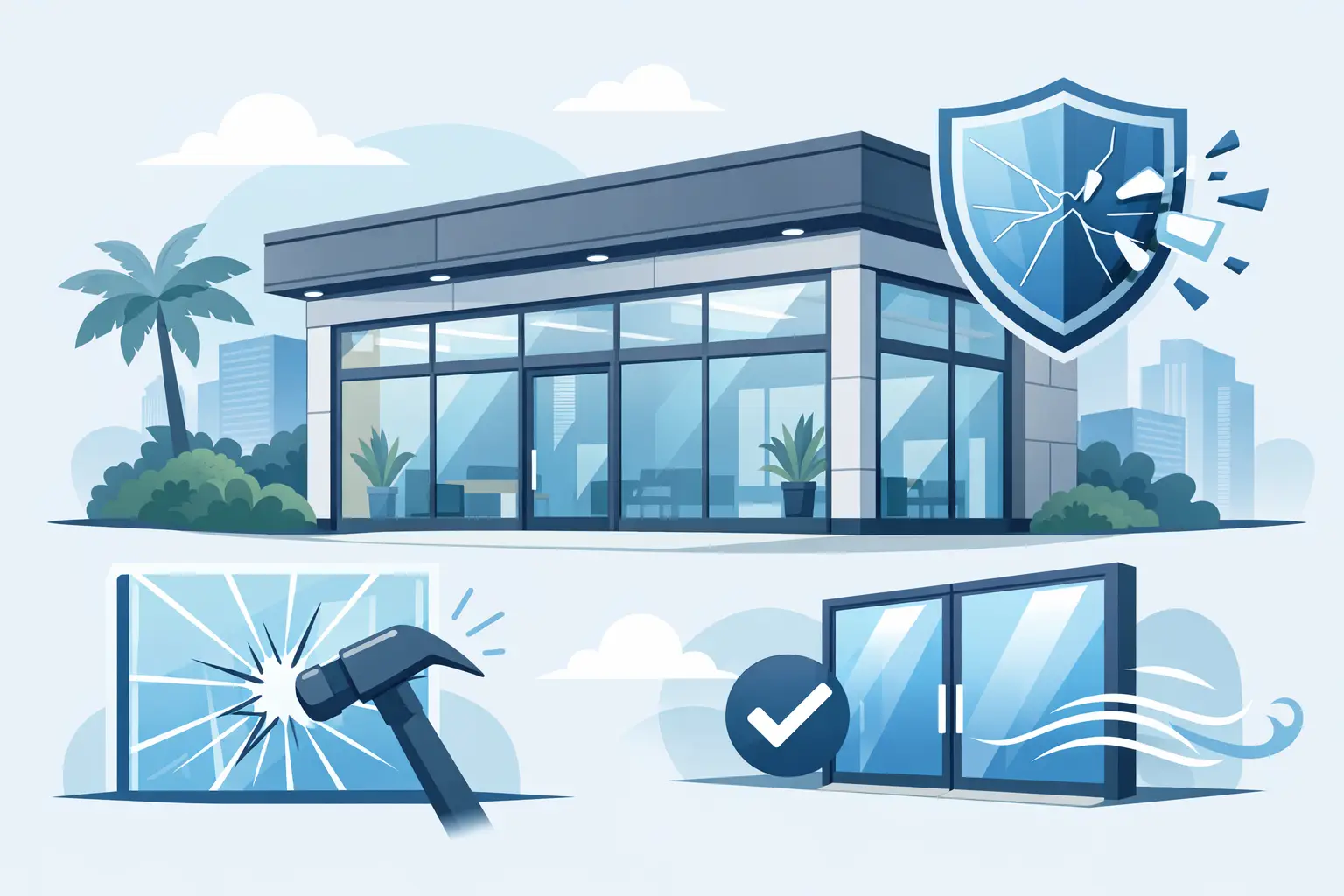
A cracked pane after a summer storm does more than look bad. For a retail store, restaurant, office, or mixed-use property in Florida, damaged glass can interrupt business, raise safety concerns, and leave the entire front of the building exposed. That is why commercial storefront impact windows are not just a cosmetic upgrade. They are a practical investment in protection, continuity, and long-term property value.
Along the Treasure Coast and throughout Florida, commercial properties deal with a tough mix of wind, rain, heat, salt air, and security concerns. Storefront glass has to do more than let in light. It has to stand up to storm conditions, help manage energy use, and support the professional image of the business behind it. When those priorities come together, impact-rated storefront systems make a strong case.
Why commercial storefront impact windows matter in Florida
For many commercial buildings, the storefront is the most vulnerable part of the exterior. Large expanses of glass create visibility and curb appeal, but they also face direct exposure during severe weather. In hurricane-prone areas, standard glass can become a serious liability. Once glass breaks, wind and water can enter the building quickly, leading to interior damage, product loss, and costly downtime.
Commercial storefront impact windows are built to help prevent that chain reaction. These systems use laminated impact glass and reinforced framing designed to withstand high winds and flying debris. The goal is not just to avoid shattered glass on the sidewalk. It is to maintain the building envelope when conditions turn dangerous.
That matters whether you manage a street-facing retail shop, a healthcare office, a restaurant with high pedestrian traffic, or a multi-tenant commercial plaza. Storm protection is not only about surviving the event. It is about limiting disruption after the storm passes.
What makes impact-rated storefront systems different
At a glance, impact windows can look similar to standard commercial glass. The difference is in the engineering. Impact-rated systems are designed and tested to meet specific performance standards for wind pressure, missile impact, and structural integrity.
The glass itself typically includes a strong interlayer bonded between panes. If struck, the glass may crack, but it is designed to remain largely in place rather than break apart and leave an opening. Frames, anchors, and installation methods also matter. A high-quality pane installed in an underbuilt frame is not a complete system.
This is one reason property owners should look beyond the glass alone. Real performance depends on how the storefront is designed, manufactured, and installed as a unified assembly. In coastal Florida, details like fastener selection, corrosion resistance, and code compliance are not small issues. They directly affect how the storefront performs over time.
Protection is the first benefit, but not the only one
Storm defense is what gets most owners interested in impact products, but there are several other reasons to consider them for a commercial property.
Security is one of the biggest. Storefront glass is a common target for break-ins, especially after hours. Laminated impact glass creates an added barrier that can slow forced entry and make smash-and-grab attempts more difficult. It is not the same as making a building impenetrable, but it does improve resistance and buy valuable time.
Energy efficiency is another major benefit. Florida businesses spend heavily on cooling, and storefront glass plays a big role in interior temperature control. Modern impact windows can help reduce solar heat gain and improve insulation, depending on the glass package selected. That can lead to lower strain on HVAC systems and a more comfortable environment for customers and staff.
Noise reduction also deserves attention, especially for businesses located near busy roads, downtown corridors, or high-traffic shopping areas. Laminated glass can help reduce outside noise, which is useful for offices, medical spaces, salons, and hospitality settings where comfort affects the customer experience.
Then there is appearance. A storefront needs to look clean, modern, and well maintained. Replacing aging or damaged glazing with updated impact systems can sharpen the overall presentation of the building. For owners trying to attract tenants or create a stronger first impression, that visual upgrade matters.
Choosing the right commercial storefront impact windows
Not every commercial property needs the same solution. A boutique retail storefront has different requirements than a warehouse office, bank branch, school building, or waterfront restaurant. The best system depends on several factors, and this is where experience matters.
Start with the building location and exposure. Properties closer to the coast often face more demanding wind and corrosion conditions. Height, orientation, and surrounding structures also affect design pressure requirements.
Next, consider the purpose of the space. If visibility and daylight are top priorities, glass selection should balance clarity with performance. If the property faces intense afternoon sun, energy performance may become a bigger factor. If security concerns are high, frame strength and glazing configuration may deserve more attention.
Aesthetic goals also come into play. Commercial storefront systems can be customized to support a modern, clean-lined appearance or blend with an existing facade. Frame finish, sightlines, door integration, and mullion layout all influence the final look.
There is also the issue of code compliance. Florida has strict building requirements for storm protection, and commercial projects can involve additional layers of review depending on occupancy type and location. A qualified contractor should be prepared to guide owners through product selection, measurements, permitting, and installation requirements so there are no surprises later.
Installation quality can make or break the investment
A strong product installed poorly will not deliver the protection or longevity you expect. That is especially true for commercial storefront systems, where fit, anchoring, waterproofing, and structural alignment all matter.
Professional installation helps ensure the system performs as designed under real-world conditions. It also affects day-to-day results, including how the windows look, how they seal, and how they hold up under constant exposure to sun, moisture, and use.
For occupied commercial properties, installation planning is just as important as workmanship. Business owners and property managers often need projects scheduled to minimize disruption to tenants, customers, and operations. That may mean phased installation, off-hour work, or careful site coordination.
This is where a full-service contractor brings real value. Jensen Beach Aluminum & Windows works with property owners who need more than a product drop-off. They need experienced professionals who understand coastal conditions, code-driven installation, and the importance of getting the job done right the first time.
When replacement makes more sense than repair
Some storefront issues can be repaired, but not all. If a building has recurring leaks, fogging glass, corroded frames, outdated non-impact glazing, or visible wear from years of coastal exposure, replacement may be the smarter financial move.
Repairs can solve a short-term problem, but they do not always address the underlying weakness of an aging system. For a commercial property, repeated service calls, tenant complaints, and rising energy costs can add up quickly. At a certain point, putting money into an obsolete storefront stops making sense.
Replacement is also worth considering during broader exterior upgrades. If you are improving curb appeal, updating entrances, or preparing a property for lease-up or resale, impact-rated storefront windows can support both function and presentation.
The long-term value for owners and managers
Commercial upgrades should earn their keep. Storefront impact windows do that in a few ways. They can reduce storm vulnerability, support energy savings, strengthen security, and improve the appearance of the property. They may also help reduce maintenance issues tied to older systems.
Still, the right decision depends on the building, budget, and timeline. Some owners prioritize hurricane readiness above all else. Others are focused on tenant satisfaction, insurance concerns, or modernizing an aging facade. A good contractor will talk through those priorities instead of pushing a one-size-fits-all recommendation.
For Florida commercial properties, the storefront is too important to treat as an afterthought. It protects the business, shapes first impressions, and carries a lot of responsibility every storm season. When the system is well chosen and professionally installed, it does more than withstand bad weather. It helps the property operate better year-round.
If your current storefront glass is showing its age or your building still relies on outdated non-impact glazing, now is a smart time to evaluate your options. The right upgrade can protect your investment today and make the next storm season a lot less stressful.
1 comment on “Commercial Storefront Impact Windows”