


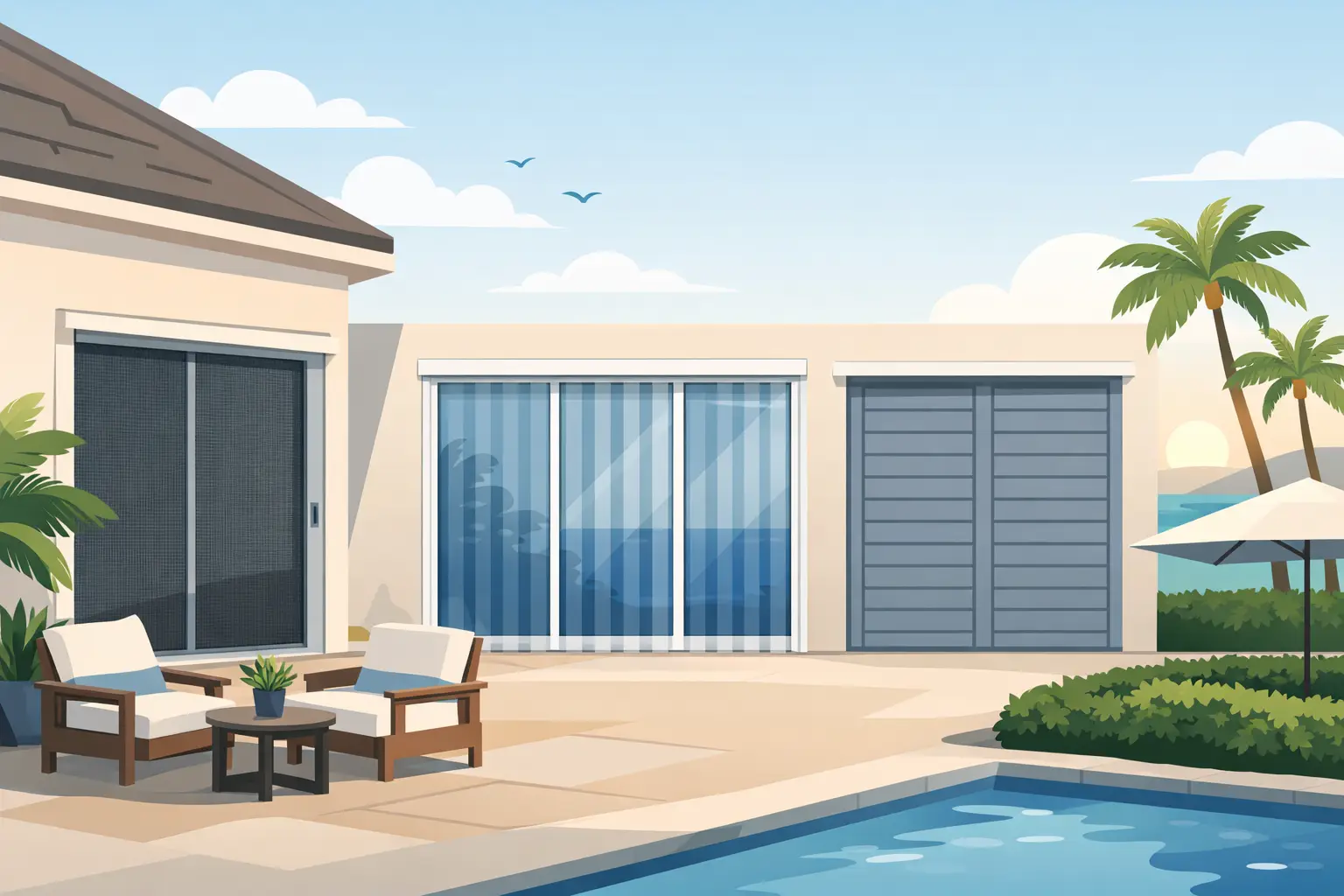
A patio can be the best square footage on your property right up until wind, rain, insects, and sun make it hard to enjoy. If you are asking how to protect patio openings, the right answer depends on what your patio is exposed to every day – and what it needs to withstand during storm season.
In Florida, patio openings do more than frame a view. They are vulnerable points where water intrusion, wind pressure, debris, pests, and UV exposure can all create problems over time. A good protection plan should improve comfort now while helping preserve the structure, finishes, and value of the property for years to come.
How to protect patio openings starts with the risk
Not every patio opening needs the same solution. A covered lanai facing inland has different demands than a waterfront patio with direct exposure to salt air and wind-driven rain. Before choosing a product, look at the conditions the opening handles most often.
Some property owners are mainly trying to keep out mosquitoes and no-see-ums. Others are dealing with harsh afternoon sun, frequent rain, or the need for hurricane protection. In many cases, the best setup combines more than one layer of defense, such as screening for daily comfort and shutters or impact-rated products for severe weather.
The size of the opening matters too. Wide spans may require stronger framing or custom systems to maintain performance. Older patios can also have hidden issues, including corroded fasteners, weakened framing, or aging attachments that need to be corrected before any new protection is installed.
Screen systems for everyday protection
For many Florida homes, screens are the first and most practical line of defense. They create a cleaner, more usable outdoor living area by reducing insects, wind-blown debris, and leaf buildup. They also make it easier to enjoy a patio without constant maintenance.
Traditional screen enclosures work well when the main goal is comfort and airflow. They allow ventilation while creating a barrier that keeps pests out. If your patio already has a cage or enclosure, rescreening may be enough to restore performance when mesh becomes torn, loose, or faded.
Retractable screens offer more flexibility. They are a strong option when you want open views and airflow at certain times of day but still need the ability to close off the space when insects or glare become a problem. They tend to be especially useful around covered patios, outdoor kitchens, and larger openings that connect indoor and outdoor areas.
The trade-off is that screens are not storm protection. They improve daily livability, but they are not designed to stop wind-borne debris or provide the same structural defense as impact-rated systems or code-compliant shutters.
Storm protection for exposed patio openings
If your patio opening is vulnerable during hurricane season, screen-only protection is not enough. This is where shutters or impact-rated products become essential.
Accordion shutters remain a popular choice because they are permanently attached, easy to deploy, and well suited for larger openings. For homeowners and property managers, that convenience matters. When a storm is approaching, a system that closes quickly can make a real difference.
Impact-rated windows and doors are another strong option for patio-adjacent spaces, especially where openings connect directly to conditioned living areas. They provide year-round protection without needing to be put up or taken down ahead of a storm. They can also improve energy efficiency and noise reduction, which adds value beyond weather events.
Panels and other removable systems may cost less upfront, but they require storage, preparation time, and a clear plan before each storm. That can work for some properties, but it is not always ideal for seasonal residents, busy owners, or commercial facilities that need a more predictable solution.
How to protect patio openings from water and sun
Storms get the most attention in Florida, but long-term wear often comes from everyday exposure. Rain intrusion around patio openings can damage flooring, framing, trim, and adjacent walls. Constant sun can fade finishes, overheat nearby rooms, and shorten the life of materials.
Awnings, pergolas, and louvered roof systems can help control that exposure. By reducing direct rain and sun at the opening, these additions improve comfort while taking pressure off the patio itself. They are especially valuable on west-facing patios that absorb heavy afternoon heat.
Drainage and flashing also matter more than many people realize. If water is collecting near thresholds or tracking inward during storms, the problem may not be the opening alone. The surrounding slab, roof runoff, or transition details may need to be corrected. A professional assessment should look at the full area, not just the visible opening.
Shade solutions can also support energy savings. When less heat builds up around glass doors and patio transitions, interior spaces often stay more comfortable, and HVAC systems do not have to work as hard.
Choosing materials that hold up in coastal conditions
In coastal Florida, protection is only as good as the materials and installation behind it. Patio openings are exposed to humidity, salt, intense sunlight, and regular temperature swings. Products that look fine at first can fail early if they are not built for that environment.
Aluminum remains a reliable choice for many patio structures and protective systems because it resists rust better than untreated steel and performs well when properly finished. Premium screening components, corrosion-resistant hardware, and quality fastening methods all contribute to longer service life.
This is one reason custom fitting matters. A product that is not sized, anchored, or integrated correctly may leave weak points at the edges or attachments. On larger patio openings, that gap between product quality and installation quality becomes even more important.
For commercial properties and multifamily buildings, durability should be weighed alongside serviceability. Systems that are easy to maintain and repair can reduce long-term operating costs, even if the initial investment is higher.
Professional installation makes the difference
Knowing how to protect patio openings is not just about picking a product category. It is about matching the right system to the opening, the property, and the level of exposure.
That takes experience with local code requirements, wind-load considerations, drainage behavior, and structural attachment methods. In Florida, those details are not optional. They directly affect safety, longevity, and whether the solution performs the way it should under pressure.
Professional installation also helps avoid common mistakes. Homeowners sometimes focus on the visible part of the project while overlooking framing condition, substrate strength, or compatibility between old and new materials. Those issues can lead to leaks, premature wear, or systems that do not operate properly.
A qualified contractor should evaluate the full use of the space. Is the goal to keep bugs out, reduce heat, improve storm readiness, create privacy, or do all of the above? The best recommendations usually come from balancing daily comfort with long-term protection.
When one upgrade should lead to another
Patio openings are often part of a larger exterior system. If you are already updating screens, doors, shutters, or the patio cover, it may make sense to look at nearby components at the same time.
For example, replacing a worn sliding glass door while upgrading patio protection can improve weather resistance and energy performance together. Rescreening a lanai may be the right moment to repair framing or refresh the enclosure. Adding pavers or adjusting concrete around the patio can also improve drainage and reduce water problems at the threshold.
This is where a full-service contractor brings value. Instead of patching one issue at a time, you can address the opening as part of a broader plan for protection, appearance, and long-term use. For Florida property owners, that approach often delivers better results than chasing isolated repairs.
Jensen Beach Aluminum & Windows works with homeowners and property managers across the Treasure Coast who need that kind of practical, coastal-focused guidance. The right recommendation is not always the most expensive product. It is the one that fits the opening, the exposure, and the way you actually use the space.
A patio should feel like an asset, not a weak point. When the opening is protected with the right mix of screening, storm defense, shade, and professional installation, you get a space that is more comfortable on a normal day and far more prepared when Florida weather turns serious.
1 comment on “How to Protect Patio Openings in Florida”