


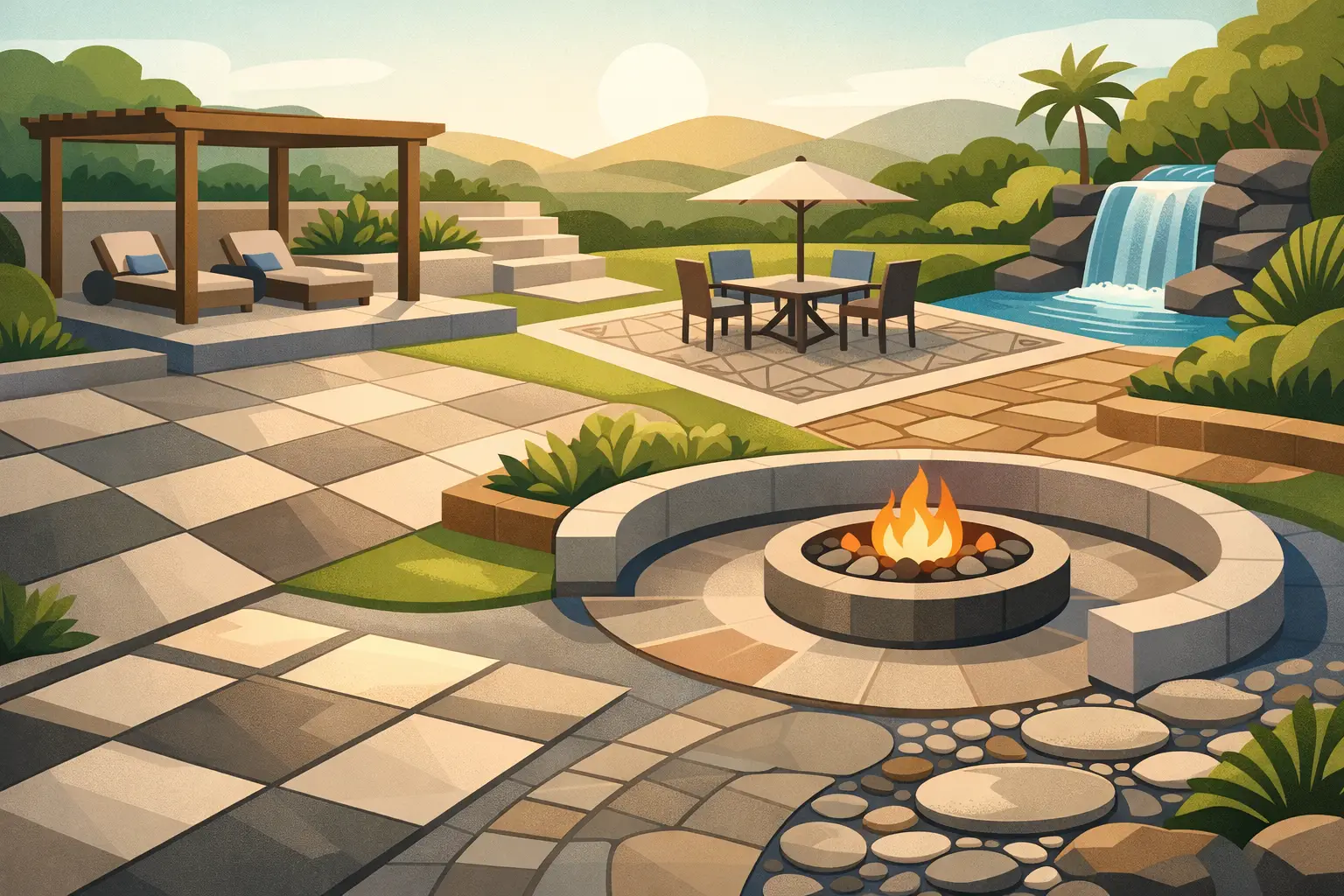
A plain backyard slab can do the job, but in Florida, outdoor space has to work harder. It needs to handle heat, rain, salt air, heavy foot traffic, and still look polished year after year. That is why decorative concrete patio ideas appeal to so many homeowners and property managers. When concrete is designed and installed correctly, it can deliver the clean appearance people want with the durability coastal properties demand.
For homes across the Treasure Coast, the best patio design is not just about pattern or color. It is about choosing a finish that fits the way the space is used, how much sun it gets, how exposed it is to storms, and how much upkeep the owner wants to take on. Decorative concrete gives you a lot of flexibility, but some options perform better than others in a coastal setting.
Decorative concrete patio ideas that fit Florida living
The strongest patio designs usually balance appearance with practicality. A beautiful finish that gets too slick in rain or fades too fast under sun is not much of an upgrade. The following decorative concrete patio ideas are worth considering if you want a surface that looks custom but still holds up under real outdoor conditions.
1. Stamped concrete that mimics stone or pavers
Stamped concrete remains one of the most popular options because it gives you the look of natural stone, brick, slate, or even wood planks without the same installation complexity. It can create a higher-end appearance and work well with pool areas, lanais, pergolas, and covered patios.
The trade-off is that stamped surfaces need careful finishing. If the texture is too shallow, the design can look flat. If the sealer is overapplied, the patio may become slick when wet. In Florida, that matters. Proper texture, drainage, and the right sealant make a major difference in both performance and safety.
2. Broom-finished concrete with a tinted color wash
Not every patio needs an ornate pattern. For many homes, a broom finish with integral color or a light stain creates a cleaner, more understated look. This option is especially practical for larger patios where you want visual warmth without a busy surface.
A broom finish also provides traction, which is useful during summer rain and around outdoor kitchens or pool-adjacent seating areas. It may not have the visual drama of stamped concrete, but it is often easier to maintain and can still feel upgraded when paired with the right border or color tone.
3. Decorative scoring for a custom grid or tile effect
Scored concrete is a smart choice for property owners who want definition without the cost of individual pavers. Cuts can be laid out in squares, rectangles, or more contemporary linear patterns to create a tile-like appearance.
This approach works well on modern homes and commercial spaces because it looks intentional and clean. It also allows more control over the visual scale of the patio. A small courtyard may benefit from tighter scoring, while a wider outdoor entertaining area can handle larger sections. The finish itself can stay simple while the pattern adds interest.
4. A contrasting border around the patio edge
One of the easiest ways to elevate decorative concrete is by adding a border in a different color, texture, or stamp pattern. A patio with a clean center field and a darker perimeter often looks more finished than a single treatment across the entire slab.
Borders can also help define transitions between covered and open sections of the patio. If your outdoor area connects to a sunroom, screen enclosure, or walkway, this detail can make the space feel better planned as a whole. It is a subtle upgrade, but it has a strong visual impact.
5. Textured overlays for aging concrete
If the existing slab is structurally sound but looks worn, stained, or dated, a decorative overlay may be worth considering. Overlays are applied over the surface to refresh the look with new texture, color, and pattern.
This can be a good solution when you want a facelift without a full demolition. The key question is condition. If the base concrete has major cracking, settlement, or drainage problems, covering it will not solve the real issue. A professional inspection matters here because overlays perform best when the slab underneath is stable.
6. Exposed aggregate for slip resistance and durability
Exposed aggregate reveals the stone within the concrete and creates a naturally textured finish. It is often chosen for driveways, but it can also work well for patios where traction is a priority.
This finish tends to be durable and less likely to show dirt than smooth decorative surfaces. It does have a more casual look, so it may not fit every architectural style. For coastal homes that prioritize long-term function and lower maintenance, though, it is a practical option with lasting value.
7. Wood-look concrete planks
Wood-look concrete gives you the character of a deck without many of the maintenance issues that come with wood in humid, storm-prone climates. It can be especially attractive for homeowners who like a coastal or transitional design but want to avoid ongoing concerns about rot, warping, or insect damage.
The finish has to be done well to look convincing. Good color variation and realistic grain texture are essential. When installed professionally, it can soften the look of a patio while still delivering the resilience of concrete.
8. Cool-toned colors that reduce heat absorption
In Florida, patio comfort is not only about appearance. Surface temperature matters. Dark finishes may look rich, but they can become uncomfortable under direct sun. Lighter shades such as sand, ivory, light gray, and soft taupe often make more sense for open patios.
This is one of those cases where design and function should be considered together. A color that complements the home is important, but the patio still needs to be usable in the middle of summer. For uncovered areas, heat-reflective tones can improve comfort without giving up style.
9. Decorative concrete paired with outdoor structures
Some of the best patio results come from designing the slab and the overhead structure at the same time. A pergola, louvered roof system, awning, or screen enclosure changes how the patio is used, so the concrete finish should support that purpose.
For example, a covered entertaining area may benefit from a more decorative stamped surface since it is protected from full weather exposure. An open grilling area may be better with a simpler, slip-resistant texture. When the patio is planned as part of the larger outdoor living space, the result is usually more functional and more cohesive.
How to choose among decorative concrete patio ideas
The right choice depends on more than taste. You need to think about sun exposure, drainage, foot traffic, maintenance expectations, and the age of the existing slab if this is a renovation.
If the patio is near a pool or frequently gets wet, traction should carry more weight in the decision. If the goal is curb appeal for resale or rental value, a stamped or bordered finish may offer stronger visual return. If you manage a commercial property or multi-unit site, long-term durability and easier maintenance may matter more than decorative detail.
Budget also matters, but it should be evaluated correctly. The lowest initial price is not always the best value if the finish needs frequent repair or replacement. Quality concrete work depends heavily on preparation, reinforcement, grading, finishing technique, and sealing. In coastal environments, shortcuts tend to show up faster.
Why installation quality matters as much as the design
Decorative concrete can look excellent in photos and disappoint in real life if the installation is rushed. Uneven coloring, poor drainage, weak edges, premature cracking, and slippery sealers are common problems when the work is not handled by skilled professionals.
That is especially true in Florida, where weather exposure is constant and intense. A patio needs to shed water properly, resist wear, and maintain its appearance through heat and storms. Good installation is what turns a decorative finish into a lasting improvement instead of a short-term cosmetic fix.
For homeowners looking at a larger outdoor upgrade, it often makes sense to work with an experienced contractor who understands how concrete integrates with patio covers, enclosures, pavers, and other exterior improvements. Companies such as Jensen Beach Aluminum & Windows see that bigger picture, which helps property owners plan spaces that are not only attractive but also durable and practical for coastal living.
The best patio is not always the most elaborate one. It is the one that fits your home, holds up to the climate, and gives you an outdoor space you will actually use.