


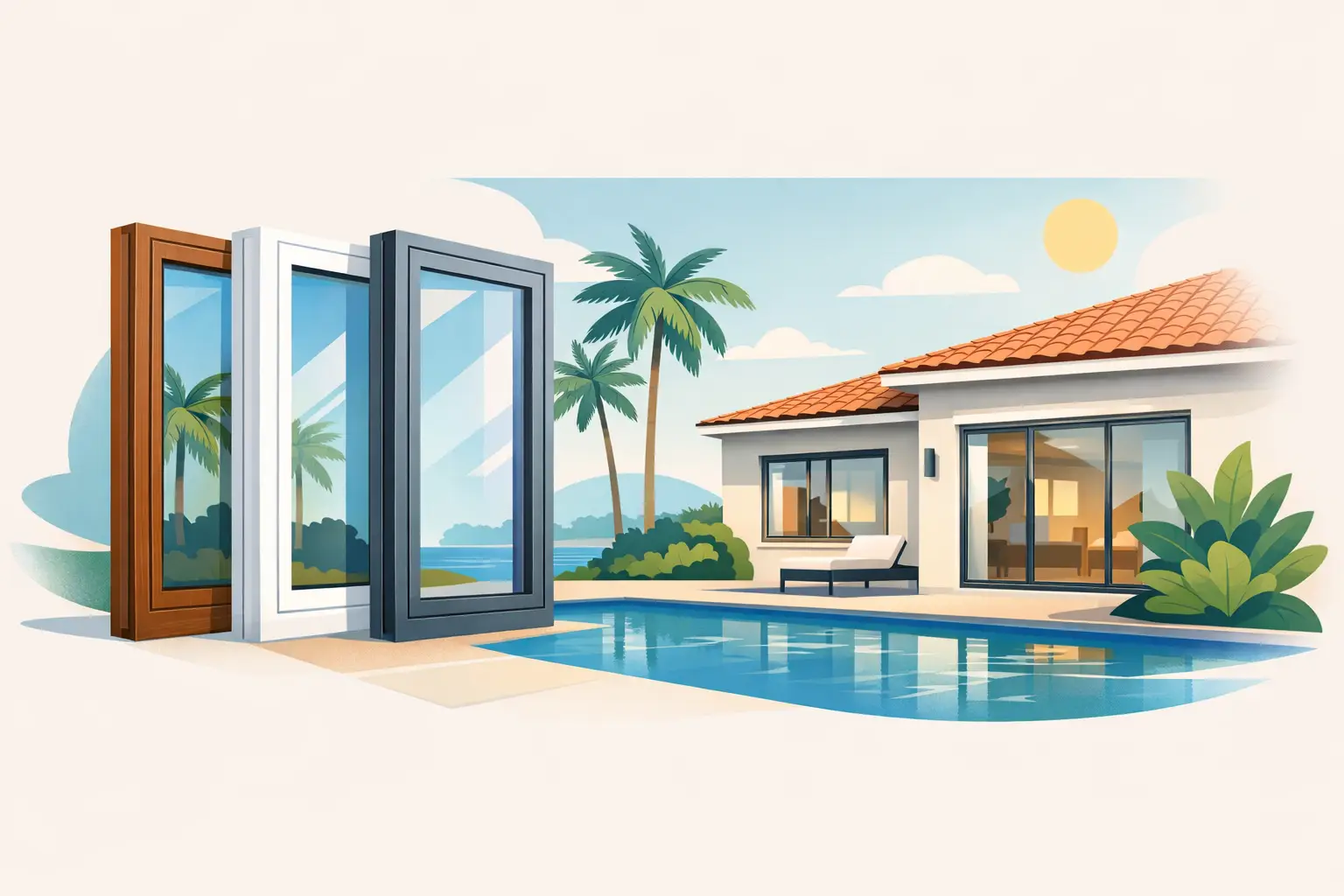
If your windows look fine on a calm day but leave you worried every time a storm track shifts toward the coast, the frame material deserves a closer look. Choosing the best window frame materials is not just about appearance. In Florida, it affects hurricane readiness, salt-air durability, energy performance, maintenance needs, and how long your investment actually holds up.
For homeowners and property managers on the Treasure Coast, that choice usually comes down to a few proven options: aluminum, vinyl, wood, and composite or fiberglass-style frames. Each has strengths. Each has trade-offs. The right answer depends on your property, your budget, your exposure to wind and moisture, and whether you want the lowest maintenance possible or a more custom architectural look.
What makes the best window frame materials in Florida?
A frame that performs well in another state may not be the right fit here. Florida properties deal with intense sun, humidity, heavy rain, airborne salt near the coast, and the possibility of severe storms. That means the best window frame materials need to do more than support the glass.
They need to resist corrosion, hold up under pressure, and stay stable through years of heat and moisture. They should also work well with impact-rated glass and proper installation systems. A high-quality frame can still underperform if it is not engineered and installed for local code requirements, but the material itself sets the foundation for long-term performance.
Energy efficiency matters too, but it should be viewed as one part of the equation. In storm-prone areas, durability and structural strength often carry just as much weight as insulation values.
Aluminum window frames
Aluminum remains one of the most practical choices for coastal homes and commercial properties. It is strong, lightweight, and well suited for large openings where structural performance matters. That is one reason aluminum has stayed popular in Florida for decades.
Its biggest advantage is strength. Aluminum frames can support expansive glass areas with slimmer profiles, which gives properties a clean look and can improve views and natural light. For homes facing high wind loads or commercial buildings that need durable, long-lasting windows, that strength matters.
Modern aluminum systems also offer better finishes and better performance than older generations. Premium products are built to handle demanding environments, and when paired with impact-resistant glass and skilled installation, they can be an excellent fit for hurricane-prone regions.
The trade-off is insulation. Aluminum conducts heat more readily than other materials, so it is not always the top performer if your only goal is maximizing thermal efficiency. That said, many Florida property owners still choose it because structural reliability, longevity, and low upkeep are priorities. In coastal conditions, a well-made aluminum frame often delivers dependable value over time.
Vinyl window frames
Vinyl is a strong contender for homeowners who want solid energy performance and lower maintenance at a competitive price point. It does not need painting, it resists moisture, and it generally offers better thermal performance than standard aluminum.
For many residential replacement projects, vinyl hits a comfortable middle ground. It is easier on the budget than some premium materials, and it can help reduce heat transfer in a hot climate. That can support indoor comfort and potentially lower cooling demands, especially when combined with quality glass packages.
Still, not all vinyl windows are built the same. In Florida heat, lower-grade vinyl can warp, fade, or lose rigidity over time. That is why product quality matters. Frame design, reinforcement, and manufacturing standards all play a role in how well vinyl performs in real-world conditions.
Vinyl can be an excellent option for many homes, but in larger openings or more demanding structural applications, aluminum may still be the stronger choice. It depends on the size of the window, the location on the property, and the performance requirements.
Wood window frames
Wood has a timeless appearance that many homeowners still appreciate, especially in custom homes or historically styled properties. It offers natural insulation and can bring warmth and character that manufactured materials often try to imitate.
From a performance standpoint, though, wood requires more caution in Florida. Moisture, humidity, sun exposure, and insects can all shorten the life of wood windows if they are not maintained carefully. Paint and sealants need attention. Small maintenance issues can turn into larger repair costs if they are ignored.
That does not mean wood is a poor material. It means wood is usually best for owners who are committed to ongoing upkeep and who place a high value on its appearance. For a coastal or storm-exposed property where low maintenance and durability are top priorities, wood is often harder to justify as the primary frame material.
Composite and fiberglass-style frames
Composite and fiberglass-style frames are often discussed as premium alternatives because they combine strength with good insulation performance. These materials are designed to resist warping, moisture issues, and temperature-related expansion better than some traditional options.
In the right application, they can perform very well. They are often more stable than vinyl and more insulating than aluminum. That makes them appealing for buyers who want a balance of durability and energy efficiency.
The main drawback is cost and availability. These systems can be more expensive, and product selection may be more limited depending on the market and the type of project. For some property owners, the added cost makes sense. For others, a high-quality aluminum or vinyl system delivers better practical value.
Best window frame materials by priority
If your top concern is storm strength and long-term durability, aluminum is often the leading choice. It has the structural qualities many Florida homes and commercial buildings need, especially in exposed areas.
If your top concern is energy efficiency and affordability for a residential project, vinyl deserves serious consideration. It can offer strong performance when you choose a well-built product from a trusted manufacturer.
If appearance is your main priority and you are prepared for ongoing maintenance, wood still has a place. It simply requires more care in this climate.
If you want a more premium blend of insulation and stability and the budget allows for it, composite or fiberglass-style options may be worth reviewing.
That is why the phrase best window frame materials does not lead to one universal answer. The best material is the one that fits your property conditions, design goals, code requirements, and long-term maintenance expectations.
Why installation matters as much as the frame
Even the best frame material can fall short if the installation is rushed or improperly detailed. In Florida, windows have to do real work. They need to be set correctly, anchored correctly, sealed correctly, and integrated with the surrounding structure to perform under wind, rain, and pressure changes.
This is especially important for impact windows and replacement projects in older homes. A strong frame cannot compensate for poor measurements, weak fastening, or improper waterproofing. That is why experienced installation professionals matter just as much as the product selection.
For property owners comparing quotes, this is where the cheapest option can become the most expensive one later. Repairs, leaks, reduced efficiency, and performance issues often start with corners being cut during installation rather than with the frame material itself.
How to choose with confidence
Start with the conditions of the property. Is it directly exposed to salt air? Does it face strong wind loads? Are you replacing a few aging windows or planning a full exterior upgrade? A beachfront home, an inland residential property, and a commercial building can all require different answers.
Then look at the full cost of ownership, not just the purchase price. A lower-priced option that requires more upkeep or has a shorter service life may not be the better value. On the other hand, the most expensive material is not automatically the right one if a more practical solution meets your needs just as well.
Finally, think beyond the frame alone. Glass package, impact rating, hardware quality, and installation standards all influence the finished result. At Jensen Beach Aluminum & Windows, that full-picture approach is what helps property owners make improvements that protect their investment and perform well for years.
A window frame is easy to overlook until a storm, a spike in energy bills, or years of coastal wear make the choice impossible to ignore. When you choose carefully, you are not just buying a material. You are investing in the safety, comfort, and lasting performance of the property you depend on.