


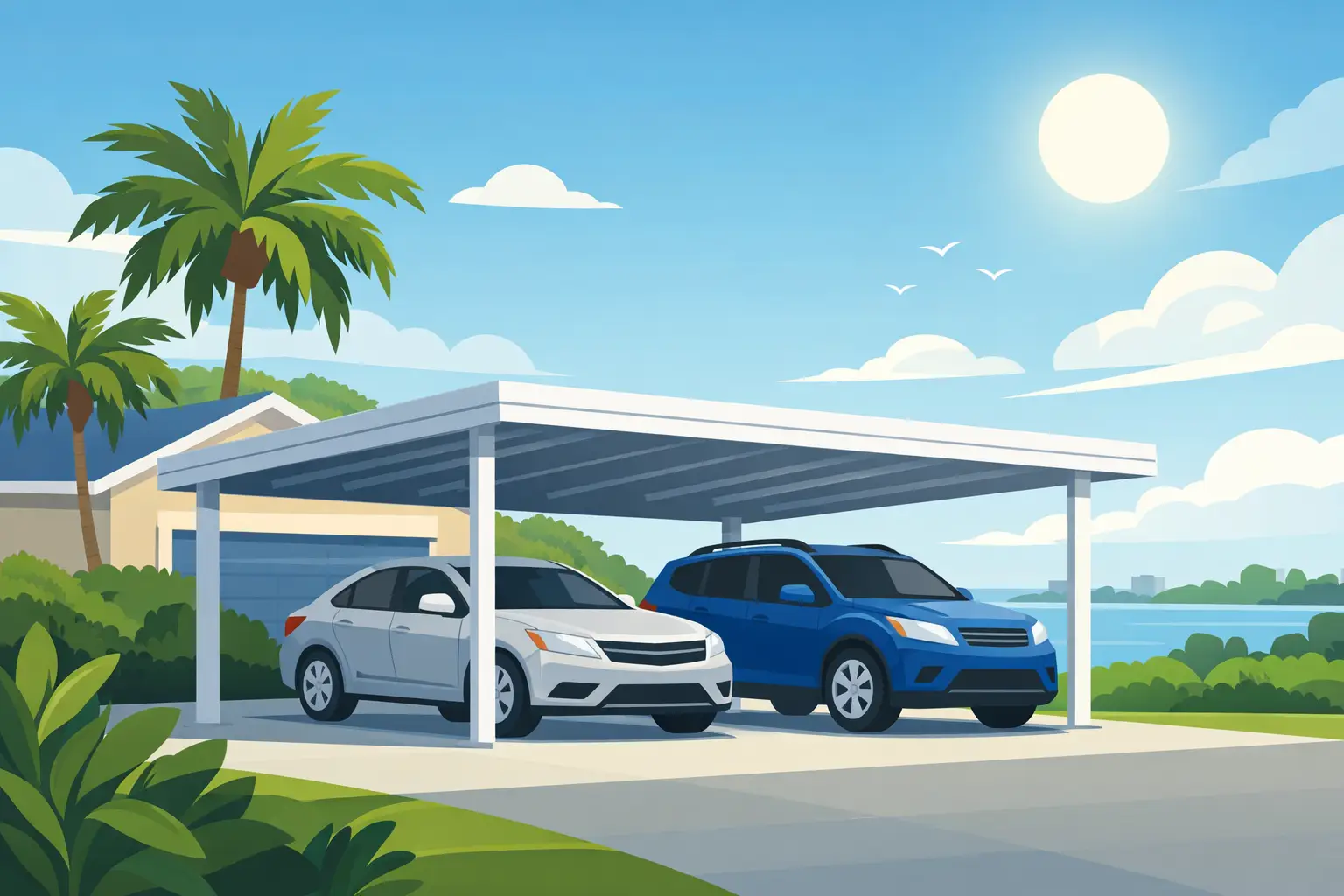
A car left exposed in Florida takes a beating fast. Sun fades paint, salt air speeds corrosion, sudden storms turn a routine afternoon into a scramble, and tree debris can leave dents you did not plan for. That is why this guide to aluminum carports focuses on what property owners in coastal and storm-prone areas actually need to know before they invest.
Aluminum carports are popular for a reason. They add practical covered space without the weight, upkeep, and cost profile that often comes with heavier construction. For homeowners, they protect daily-use vehicles and create a more comfortable arrival at home. For investors and commercial property managers, they can improve function, appearance, and tenant convenience while keeping maintenance manageable.
Why aluminum carports make sense in Florida
Florida is not a forgiving environment for exterior structures. Heat, humidity, wind, rain, and salt all work against exposed materials. A well-built aluminum carport is often a smart fit because aluminum resists rust, holds up well in coastal conditions, and can be engineered for local code requirements.
That does not mean every aluminum carport is the same. Material quality, gauge, finish, anchoring method, roof style, and installation standards all affect long-term performance. The difference between a carport that looks good for years and one that starts showing problems early usually comes down to design details and workmanship.
For many property owners, the biggest advantage is balance. Aluminum gives you durability and a clean finished look without asking for constant maintenance. You are not repainting it every season, and you are not dealing with the same moisture-related issues that can affect other materials over time.
A practical guide to aluminum carports: what to evaluate first
Before choosing colors or rooflines, start with the job the structure needs to do. A single-vehicle carport for a primary residence has different demands than a multi-bay installation for a rental property or commercial building.
Think about vehicle size, turning radius, and how the carport will be used day to day. If you drive a truck, SUV, or lifted vehicle, clearance matters. If you want room to open doors comfortably, width matters just as much as cover area. If the space may also handle golf carts, small boats, storage, or outdoor work, that should be built into the design from the beginning.
Placement matters too. Some properties have ideal side-yard access and open slab space. Others require more careful planning because of drainage, setbacks, utilities, landscaping, or existing structures. In Florida, a good layout is not just about convenience. It also affects water flow, storm exposure, and code compliance.
Attached vs. freestanding carports
One of the first decisions is whether the carport should attach to the building or stand on its own. Each option has advantages, and the right answer depends on the property.
An attached carport can create a more integrated appearance and provide direct covered access to the home or building. That is especially useful during heavy rain and for daily convenience. It can also make efficient use of available space on narrower lots.
A freestanding carport offers more flexibility in placement. It may be the better choice when the best parking area sits away from the structure or when attaching to the building would complicate drainage, roof integration, or permitting. For commercial properties, freestanding layouts often make more sense when serving multiple spaces or creating a dedicated parking zone.
Neither option is automatically better. The site, the intended use, and the local code requirements should drive the decision.
Roof style, drainage, and storm performance
Roof design affects more than appearance. It influences runoff, clearance, wind behavior, and how well the structure fits the surrounding architecture.
Flat pan and low-slope styles are common because they look clean and can work well for many applications. Insulated roof panels may also be worth considering when heat reduction is a priority, especially if the covered area doubles as a workspace or transition area near the home. On some properties, a more pitched profile may improve drainage and better match the existing roofline.
In coastal Florida, water management should never be an afterthought. Gutters, downspouts, and proper slope help direct water away from foundations, paving, and walkways. Wind resistance matters just as much. A professionally designed aluminum carport should be selected and installed with local wind load standards in mind, along with proper fastening and anchoring.
This is where cutting corners becomes expensive. A lower upfront price may look attractive until you factor in weaker components, limited engineering, or installation methods that are not suited to the site.
What impacts cost
Property owners often ask for a simple price, but aluminum carport cost depends on several moving parts. Size is the obvious factor, but it is not the only one. Engineering requirements, foundation conditions, roof style, panel type, attachment details, permit needs, and finish options all influence the final number.
A straightforward single-car installation on a prepared surface will usually cost less than a custom multi-vehicle structure with upgraded panels and complex site work. If concrete needs to be added or improved, that changes the project scope. If the site has limited access, uneven grade, or drainage issues, labor and preparation can increase.
The better question is not just what it costs, but what value it delivers over time. A quality carport can reduce sun and weather exposure, improve curb appeal, support property value, and lower the need for frequent vehicle cleaning or cosmetic repairs. For rental and commercial properties, it can also make the property more attractive to tenants and users.
Permits and code requirements
In Florida, permits matter. A carport is not a casual add-on, especially in areas where wind exposure and local building standards are strict. Structural engineering, attachment methods, footing or slab requirements, and setbacks all need to be addressed correctly.
This is one reason professional installation is so important. A carport should not just fit the space. It should be designed for the location and installed to meet the applicable code. That protects your investment and helps avoid problems during inspections, insurance reviews, or future property transactions.
Experienced local contractors understand that code compliance is part of the product, not an extra. Jensen Beach Aluminum & Windows works with property owners who want that process handled with clarity, precision, and long-term performance in mind.
Design choices that affect appearance and usability
A carport should be functional, but it also becomes part of the property’s exterior. The right finish, trim, and proportions can make it look intentional rather than added on as an afterthought.
Color selection usually works best when it complements existing roofing, trim, and facade materials. Post placement should support vehicle movement without making the structure feel cramped. Height should allow easy clearance while still looking proportionate to the home or building.
There are also practical upgrades worth considering. Integrated gutters improve runoff control. Insulated panels can reduce heat gain. Decorative elements may help the structure blend better with the surrounding architecture. If the area needs to do more than cover cars, layout adjustments can create useful multipurpose space.
Maintenance expectations
One reason aluminum remains a strong choice is that maintenance is relatively low. That said, low maintenance does not mean no maintenance. In coastal environments, occasional cleaning helps remove salt, dirt, and debris that can affect the finish over time.
Regular inspections are also wise after major weather events. Look for loose fasteners, drainage issues, impact damage, or wear at connection points. Most problems are easier and less expensive to address when caught early.
If you want the longest service life, professional installation and quality materials still matter more than any maintenance routine. A poorly built structure can create ongoing issues no matter how often it is cleaned.
When an aluminum carport is the right investment
Not every property needs one, and not every owner will use one enough to justify the project. But when covered parking solves a real exposure problem, aluminum carports are often one of the most practical exterior upgrades available.
They are especially valuable when a garage is not available, when additional covered parking is needed, or when a property owner wants weather protection without taking on a major enclosed addition. They also work well for properties where durability, appearance, and manageable upkeep all need to stay in balance.
The best results come from treating the project like a long-term improvement, not a quick purchase. Site planning, engineering, materials, and installation quality all affect how the carport performs through Florida weather and over years of use.
If you are considering one for your home, rental, or commercial property, focus on fit before price alone. The right structure should protect what matters, match the property, and hold up with confidence when the weather shifts – which in Florida, it always does.