


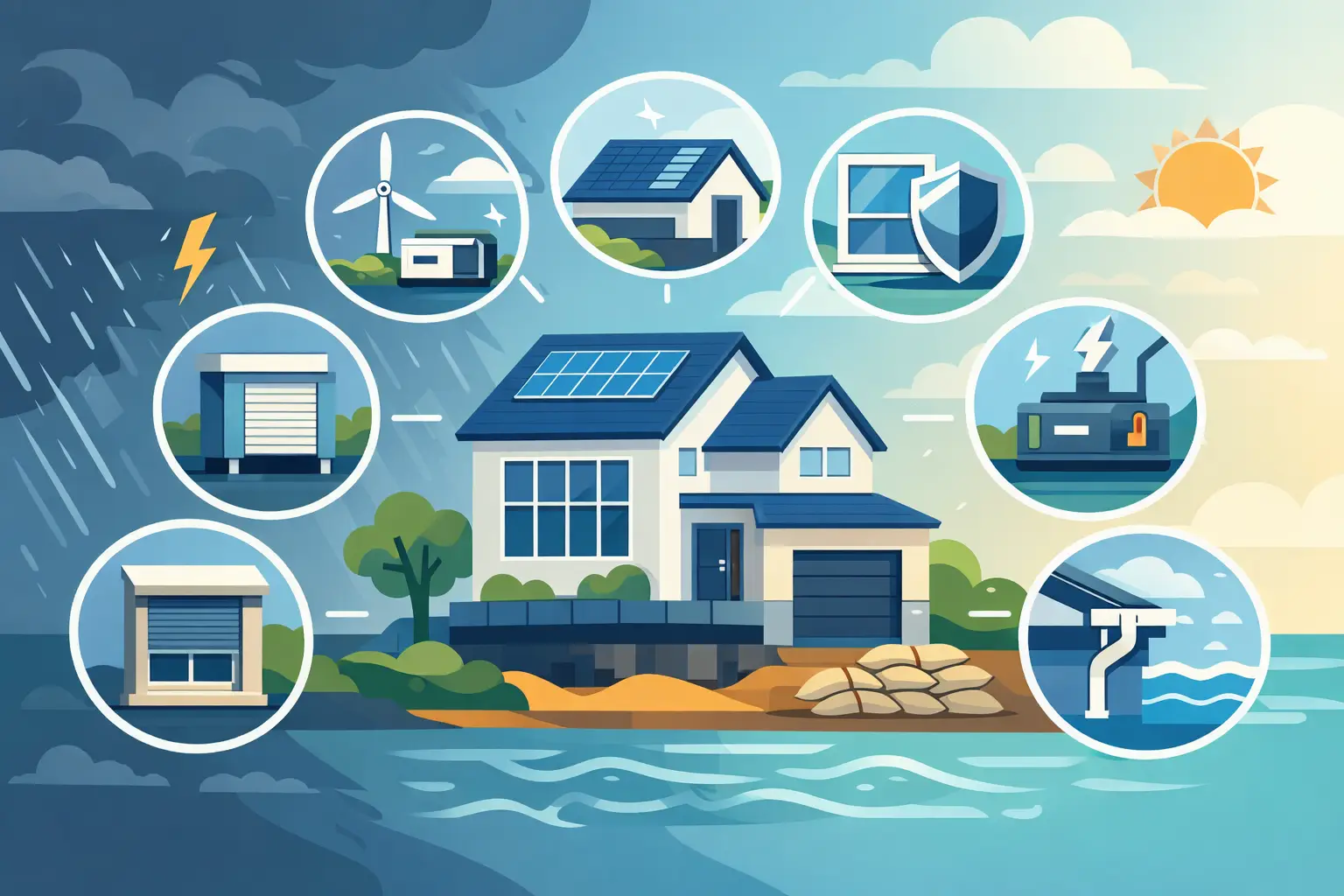
A single failed window or weak enclosure can turn a manageable storm into a major repair bill. That is why storm resilient home upgrades matter so much for Florida property owners. In coastal communities, the right improvements do more than help a building look better. They strengthen the structure, reduce water intrusion, improve comfort, and protect long-term value.
For many homeowners and property managers, the challenge is not deciding whether to upgrade. It is deciding what to do first. Some improvements are essential for life safety and code compliance. Others improve durability, energy performance, and everyday use of the property. The best plan usually balances all three.
What storm resilient home upgrades should do
The strongest upgrades are not just about withstanding wind. They should address the full chain of storm-related risk: wind pressure, flying debris, water entry, corrosion, and the wear that comes from heat, salt air, and year-round exposure.
That is especially true on the Treasure Coast, where a product that performs well in a mild climate may not hold up the same way near the water. Materials, installation methods, fasteners, and product ratings all matter. A well-made product installed poorly can still fail when conditions turn serious.
Start with impact windows and doors
If you are prioritizing storm resilient home upgrades, impact-rated windows and doors are often near the top of the list. They help protect the building envelope, which is critical during a hurricane or severe storm. When openings are compromised, internal pressure can increase and damage can spread fast.
Impact products are also a practical upgrade outside storm season. They can improve energy efficiency, reduce outside noise, and cut down on UV exposure that fades flooring and furnishings. For many property owners, that combination makes the investment easier to justify.
There are trade-offs, of course. Impact windows and doors usually cost more up front than standard replacements. But for many Florida properties, they reduce ongoing risk and can eliminate the need to install and remove temporary panels every time a storm threatens. That convenience matters, especially for seasonal residents, older homeowners, and managers responsible for multiple units.
Add shutters where they make the most sense
Shutters remain one of the most effective storm protection options for many homes and commercial buildings. Accordion shutters are popular because they are permanently attached, quicker to close than loose panels, and well suited to properties that need reliable protection without a complex setup.
This is one of those areas where it depends on the building and the owner. Some people want impact glass everywhere. Others prefer a hybrid approach, using impact windows in key areas and shutters in others to manage cost. That can be a smart strategy when you are upgrading in phases.
The key is not to treat shutters as an afterthought. They need to fit correctly, operate smoothly, and be installed by skilled professionals who understand product approvals and local requirements.
Reinforce screened and outdoor living areas
A lot of storm planning focuses on the main structure, but outdoor enclosures deserve attention too. Pool cages, lanais, screen rooms, pergolas, and patio systems take constant exposure from wind, salt, rain, and sun. If they are aging, loose, or built with undersized components, they can become vulnerable during a storm.
For Florida homes, these areas are not just decorative extras. They are part of how people use the property every day. Upgrading them with stronger framing, better anchoring, and more durable materials can improve both safety and function.
That does not mean every enclosure should be made to withstand the same conditions as the main home. The right standard depends on the product, location, and intended use. But ignoring these spaces can lead to damage that spreads to adjacent walls, doors, screens, and outdoor finishes.
Look closely at entry points for water intrusion
Wind gets most of the attention, but water causes a huge share of post-storm damage. Even a home with good structural protection can suffer costly interior problems if water enters around doors, windows, thresholds, or transitions between materials.
This is why storm resilient home upgrades should include a careful look at seals, drainage, flashing details, and aging components. Replacing an old door without addressing the surrounding condition may leave the same weak point in place. The same goes for window replacement if the installation does not account for proper water management.
In many cases, the best value comes from combining visible upgrades with less visible corrective work. It is not as exciting as a dramatic before-and-after photo, but it matters when the rain starts blowing sideways.
Choose materials built for coastal exposure
Not all exterior products are equal in a salt-air environment. Corrosion resistance, finish quality, frame strength, and hardware durability all affect how long an upgrade will perform. A lower-cost product may look fine at first, then show wear, pitting, sticking, or seal failure far sooner than expected.
That is one reason product selection and installation should go together. Premium materials perform best when they are matched to the property and installed with precision. Fastener choice, anchoring method, and substrate condition can all influence how a system handles repeated storm exposure over time.
For owners comparing quotes, this is where apples-to-apples evaluation matters. A lower bid is not necessarily the better long-term value if the materials or scope leave key vulnerabilities unaddressed.
Do not overlook garage doors and large openings
Large openings create larger risks under storm pressure. If a garage door or wide opening fails, the consequences can be significant. While every property is different, these areas often deserve special attention in a storm hardening plan.
For some homes, reinforcing or replacing a garage door may be one of the most important upgrades available. For commercial properties, storefront systems, service doors, and broad glazed areas should be evaluated with the same care. Bigger openings mean greater demand on the product, the frame, and the installation.
This is another reason a full-property assessment is more useful than making decisions one product at a time. Storm resilience works best when the building is considered as a complete system.
Think beyond protection alone
The best storm resilient home upgrades also improve daily living. New windows can help stabilize indoor temperatures. Better doors can improve security and operation. Upgraded outdoor structures can create more usable shade and comfort. Retractable screens, insulated sunroom components, and properly designed shade systems can make the property more livable while still supporting weather resistance.
That balance matters because most owners are not investing only for the next named storm. They are improving a property they plan to use, manage, or hold for years. A good upgrade should protect the building during severe weather and add value the other 360 days of the year.
How to prioritize upgrades without overspending
The right sequence depends on the age of the property, its location, and the current condition of major components. In general, openings and structural vulnerabilities should come before purely cosmetic work. If windows leak, doors are outdated, shutters are missing, or enclosures are deteriorating, those issues usually deserve attention first.
After that, owners can look at performance upgrades that also improve comfort and appearance. This is where a phased plan can work well. You do not always need to do everything at once, but each project should fit into a larger strategy.
An experienced contractor can help identify where money makes the biggest difference. Sometimes that means replacing failing products. Sometimes it means strengthening what is already there. Sometimes it means combining protection upgrades with exterior improvements so labor and disruption are handled more efficiently.
For Florida property owners, that practical planning is often what turns a stressful project into a smart investment. Companies like Jensen Beach Aluminum & Windows see this every day – the properties that hold up better are usually the ones where product quality, local knowledge, and professional installation came together from the start.
Why installation quality matters as much as the product
Storm ratings and product features matter, but installation is where performance becomes real. A premium window or shutter system cannot deliver its full value if it is measured incorrectly, anchored poorly, or fitted without attention to the surrounding structure.
That is why storm work should never be treated like generic replacement work. Coastal conditions demand precision. Code requirements matter. Existing conditions matter. And when repairs or upgrades are done correctly, the property owner gets more than a product. They get confidence in how that improvement will perform when it is tested.
The smartest next step is not chasing the cheapest fix. It is identifying the weak points in your property, choosing upgrades that fit your goals, and having them installed by professionals who understand Florida building demands. A well-protected home should feel stronger before the forecast turns serious, not after.