


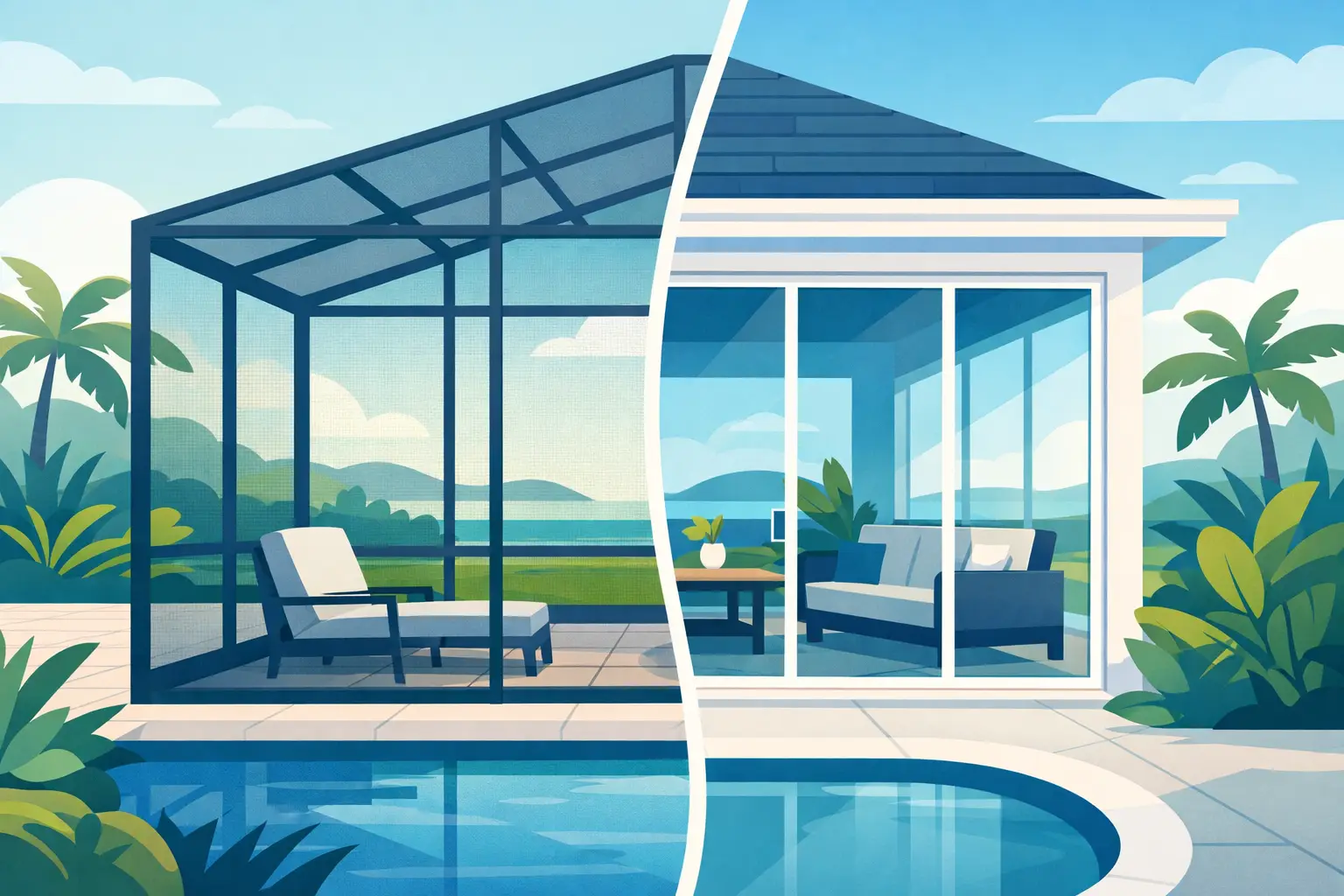
A lanai should make your Florida property more enjoyable, not become another area you avoid because of mosquitoes, windblown rain, heat, or constant cleanup. When homeowners compare a lanai screen or glass enclosure, the right choice usually comes down to how they want to use the space, how exposed the home is to coastal weather, and what level of maintenance they are comfortable with over time.
A screened lanai delivers the open-air Florida lifestyle many homeowners want. A glass enclosure creates a more protected, room-like environment that can be used through more weather conditions. Both can be excellent investments when designed for the home, professionally installed, and built with materials suited to the Treasure Coast climate.
Start With How You Want to Use the Lanai
The best enclosure is not always the one with the most features. It is the one that solves the problems you have with your current outdoor space.
If your priority is enjoying evening breezes, hearing the rain, and keeping insects out while preserving an outdoor feel, a screen enclosure is often the natural fit. It is especially practical around pools, patios, and covered lanais where the existing roof already provides meaningful shade and rain coverage.
If you want to use the lanai as a protected sitting area, casual dining space, hobby room, or extension of the living area, glass may be the better choice. A glass enclosure reduces exposure to wind, rain, pollen, and outdoor debris. It can also make the space more comfortable during cooler winter mornings or wet summer afternoons.
Before choosing, consider when the area sits empty today. Is it because bugs are a nuisance at dusk? Is wind-driven rain soaking furniture? Is pollen coating every surface? The specific issue matters more than a one-size-fits-all recommendation.
Lanai Screen or Glass Enclosure: Key Differences
A screened lanai is generally the more open and lower-cost option. Screen panels allow air to move freely through the space, helping it feel cooler when there is a breeze. They keep out mosquitoes, no-see-ums, leaves, and larger debris while maintaining a direct connection to the outdoors.
That openness also has limits. Screens do not stop rain, humidity, fine dust, or wind. During a strong storm, a screened enclosure is not a replacement for hurricane protection or impact-rated openings. Screen mesh can tear, stretch, or become damaged by flying debris, pets, and routine wear, particularly in homes close to saltwater.
Glass enclosures provide substantially more separation from outdoor conditions. Depending on the design, they may use fixed glass, sliding glass panels, or a combination of glass and screens. This construction keeps the space cleaner, quieter, and more usable when weather is less than ideal.
The trade-off is ventilation. Closed glass panels can hold heat without proper shading, ventilation, or climate control. On a sunny Florida afternoon, a poorly planned glass enclosure can become uncomfortable quickly. Homeowners should think carefully about roof design, window orientation, tinting options, operable panels, and whether the space will connect to the home’s air conditioning.
Airflow and Everyday Comfort
Florida’s climate makes airflow a major decision point. Screen enclosures win when natural ventilation is the goal. They allow warm air to move out and fresh air to move through, which is valuable for pool areas and covered patios that are used primarily in the morning, evening, and cooler months.
Glass gives you more control rather than more airflow. With operable windows or sliding panels, you can open the enclosure on pleasant days and close it when rain, pollen, or wind picks up. This flexibility appeals to homeowners who want an outdoor view without having to check the weather before using the space.
For either option, shade is critical. Roof overhangs, insulated roof panels, awnings, and strategic landscaping can significantly improve comfort. A quality enclosure should be planned as part of the property, not treated as an afterthought attached to the back of the house.
Consider Sun Exposure Before Choosing Glass
A west-facing lanai receives intense late-day sun, while a south-facing area can experience prolonged sun exposure. Glass can magnify heat gain if the system is not designed for those conditions. Professionally selected glazing, solar-control options, and ventilation can help, but they should be considered before construction begins.
For a shaded lanai with a desirable view, glass may provide the comfortable protected room you have been missing. For a sunny pool deck where open air is the point, screens may be the smarter and more economical choice.
Weather Protection and Coastal Conditions
Coastal Florida construction requires more than choosing the look you prefer. Salt air, humidity, wind, heavy rain, and tropical storms place ongoing demands on frames, fasteners, seals, and hardware.
A screened structure should use quality aluminum framing and screen materials appropriate for the intended use. Standard mesh may be sufficient for a lightly used patio, while tighter mesh can help with small insects and specialty screen products can provide added strength or privacy. The right choice depends on airflow needs, visibility, pets, and local insect conditions.
A glass enclosure offers better protection from routine rain and airborne debris, but it must be engineered and installed correctly. Drainage details, seal integrity, structural attachment, and the proper glass system all affect long-term performance. Water intrusion around an enclosure can lead to expensive repairs if installation shortcuts are taken.
Neither enclosure type should be assumed to provide hurricane protection unless it has been specifically designed, permitted, and rated for that purpose. If storm readiness is a priority, discuss impact-rated windows and doors, shutters, or other approved protection measures for the home and the enclosure opening system.
Maintenance, Repairs, and Long-Term Value
Screened lanais require regular but straightforward care. Rinse frames and screens to remove salt, pollen, and dirt, especially in coastal areas. Check for torn mesh, loose spline, corrosion, and damaged fasteners. Rescreening is a normal part of ownership, and addressing small tears early helps keep insects and debris from becoming a bigger problem.
Glass enclosures require more cleaning because every panel shows fingerprints, water spots, and salt residue. Tracks need to stay clear so sliding panels operate properly and drain as intended. Seals, rollers, locks, and hardware should be inspected periodically, particularly after major storms.
Initial cost is usually lower for a screen enclosure, while glass costs more because of the framing, glazing, hardware, and installation requirements. However, value should be measured by useful space, not price alone. If glass allows you to use a lanai daily instead of only during ideal weather, the added investment may make sense. If your family wants a breezy poolside area without shutting out the outdoors, screens may provide better value.
Permitting and Professional Installation Matter
Enclosure projects can involve local building requirements, engineering considerations, drainage planning, and coordination with existing roofs, slabs, doors, and windows. Requirements vary based on the property, municipality, wind zone, and the scope of work.
Experienced professionals begin by evaluating the existing structure and identifying what the enclosure must withstand. They can also help homeowners avoid common mistakes, such as enclosing an area without accounting for water flow, installing incompatible materials, or choosing a system that restricts access and natural light.
At Jensen Beach Aluminum & Windows, skilled professionals help Florida property owners match premium outdoor living solutions to the way they actually live. From initial consultation through installation and after-market service, the goal is a finished space that looks right, performs reliably, and supports the long-term value of the property.
Make the Choice Based on Your Property
Choose a screen enclosure when you want open-air living, reliable insect protection, strong airflow, and a more budget-conscious improvement. Choose glass when you want greater weather protection, a cleaner and quieter space, and more year-round use of the lanai.
For many homes, a hybrid solution is worth considering. Operable glass panels, retractable screens, or a screened enclosure with upgraded shade and wind-management features can address both comfort and flexibility. A site evaluation can reveal which approach will work best with your roofline, sun exposure, view, budget, and storm-preparedness goals.
A well-planned lanai should feel like a natural part of your home from the first day you use it. Take time to define what is keeping you from enjoying the space now, then choose the enclosure that gives you a practical, durable answer for the years ahead.