


A patio on the Treasure Coast does more than hold a table and a few chairs. It has to handle intense sun, seasonal downpours, humid conditions, pool traffic, and the shifting soils common to coastal Florida. When homeowners ask whether to choose pavers or concrete patio construction, the right answer depends on how the space will be used, the condition of the site, and how much long-term maintenance they are prepared to manage.
Both materials can create a clean, durable outdoor area when they are professionally installed. The difference is how each one responds to Florida’s weather, drainage needs, movement in the ground, and everyday wear.
Pavers or Concrete Patio: Start With How You Use It
A patio that supports a screened lanai, outdoor kitchen, or pool deck has different demands than a small courtyard outside a side door. Before choosing a material, consider traffic patterns, furniture weight, drainage paths, sun exposure, and whether the patio may connect to future improvements such as a pergola, screen enclosure, or louvered roof system.
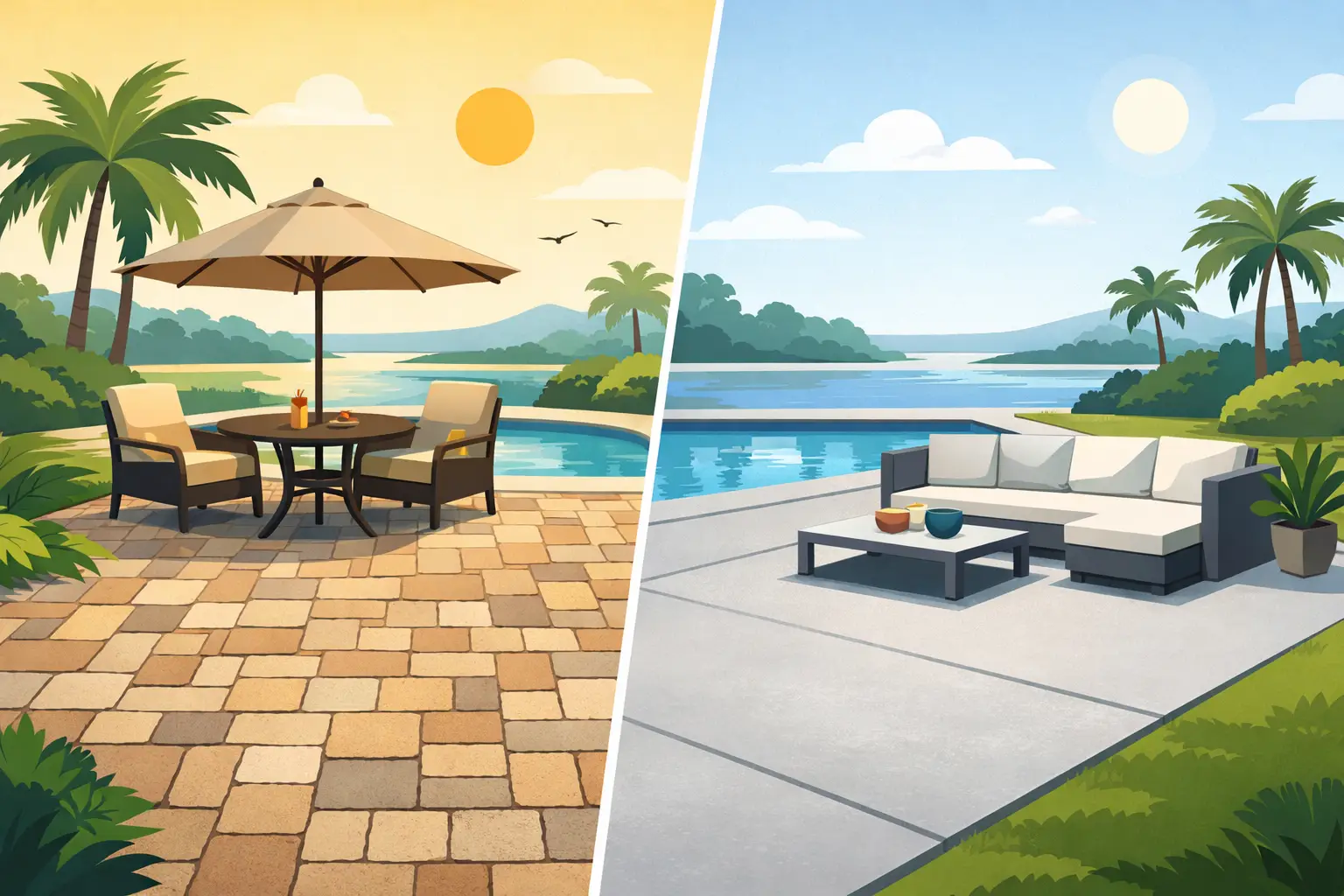
Concrete creates a continuous, solid surface. It can be an efficient choice for broad patio areas, especially when a simple, modern appearance is the goal. It also works well when the existing grade is stable and the project calls for a straightforward layout without many curves or decorative transitions.
Pavers are individual units installed over a prepared base. Their modular design makes them particularly useful for patios with curved edges, varying shapes, decorative borders, or connections to walkways and pool areas. They offer a more textured, tailored appearance and allow greater flexibility in color, pattern, and layout.
The best choice is not always the lower initial price. A patio should be evaluated as part of the entire outdoor living area, including its drainage, adjacent structures, and expected service life.
Initial Cost Versus Long-Term Value
A basic concrete patio often has a lower upfront cost than a paver installation. The material is poured in place, and a simple broom finish can provide a functional surface without the added labor of placing individual pavers. Decorative finishes, stamping, staining, intricate forming, and thicker slabs can narrow that price difference.
Pavers generally require a higher initial investment because the preparation and installation are more detailed. The base must be excavated, graded, compacted, and leveled correctly. Edge restraints and joint sand are also essential to keeping the system stable. Those steps are not extras – they are what help a paver patio perform over time.
Long-term value changes the calculation. If a section of concrete cracks or settles, a repair may remain visible even after patching. Resurfacing is possible in some situations, but it is not a cure for every underlying issue. With pavers, individual pieces can often be lifted, the base corrected, and the same or similar pavers reinstalled. That repairability can be a meaningful advantage for Florida properties where drainage and soil movement deserve close attention.
Florida Rainfall Makes Drainage a Major Decision
Water management should be part of the design from the first site visit. A patio needs the proper slope to guide water away from the home, enclosure footings, doors, and other vulnerable areas. Standing water can create slip hazards, encourage staining, and add stress where it does not belong.
Concrete is typically installed with a planned slope so water runs across the surface toward an approved drainage area. This can work very well when grading is accurate and the surrounding landscape supports the runoff plan. Because concrete is largely impermeable, all surface water must travel somewhere.
Traditional paver patios have joints between units that can allow some water to move through the surface. Permeable paver systems are designed more specifically for drainage, directing water through wider joints and a prepared aggregate base. They are not right for every property, but they can be worth discussing where runoff is a persistent concern.
Neither material automatically solves a drainage problem. A beautiful patio installed over poor grading can still send water toward the house. Skilled professionals assess elevations, downspout discharge, nearby landscaping, and the condition of existing slabs or decks before recommending a solution.
Cracking, Settling, and Repairs
Florida’s heat and moisture create expansion and contraction cycles, while sandy or poorly compacted soils can contribute to movement below a patio. Concrete is strong, but it is not immune to cracking. Proper control joints help manage where cracks are likely to occur, and reinforcement can add strength, but small cracks are still common over the life of a slab.
A hairline crack may be primarily cosmetic. Wider cracks, uneven sections, or separation near the home can signal a more significant issue with the base, drainage, or surrounding soil. These conditions should be evaluated rather than simply covered with a coating.
Pavers do not eliminate settlement, either. If the base was not properly prepared or water washes material away, pavers can shift, dip, or become uneven. The advantage is that localized repairs are usually more practical. The affected area can be removed, corrected, and reset without replacing the entire patio.
For homeowners who want a surface that can be adapted or repaired in sections, pavers often provide peace of mind. For those who prefer a simple, uninterrupted surface and have a stable, well-drained site, concrete can be an excellent fit.
Heat, Slip Resistance, and Everyday Comfort
Any patio surface can become hot under direct Florida sun. Darker colors usually absorb more heat than lighter colors, whether the material is concrete or pavers. Selecting a lighter tone, adding shade through a covered structure, and planning furniture placement can make a major difference in how often the space is used during the warmer months.
Concrete can be finished in several ways. A broom finish provides traction and is common around outdoor living areas. Smooth concrete may look refined, but it can become slippery when wet and is generally a poor choice for poolside conditions unless a suitable textured finish is used.
Pavers naturally have joints and surface texture that can improve traction. Some styles are better suited to pool decks and wet locations than others, so material selection matters. A polished appearance should never take priority over a surface that feels safe underfoot after a summer rain or a day in the pool.
Appearance and Design Flexibility
Concrete offers a clean, continuous look that works especially well with contemporary homes, covered patios, and minimalist outdoor spaces. It can be colored, stamped, or finished to create more visual interest, though decorative concrete requires careful installation and ongoing attention to preserve its appearance.
Pavers offer more design flexibility. Homeowners can choose from patterns such as running bond, herringbone, or basketweave, then add borders that define a dining area, fire feature, or walkway. Pavers can also blend naturally with existing landscaping, pool coping, or a lanai enclosure.
For a coastal property, appearance should be paired with practical details. A surface that complements the home while supporting easy drainage, safe walking, and future upgrades will deliver more lasting satisfaction than a design selected only from a sample board.
Maintenance Expectations for Each Surface
Concrete maintenance is generally simple: routine sweeping, occasional washing, and attention to stains before they set. Depending on the finish and exposure, sealing may help protect the surface and maintain its color. Sealer needs periodic reapplication, particularly in high-sun or high-traffic areas.
Pavers also benefit from routine cleaning and may need joint sand replenished over time. Weeds can appear in joints when debris and organic material accumulate, although proper installation and regular care reduce that issue. Sealing is optional for many paver patios, but it can enhance color and help with stain resistance when applied correctly.
Avoid assuming that either option is maintenance-free. The more realistic goal is choosing a surface with maintenance requirements that match your property, lifestyle, and expectations.
When Concrete Is the Better Choice
Concrete is often the practical choice when the project needs a large, uncomplicated surface, the existing site is stable, and budget is a primary consideration. It can provide a durable foundation for a covered patio or outdoor seating area with a clean, cohesive look.
It may also be a good choice when the patio needs to align with an existing concrete slab or when a homeowner prefers fewer joints and less visual pattern. The key is proper site preparation, reinforcement where appropriate, correctly placed control joints, and a drainage plan that protects the home.
When Pavers Are Worth the Investment
Pavers are often the stronger choice for homeowners who want visual detail, easier localized repairs, and flexibility around curves, steps, planting beds, and pool features. They can be especially appealing where settlement is a concern or where the patio is likely to be expanded or modified later.
Their performance depends heavily on what lies beneath them. A premium paver installed over an inadequate base will not deliver premium results. Professional excavation, compaction, edge restraint, and grading are essential to a stable patio that looks as good in a few years as it does on installation day.
A well-planned patio should make your property more comfortable without creating new drainage or maintenance problems. Jensen Beach Aluminum & Windows can help homeowners evaluate their outdoor area, material options, and installation requirements before work begins. Start with the site itself, then choose the surface that gives your family the safest, most durable place to enjoy Florida outdoors.