


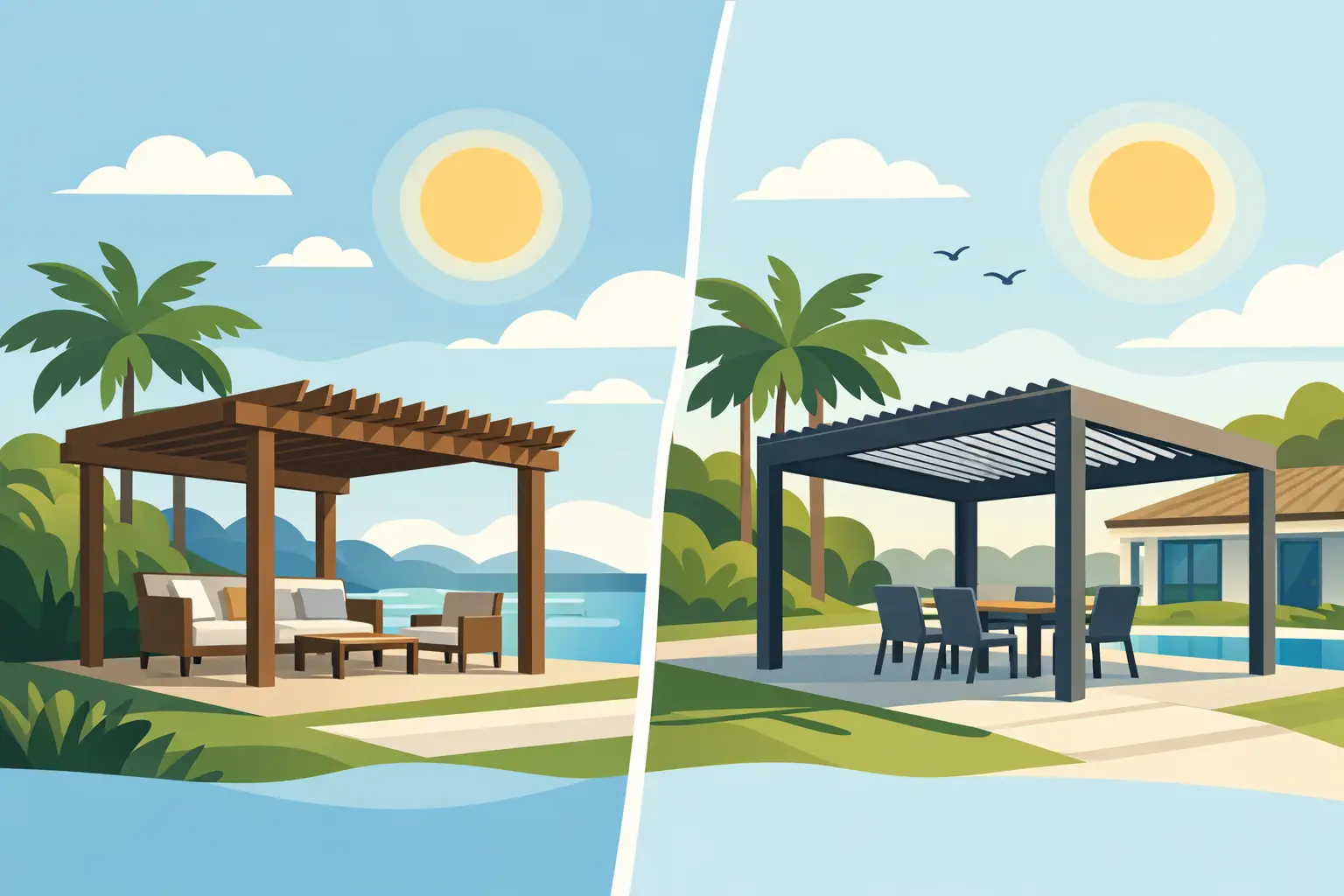
A patio can look finished and still be difficult to use for much of the year. Florida sun can make an open deck uncomfortable by midday, while a quick afternoon shower can end an outdoor meal just as it starts. When comparing a pergola vs louvered roof, the real question is not which structure looks better. It is which one gives your home the level of shade, weather control, and long-term performance you expect.
Both options can improve curb appeal, define an outdoor gathering area, and add value to a Treasure Coast property. However, they solve different problems. A traditional pergola is an attractive shade structure with an open or partially open roof. A louvered roof system uses adjustable aluminum blades that can open for sun and airflow or close to create a covered outdoor space.
Pergola vs Louvered Roof: The Core Difference
A pergola is often the simpler choice. Its overhead beams and cross members create architectural interest while allowing light and air to pass through. Depending on the design, homeowners may add a canopy, fabric shade, climbing plants, or a fixed roof panel for additional coverage. It works well when the goal is to soften direct sunlight without making the patio feel enclosed.
A louvered roof is built for greater control. Its motorized or manually operated louvers rotate to change the amount of sun entering the space. Open the louvers when you want a breeze and natural light. Close them when the sun is intense or rain moves in. Quality systems are designed to channel water through integrated gutters and downspouts when the roof is closed.
That distinction matters in coastal Florida. A pergola provides filtered shade. A properly designed louvered roof can provide shade, ventilation, and rain management in one permanent aluminum structure.
When a Pergola Is the Right Choice
A pergola is a strong option for homeowners who enjoy an open-air setting and need a visually appealing way to create partial shade. It can define a seating area beside a pool, create a transition from the home to the yard, or make a paver patio feel more intentional without changing the open character of the space.
Pergolas are also often more budget-friendly than automated louvered roof systems. The final cost still depends on the size, material, foundation requirements, attachments, finishes, and local permitting, but the design is generally less complex. For a property owner who mainly uses the patio in the morning, late afternoon, or cooler months, a pergola may offer the right balance of comfort and investment.
What to consider before choosing a pergola
The main trade-off is weather protection. An open pergola does not keep out rain, and the amount of shade changes throughout the day as the sun moves. Adding a fabric cover can increase shade, but fabric may need more frequent cleaning and replacement in Florida’s humidity, salt air, and strong UV exposure.
If you want a pergola near a pool or landscape area, material selection is especially important. Aluminum pergolas are commonly preferred for coastal properties because they resist rot, insect damage, and the ongoing maintenance associated with wood. A professionally installed aluminum structure can provide a clean finish while holding up better against Florida’s demanding climate.
When a Louvered Roof Is Worth the Investment
A louvered roof is often the better fit when the patio is meant to function as a true extension of the home. Homeowners use these systems to cover outdoor kitchens, dining spaces, lounge areas, and commercial patios where changing weather should not dictate whether the area can be used.
The ability to adjust the roof is the primary benefit. During a clear morning, louvers can remain open to allow sunlight and heat to escape. As the afternoon sun shifts, the blades can be positioned for more shade. If rain begins, closing the louvers provides a covered space without needing to bring furniture indoors or cancel plans.
For Florida homeowners, this flexibility can turn an underused patio into a more dependable living area. It is particularly valuable on west-facing patios that receive harsh afternoon sun, or in yards with limited natural shade.
Rain control is not the same as storm protection
A closed louvered roof is designed to manage ordinary rain, but it should never be assumed to be a hurricane shelter or a substitute for proper storm protection. Wind ratings, engineering requirements, attachment methods, and permitting rules vary by product, location, and installation conditions.
This is why professional planning matters. A structure attached to the home must be evaluated for the existing wall, roofline, drainage path, and load requirements. Freestanding systems also require proper footings and anchoring. In coastal communities, a skilled installation team should account for wind exposure, salt air, and applicable building codes before work begins.
Comparing Shade, Comfort, and Maintenance
For pure visual appeal, either option can complement a Florida home. The better choice depends on how you plan to use the space. A pergola creates dappled, partial shade and a lighter architectural look. A louvered roof delivers more complete shade when closed and lets you adjust conditions throughout the day.
Ventilation is another important point. An open pergola naturally allows heat to rise and breezes to pass through, but it cannot be closed when rain arrives. Louvered roof systems offer more control, although the louvers need to be opened periodically to release heat and maximize airflow. This makes them useful in outdoor areas that need to feel comfortable across more seasons and more hours of the day.
Maintenance requirements are usually manageable with aluminum structures, but no exterior product is maintenance-free in Florida. Both pergolas and louvered systems benefit from regular rinsing to remove salt, pollen, leaves, and debris. Louvered roofs require additional attention to louvers, gutters, drainage channels, and motorized components. Keeping these areas clear helps the system operate as intended during heavy rain.
Budget and Long-Term Value
A pergola typically has a lower starting cost because it uses a simpler fixed structure. It can be an excellent investment when your priority is style, partial shade, and an open outdoor atmosphere. It may also be the practical choice for a secondary patio, garden sitting area, or a property where full rain coverage is not necessary.
A louvered roof has a higher upfront cost, particularly when automation, integrated lighting, fans, privacy walls, retractable screens, or upgraded finishes are included. Yet it can deliver more usable square footage from the outdoor area. For homeowners who frequently entertain, cook outside, or want a covered patio without building a fully enclosed room, that additional function can justify the investment.
Property managers should consider the same question at a larger scale. A louvered roof can improve the usability of community gathering spaces, restaurant patios, pool decks, and clubhouse areas. A pergola may be better suited to decorative walkways, garden zones, or areas where a lighter-cost shade feature is the goal.
Design Details That Affect the Final Result
The structure itself is only part of the project. Placement, orientation, drainage, lighting, and surrounding features will determine whether the finished space feels comfortable and intentional. A south- or west-facing patio may benefit from the adjustable shade of a louvered roof, while a naturally shaded backyard may need only the architectural definition of a pergola.
Think about what sits below the roof as well. Outdoor kitchens need reliable protection from rain. Poolside lounges may benefit from adjustable sun exposure. Dining areas often become more useful with integrated lighting and a ceiling fan. Retractable screens can add another layer of comfort by helping manage insects, glare, and wind-driven rain without permanently closing off the view.
Color and finish should also complement the home’s windows, doors, trim, pavers, and pool enclosure. A custom structure should look like a planned part of the property, not an afterthought attached to the back wall.
Choosing the Best Option for Your Property
Choose a pergola if you want an attractive open-air feature, appreciate filtered sun, and do not need dependable rain coverage. It is a practical way to create a defined outdoor destination while preserving the feel of an uncovered patio.
Choose a louvered roof if your priority is adjustable shade, rain control, and more consistent use of your outdoor space. It is often the stronger long-term choice for patios that serve as an outdoor kitchen, dining room, or daily gathering place.
Before making a decision, have the site evaluated for exposure, drainage, attachment conditions, and local code requirements. Jensen Beach Aluminum & Windows can help property owners plan an outdoor structure around the way they live, the conditions their property faces, and the quality of installation needed for lasting performance. The right roof should make it easier to enjoy your patio when Florida weather changes, not give you another reason to watch it from indoors.