


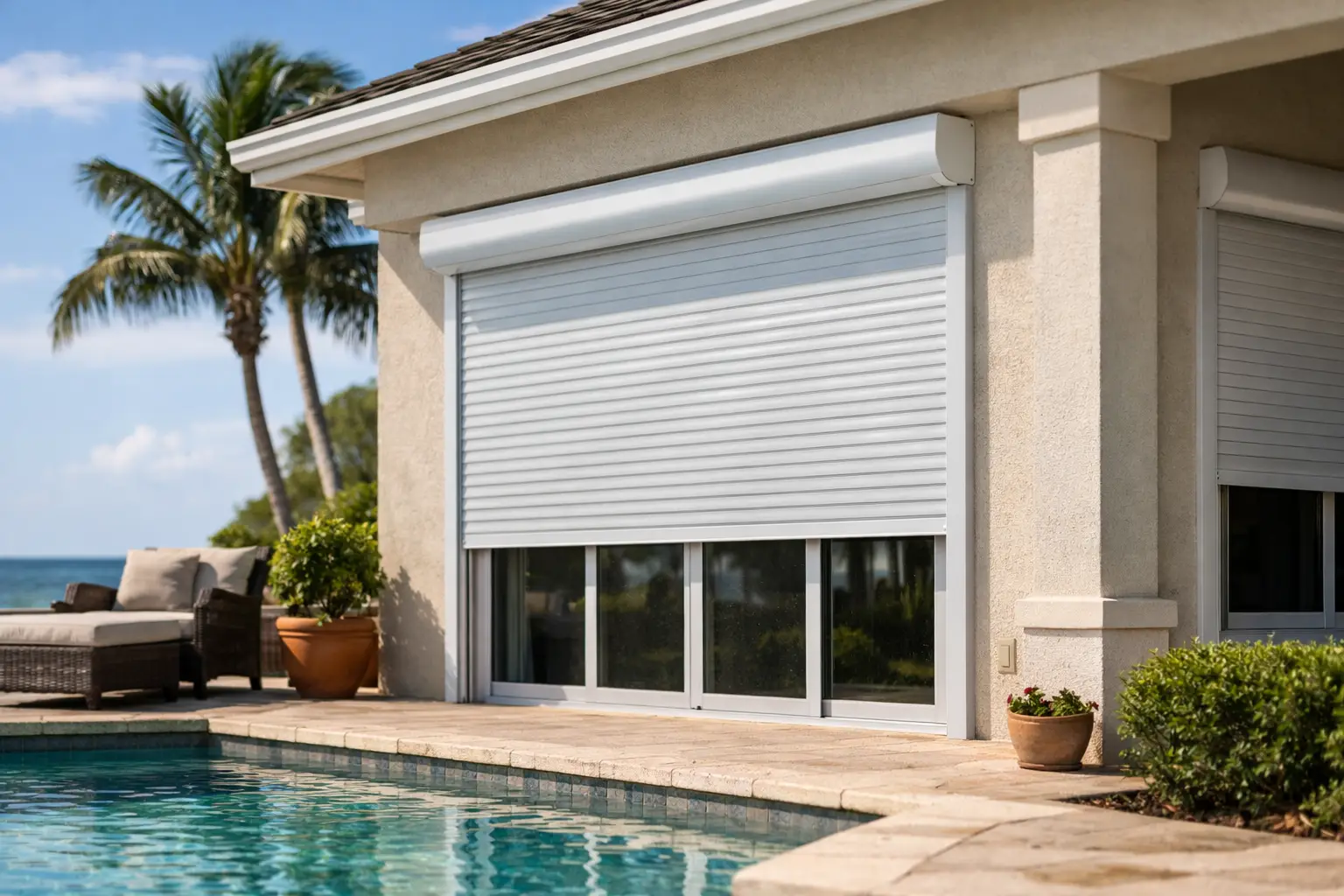
A patio can become the most exposed part of a Florida home in a matter of minutes. Wind-driven rain finds the openings, loose outdoor furniture becomes a concern, and homeowners are left rushing to prepare wide spans of glass. Rolldown shutters give those openings a permanent, ready-to-use layer of protection – without requiring panels to be carried out, positioned, and stored before every storm.
For homeowners and property managers on the Treasure Coast, the value goes beyond hurricane season. A properly selected shutter system can manage glare, reduce sun exposure, add privacy, improve security, and make a lanai, patio, storefront, or outdoor kitchen more comfortable through changing weather. The right system depends on the opening, the property’s wind-load requirements, and how you plan to use the space every day.
What Rolldown Shutters Are Designed to Do
Rolldown shutters are aluminum slats that move vertically along side tracks and roll into a compact housing above the opening when not in use. Depending on the product and configuration, they may be operated by a manual crank, motor, wall switch, remote control, or smart control system.
Unlike temporary storm panels, they remain installed year-round. That matters when a storm track shifts quickly or a property is vacant. Instead of locating hardware and spending hours covering windows or doors, the shutter can be lowered when conditions call for it.
For storm protection, the system must be engineered and installed for the specific opening and applicable building code requirements. Not every shutter is rated for every location, span, or wind zone. The curtain, tracks, mounting method, fasteners, header conditions, and structural substrate all affect performance. This is why a site evaluation is far more valuable than choosing a system based on appearance alone.
Why Florida Properties Choose Rolldown Shutters
Hurricane preparedness is often the first reason people consider rolldown shutters, especially for large glass doors, lanais, balconies, and waterfront-facing openings. When professionally designed for the application, they provide a practical form of impact and wind protection that is available at the push of a button or turn of a crank.
They also solve everyday comfort issues. West-facing patios can become difficult to use during the afternoon because of intense sun and heat. Lowering a shutter can cut glare and create shade while protecting furnishings from harsh UV exposure. On a ground-floor patio or commercial opening, a closed shutter can also add a meaningful layer of privacy and security after hours.
For seasonal residents and investment-property owners, convenience is especially valuable. A motorized system allows a property to be secured promptly before travel, during a weather alert, or when a tenant is not available to install panels. Still, convenience should not be confused with a one-size-fits-all solution. Larger openings may require particular track designs, reinforced components, or separate shutters to meet engineering requirements.
Choosing the Right System for Your Opening
The best choice begins with the purpose of the shutter. A homeowner protecting a bedroom window during hurricanes has different needs than a restaurant enclosing an outdoor dining area or a homeowner shading a poolside lanai.
Hurricane-rated protection
If storm protection is the priority, focus first on code compliance, engineering, and installation details. The shutter should be selected for the opening dimensions, building construction, exposure, and local wind-load criteria. A system may look substantial but still be unsuitable if it is not properly anchored to a capable structure.
Ask whether the proposed shutter is approved for the intended use and whether the contractor will handle measurements, permitting, product documentation, and installation. These details protect both the property and the investment.
Shade, privacy, and outdoor living
For screened enclosures, patios, pergolas, and outdoor kitchens, the goal may be sun management, privacy, light rain protection, or seasonal comfort. Some systems are better suited to frequent daily operation, while others are primarily intended for storm deployment. The right choice balances airflow, visibility, strength, and how often the shutter will be raised and lowered.
A fully closed shutter offers the most enclosure and privacy, but it also limits natural light and ventilation. Homeowners who want sun screening while preserving an open view may be better served by a retractable screen in certain areas. Many Florida properties benefit from combining solutions rather than asking one product to do every job.
Manual or motorized operation
Manual operation can be a dependable, straightforward option for smaller or less frequently used openings. It avoids reliance on a motor and may reduce initial cost. Motorized shutters are typically more convenient for large, high, or multiple openings, particularly when quick storm preparation is a priority.
Motorized systems should be planned with power access, control placement, and emergency operation in mind. During a power outage, the system needs an appropriate backup or manual override strategy where applicable. Discussing this before installation prevents an unpleasant surprise when the shutter is needed most.
Installation Is Where Performance Is Won or Lost
A premium shutter is only as dependable as the structure supporting it and the team installing it. On coastal properties, installers must account for concrete block, stucco finishes, wood framing, existing headers, drainage paths, uneven surfaces, and the condition of the opening itself.
Precision measurements are essential. Tracks must be aligned so the shutter curtain travels smoothly without binding. Mounting points must be properly located and sealed. The housing must be positioned to allow proper operation while maintaining a clean appearance. If the shutter is integrated into an existing patio enclosure or lanai, the installation also needs to complement the surrounding framing and roof system.
Professional installation is particularly important for hurricane-rated applications. Improper fasteners, insufficient embedment, weak substrates, or missed structural conditions can compromise the system when wind pressure is at its highest. A qualified local contractor brings the field experience needed to identify those issues before work begins.
What Affects Rolldown Shutter Cost
Pricing varies because each shutter is made around a specific opening and performance requirement. The size and number of openings are major factors, but they are not the only ones. Wide spans, taller openings, motorization, remote controls, upgraded slat profiles, reinforced tracks, access challenges, and structural preparation can all change the scope.
Permitting and engineering may also be part of the project, particularly when shutters are being installed for code-compliant storm protection. A detailed quote should explain what is included rather than presenting a single number without context. That clarity helps property owners compare proposals based on materials, rating, installation quality, and long-term service – not only the initial price.
The lowest quote may omit crucial work such as electrical coordination, sealing, permit assistance, upgraded anchors, or finishing around the housing. On a coastal property, these are not minor details. They affect appearance, daily reliability, and the system’s ability to perform as intended.
Maintenance for Reliable Operation
Rolldown shutters are designed for durability, but Florida’s salt air, humidity, blowing debris, and frequent use make routine care worthwhile. Keep the tracks free of leaves, sand, insect nests, and accumulated dirt. Rinse exterior components with fresh water as recommended, especially on waterfront or near-coastal homes, and avoid harsh cleaners that can damage finishes.
Operate the shutters periodically rather than leaving them untouched for an entire year. This helps identify unusual noise, uneven movement, remote-control issues, or obstructions while there is time to address them. Before hurricane season, inspect visible fasteners, side tracks, housing, and controls, then schedule service if anything appears loose, damaged, or inconsistent.
Do not force a shutter that is binding or blocked. Continuing to run it can damage the curtain, motor, or track system. Skilled technicians can diagnose alignment, control, motor, and component issues before a small repair becomes a larger replacement expense.
A Smart Addition to a Coastal Property
Rolldown shutters are most valuable when they fit the way a property is actually used. For one homeowner, that means fast protection for a wall of sliding glass doors. For another, it means turning a sunny lanai into a more private, usable space. For a commercial manager, it may mean securing an exterior service window at closing time.
Jensen Beach Aluminum & Windows helps property owners evaluate those real-world needs with professional measurements, premium-quality materials, and experienced installation. The best next step is to look at the opening, the building conditions, and the level of protection or comfort you expect – then choose a shutter system built to deliver it for years to come.