


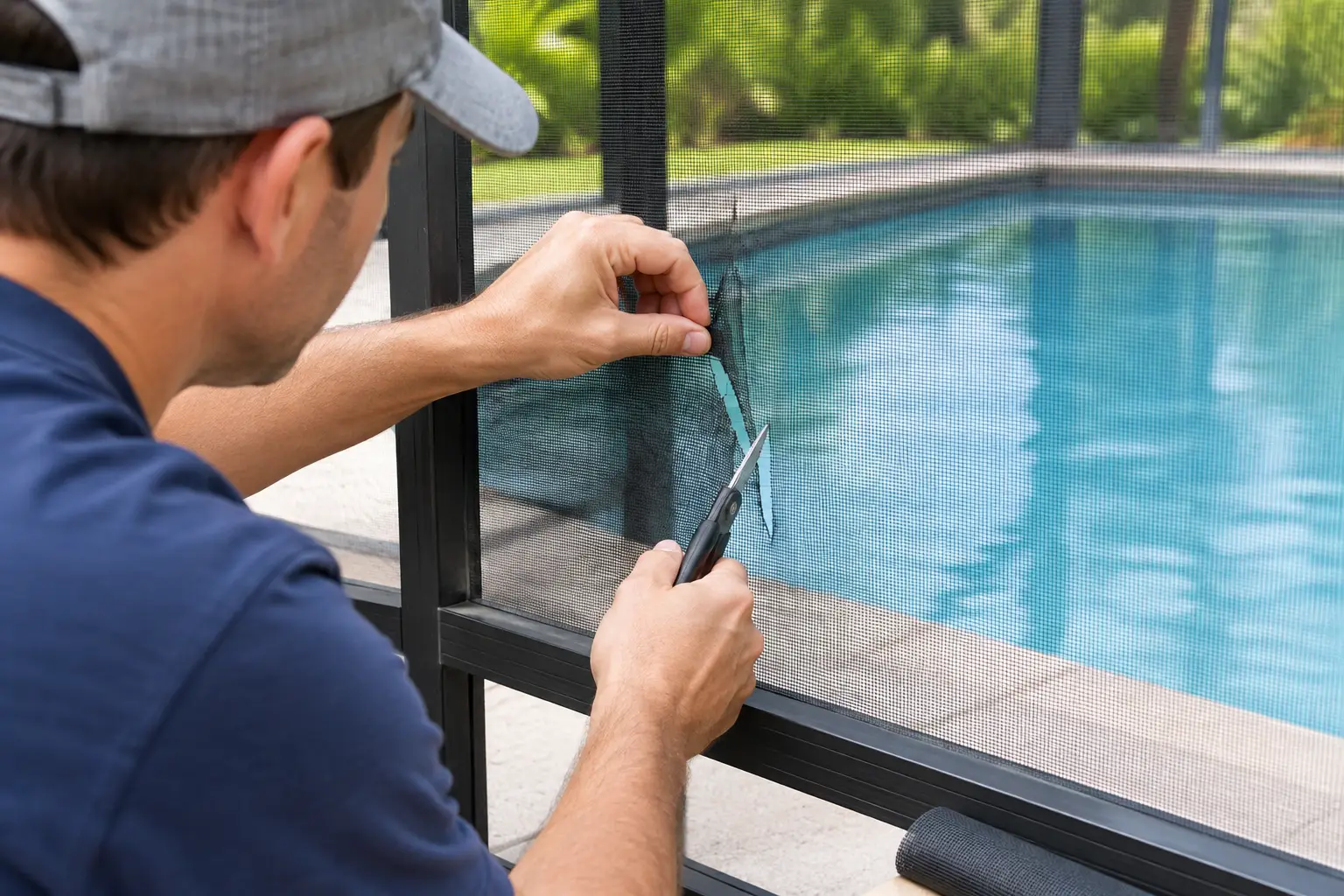
A small tear in a pool screen can become a much bigger nuisance after one windy afternoon. Mosquitoes, no-see-ums, leaves, lizards, and wind-driven debris can find their way through an opening that may have started no larger than a fingertip. Knowing how to repair torn pool screens promptly protects the comfort, appearance, and usefulness of your outdoor living space.
For Florida homeowners, the right repair is not always a patch. The screen material, the location of the damage, the condition of the spline, and the age of the pool cage all matter. A clean, properly tensioned repair should restore the enclosure without creating loose areas that sag, wrinkle, or fail again when the next storm arrives.
Start by Assessing the Tear
Before choosing a repair method, look closely at the damaged panel and the surrounding enclosure. A single clean puncture in an otherwise newer screen may be a reasonable do-it-yourself repair. A long tear along an edge, several failing panels, or screen that feels brittle and faded usually points to a more complete repair.
Pay attention to where the damage begins. Tears close to the aluminum frame are often caused by loose or deteriorated spline, the flexible cord that holds the screen in its channel. Damage in the middle of a panel may result from impact, pet claws, falling branches, pressure washing, or weather exposure. If a panel has pulled away from the frame, replacing only the screen without addressing the spline can lead to another failure quickly.
Walk around the pool cage and inspect every elevation, not just the obvious tear. Florida sun, salt air near the coast, and repeated wind loading tend to age screens at different rates. When one panel has become brittle, others may not be far behind.
When a Small Screen Patch Makes Sense
A patch can be a practical short-term solution for a very small hole, particularly when the surrounding screen remains flexible and secure. It is most useful when you need to keep insects out until a more permanent repair can be scheduled.
Screen repair patches come in adhesive and sew-on styles. Adhesive patches are fast, but their performance depends heavily on a clean, dry surface. They can also be visible, collect dirt around the edges, and peel under prolonged heat and humidity. A sewn patch generally holds better on certain screen types, but it still changes the appearance of the panel.
Use a patch as a temporary measure, not a substitute for replacing a weakened screen panel. If the hole is spreading, sits near the frame, or affects a large section of the mesh, a full panel replacement is the cleaner and more durable choice.
How to Repair Torn Pool Screens by Replacing a Panel
Replacing an individual screen panel requires patience, the correct materials, and safe access. Ground-level panels are more manageable for experienced homeowners. Upper cage walls, roof panels, and large spans should generally be handled by trained professionals with the proper equipment.
For a standard panel replacement, you will need replacement screen mesh, new spline sized for the frame channel, a spline roller, scissors or a utility knife, measuring tools, and a stable work area. Choose screen material that matches the purpose of the enclosure rather than simply selecting the least expensive option.
Begin by removing the old spline from one corner and pulling out the damaged screen. Clean the frame channel thoroughly. Bits of old spline, dirt, and corrosion can prevent the new spline from seating correctly.
Cut the new mesh several inches larger than the opening on all sides. Lay it flat over the frame, keeping the weave straight. Starting at one corner, use the concave end of the spline roller to press the screen gently into the channel, then roll the spline into place. Work across one side and then the opposite side, keeping steady, even tension.
The goal is a smooth panel, not an overstretched one. Pulling the screen too tightly can distort the mesh, place unnecessary stress on the frame, and make future repairs more difficult. Too little tension creates a loose, wavy panel that catches debris and looks unfinished. Once the spline is fully seated, trim the excess mesh carefully along the outside edge of the channel.
If the panel does not lie flat, do not ignore it. Remove and reset the section before trimming. Correcting tension while the material is still oversized is much easier than trying to fix a completed panel.
Choose the Right Screen Material
Not all pool screens perform the same way. Standard fiberglass screen is a common choice for routine insect control and everyday visibility. It is economical and works well for many enclosure panels, but it may not be the best option for homes with pets, frequent storm debris, or a history of tears.
Polyester screen is often selected for greater strength and longer-term resistance to stretching. Pet-resistant screen is a better fit near doors or lower wall sections where claws and traffic are common. Tighter mesh options can reduce tiny biting insects, including no-see-ums, though they may modestly reduce airflow and visibility.
That trade-off matters on the Treasure Coast. A screen that offers more insect protection can make evenings around the pool more enjoyable, while a more open weave may be preferred where maximum breeze and an unobstructed view are the priority. A professional assessment can help match the material to the way you use your outdoor space.
Reasons to Call a Professional Screen Repair Team
There is a clear difference between replacing a small ground-level panel and repairing an enclosure that has sustained storm damage or broad wear. Professional service is often the safer, more cost-effective decision when access is difficult or the condition of the cage is uncertain.
Consider professional repair when the tear is in a roof panel, on a second-story enclosure, or beside a door or structural connection. The same applies when several screens are loose, the aluminum frame is bent, fasteners show corrosion, or the spline channels are damaged. These conditions may indicate that the project is more than a simple rescreen.
A skilled team can also provide a consistent appearance across multiple repairs. Mismatched mesh, uneven tension, and visible patchwork can distract from an otherwise well-maintained pool area. For investment properties and commercial spaces, that finished appearance matters just as much as insect control.
Jensen Beach Aluminum & Windows helps homeowners evaluate damaged pool cages, select premium-quality screen materials, and complete repairs with careful installation and dependable service. For coastal properties, professional attention to the enclosure can prevent minor damage from becoming an ongoing maintenance issue.
Avoid Common Screen Repair Mistakes
The most frequent mistake is reusing old spline simply because it is still available. Spline can harden, shrink, or lose its grip over time. Replacing it during a panel repair is usually a small added cost that supports a better result.
Another common problem is using the wrong spline diameter. If it is too small, the screen can pull out of the channel. If it is too large, it can be difficult to install and may damage the frame channel. Measure the existing spline and confirm the correct size before beginning work.
Avoid pressure washing damaged screens. High-pressure water can turn a small weak spot into a full tear and may force water or debris into frame channels. Use a soft brush, mild cleaner, and a low-pressure rinse for routine cleaning. Also keep tree limbs trimmed back from the cage, especially before hurricane season.
Do not overlook door hardware. Pool enclosure doors often experience the most use, and a dragging door, weak closer, or damaged latch can place extra strain on nearby screen panels. Addressing those issues early helps protect the enclosure as a whole.
Plan Repairs Before Storm Season
A torn panel may seem like a minor cosmetic concern, but it leaves the enclosure more exposed to debris and can reduce the protection that makes a screened pool area enjoyable year-round. Scheduling repairs before the peak of storm season gives you more time to address loose screens, worn spline, corroded fasteners, and any larger concerns with the cage.
If your screens are aging throughout the enclosure, ask about whether targeted panel replacement or a full rescreen makes better long-term sense. The right choice depends on the condition of the existing mesh, your budget, and whether you want to upgrade to a stronger or finer screen material.
A well-repaired pool screen should disappear into the view while doing its job every day. Address small tears early, choose materials suited to Florida conditions, and bring in experienced help when the repair calls for more than a quick fix.