


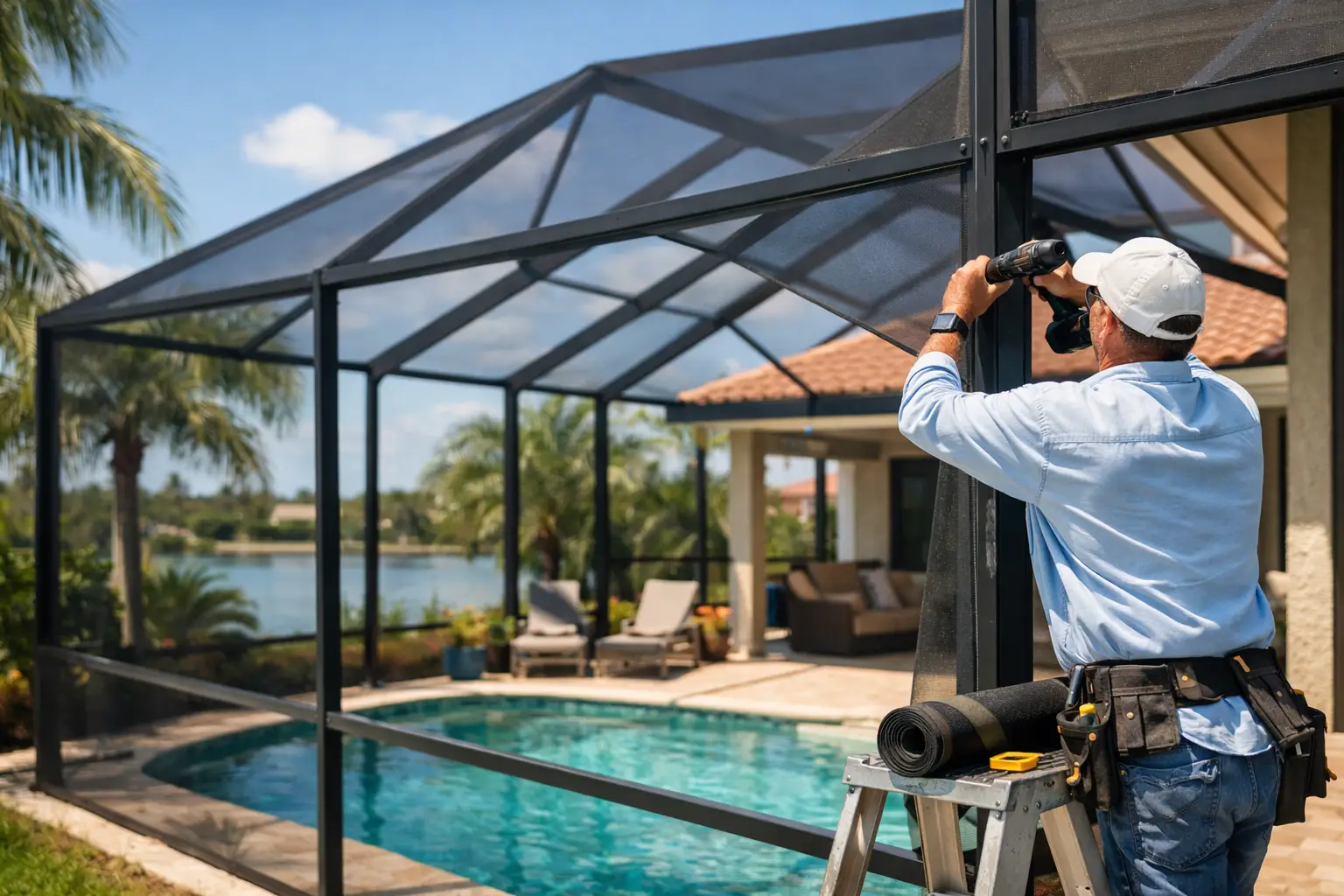
A pool cage can look fine from across the yard while corrosion is quietly weakening fasteners, screen panels are stretching at the spline, and water is collecting where it should drain. On the Treasure Coast, salt air, sun, wind, and seasonal storms place constant pressure on aluminum enclosures. Screen enclosure restoration addresses those issues before a worn structure turns into a larger safety concern or an expensive rebuild.
The right solution is rarely just replacing a torn screen. A dependable restoration evaluates the enclosure as a system: its aluminum frame, anchors, hardware, roof panels, doors, drainage, and screening. That approach protects the outdoor space you use every day while helping preserve the appearance and value of your property.
What Screen Enclosure Restoration Can Include
Restoration is a broad term because every enclosure ages differently. Some pool cages need a targeted repair after a storm. Others have reached the point where multiple components need attention at once. A professional inspection identifies the condition of the entire structure and recommends work that fits its actual needs.
A restoration project may include rescreening damaged or brittle mesh, replacing worn spline, repairing or replacing door hardware, reinforcing connections, addressing loose fasteners, and correcting areas of corrosion. It can also involve replacing bent frame members, damaged kick plates, gutters, or roof sections when needed.
For homeowners, the benefit is more than a cleaner-looking enclosure. Proper repairs restore insect protection, improve day-to-day function, reduce avoidable damage, and help the structure perform more reliably in Florida weather. For property managers, restoration can also reduce recurring maintenance calls and present a better-maintained property to tenants and guests.
Signs Your Enclosure Needs Professional Attention
A single puncture caused by patio furniture or a falling branch does not always mean the entire enclosure needs restoration. However, multiple small problems often point to broader age-related wear. Waiting can allow water intrusion, corrosion, and wind damage to spread.
Watch for screen mesh that has become faded, brittle, sagging, or loose around the edges. Small openings can admit mosquitoes and no-see-ums, while loose panels may be more vulnerable during high winds. Doors that drag, will not latch, or slam in the breeze are another common indication that hardware or alignment needs service.
Aluminum corrosion deserves close attention in coastal areas. White, chalky oxidation may be largely cosmetic in its early stages, but pitting, flaking finishes, loose connections, or deteriorated fasteners can signal a more serious issue. Rust-stained screws, cracked anchor points, and visible separation at joints should be inspected promptly.
You should also schedule an assessment after a major storm, even if the enclosure remains standing. Wind-driven debris can damage panels, loosen connections, and create issues that are easy to miss from the ground. Early repairs are usually more straightforward than emergency work after the next weather event.
Restoration or Replacement: How to Make the Right Call
The central question is whether the existing frame is structurally sound. If it is, restoration can be a practical investment that extends the useful life of the enclosure. New screening, refreshed hardware, localized frame repairs, and corrosion treatment can make a substantial difference without the cost and disruption of a full replacement.
Replacement may be the better choice when corrosion is widespread, numerous frame members are bent or compromised, anchors have failed, or the enclosure no longer meets the homeowner’s goals. An older cage may also have a low roofline, limited door access, or a layout that does not provide the clearance and views you want. In those cases, rebuilding can create a stronger, more functional outdoor living area.
Budget matters, but it should not be the only factor. A lower-cost patch is sensible for isolated damage on a sound structure. Repeated repairs to a failing frame can become frustrating and costly over time. A skilled professional can explain the condition of the enclosure clearly, outline the available options, and help you choose an approach based on safety, longevity, and planned use of the property.
Choosing the Right Screen for Your Florida Lifestyle
Not all screen mesh is designed for the same purpose. Standard fiberglass screening is a common option for basic insect protection, while premium materials can offer greater strength, improved visibility, or better resistance to pet damage. The best choice depends on how you use the space and what conditions the enclosure faces.
For a pool area exposed to regular wind and debris, homeowners may prioritize a durable screen that holds up well over time. Those who value an open view of the water, landscaping, or golf course may prefer a finer, more transparent mesh. If mosquitoes and tiny biting insects are a persistent problem, a tighter weave can improve comfort, though it may slightly reduce airflow and visibility.
Pet-resistant screen can be worthwhile around doors, lower wall sections, and high-traffic areas. It is stronger than typical mesh, but that added durability may not be necessary for every panel. A thoughtful restoration uses materials where they deliver the greatest benefit instead of applying one solution everywhere.
Why Coastal Installation Details Matter
Florida enclosures are exposed to more than ordinary weather. Salt-laden air accelerates corrosion, intense ultraviolet exposure weakens materials, and hurricane-season winds test every connection. That is why restoration should focus on installation details as carefully as visible repairs.
Properly fitted screen panels need the correct tension. Too loose, and they sag or flap. Too tight, and they can place unnecessary stress on the frame or pull away at the edges. Hardware selection matters as well, particularly near the coast where fasteners can corrode faster than the surrounding aluminum.
Drainage and roof-line conditions should also be reviewed. Water that repeatedly spills, pools, or runs against enclosure components can contribute to deterioration. Correcting a localized drainage problem during restoration can help protect the repair work and reduce future maintenance needs.
At Jensen Beach Aluminum & Windows, skilled professionals evaluate these details with the coastal environment in mind. The goal is not simply to make an enclosure look repaired on installation day, but to deliver workmanship and materials suited to the conditions Florida properties face year after year.
What to Expect During a Restoration Project
A well-managed project begins with an on-site evaluation. The contractor should inspect the enclosure frame, screening, doors, fasteners, anchors, and visible signs of corrosion or storm damage. Clear measurements and an accurate assessment are essential, especially when replacement frame sections or custom screen panels are required.
Once the scope is established, the work can be scheduled around weather conditions and access to the pool or patio. Homeowners should plan to move furniture, grills, potted plants, and fragile decorations away from the work area. Covering the pool may be recommended during extensive rescreening or overhead repairs to keep debris out of the water.
The duration depends on the size of the enclosure and the extent of repairs. A limited screen repair can be completed quickly, while full rescreening and structural work take longer. Quality should not be rushed. Proper preparation, secure attachment, clean finish work, and a final review are what make restoration worthwhile.
Protecting Your Restored Enclosure
Routine care will not eliminate weathering, but it can help you spot problems early. Rinse the enclosure periodically to remove salt residue, especially after strong coastal winds. Keep gutters and drainage paths clear, and avoid leaning heavy items against the screen walls.
Inspect door closers, latches, and lower screen panels several times a year. Trim back branches that can rub against the enclosure or fall during a storm. If you see loose mesh, corroded hardware, or movement in a frame connection, address it before the problem grows.
A restored screen enclosure should give you a cleaner, more comfortable place to enjoy the Florida outdoors, not another item on the repair list. A professional evaluation provides a clear path forward, whether your enclosure needs targeted repairs, complete rescreening, or a larger structural upgrade.