


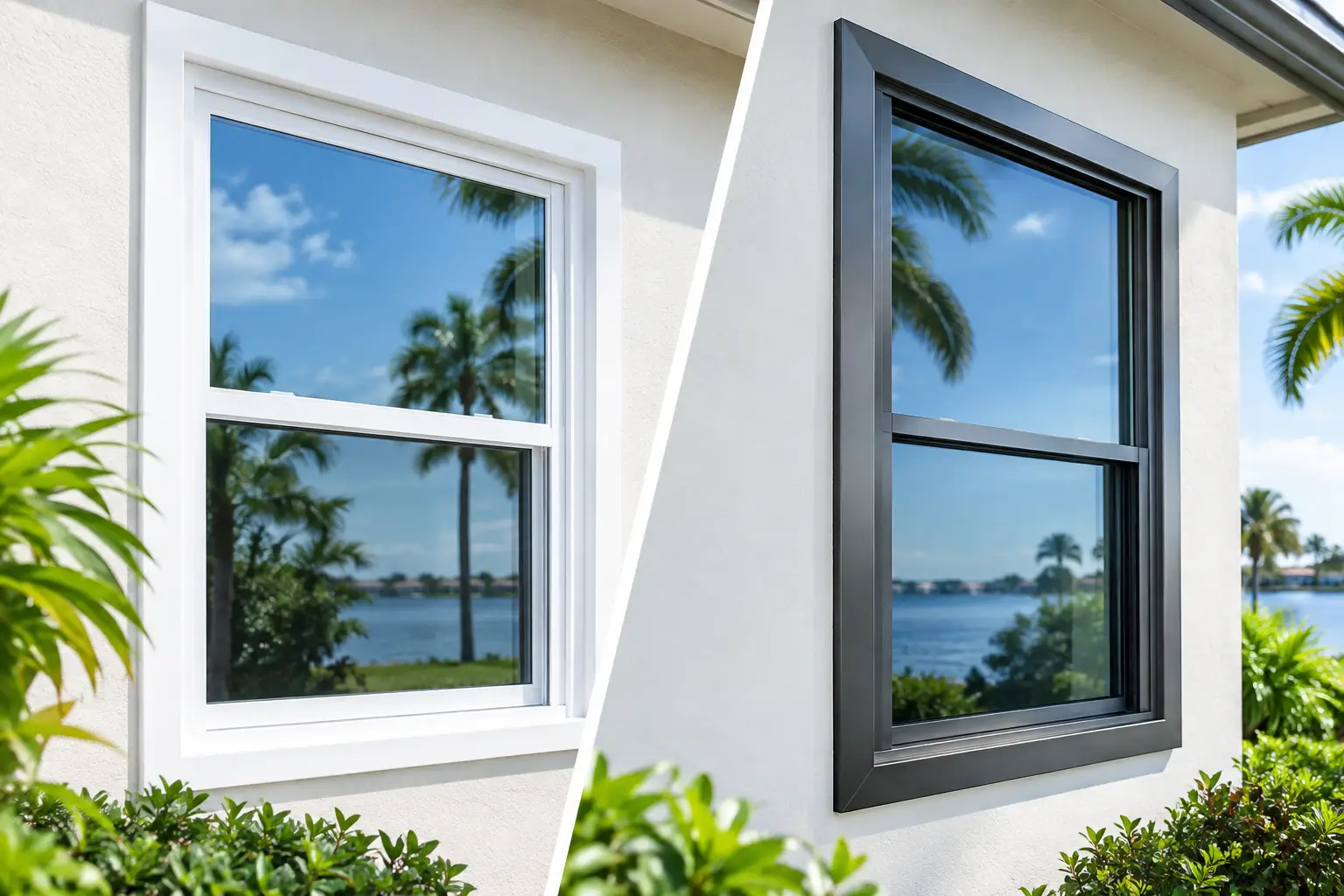
A window frame can look like a minor detail until a Florida summer, a wind-driven storm, or years of salt air put it to work. In the vinyl vs aluminum decision, the better choice depends on your home’s exposure, the size and style of the opening, hurricane requirements, and the performance level you expect over time.
For Treasure Coast property owners, this is not simply a question of appearance or initial price. Your windows must help manage solar heat, resist moisture and corrosion, support the required impact protection, and continue operating reliably after years of use. Both materials can be part of a high-quality window system, but they serve different priorities.
Vinyl vs Aluminum: The Core Difference
Vinyl window frames are made from PVC, a nonmetal material that does not rust or corrode. Because vinyl naturally resists heat transfer better than metal, it can help improve the insulating performance of a window assembly. It is a popular choice for replacement windows where energy efficiency, low maintenance, and a clean residential appearance are the main goals.
Aluminum frames are lightweight, strong, and exceptionally rigid for their profile size. That strength allows manufacturers to produce slimmer sightlines and support larger glass areas than many vinyl systems. Aluminum is common in contemporary homes, commercial properties, patio enclosures, and openings where structural demands or architectural style call for a narrower, more refined frame.
Neither material is automatically right for every Florida property. The complete window matters: glass package, frame construction, reinforcement, hardware, drainage design, installation quality, and product approvals all affect long-term performance.
Energy Efficiency in Florida Heat
Florida homeowners generally use more cooling energy than heating energy, making solar heat gain a practical concern. Vinyl has an advantage at the frame level because it does not conduct heat as readily as aluminum. When paired with appropriate low-emissivity glass, vinyl replacement windows can help limit heat transfer and reduce the strain on your air-conditioning system.
Standard aluminum transfers heat more easily. That does not make aluminum windows a poor choice, but it does mean product selection matters more. Premium aluminum systems may use thermal breaks – insulating barriers within the frame that reduce heat transfer. High-performance glass can also make a meaningful difference in comfort and energy use.
It is worth looking beyond broad labels such as “energy efficient.” Ask about the whole unit’s U-factor and solar heat gain coefficient, then consider how the window faces the sun. A large west-facing glass wall has different demands than a shaded bedroom window on the north side of the home.
Strength, Size, and Hurricane Performance
For coastal Florida homes, storm protection should be part of the conversation from the beginning. Impact-rated windows and doors are designed and tested as systems to withstand specific wind pressures and impact requirements. The frame material contributes to performance, but an impact rating belongs to the tested product configuration, not to vinyl or aluminum as a category.
Aluminum’s strength is especially valuable for wide openings, oversized fixed windows, multi-panel sliding doors, and certain commercial applications. Its rigidity can support larger spans with comparatively slim frames, helping preserve views and bring more daylight into a room.
Vinyl can also be engineered for impact resistance and is widely used in hurricane-rated residential windows. However, large openings may require thicker profiles, internal reinforcement, or different product designs to meet required design pressures. A qualified contractor can match the opening size, location, and code requirements to an approved system rather than forcing one material into every application.
Do not assume a window is hurricane-ready because it has heavy glass or a sturdy-looking frame. Review the manufacturer’s approval information, required installation method, and design-pressure rating for your property. Proper anchoring and waterproofing are as critical as the window itself.
Salt Air, Moisture, and Maintenance
Vinyl is naturally resistant to moisture and will not corrode. For homes close to the ocean, that is a meaningful benefit. Routine cleaning with mild soap and water is usually all that is needed to keep vinyl frames looking presentable. Vinyl also does not require painting, which appeals to homeowners who want a low-maintenance replacement option.
Aluminum does not rust, but it can corrode when exposed to salt, moisture, and contaminants over time, particularly if the finish is damaged or neglected. Quality finishes and marine-appropriate product options improve durability, but coastal aluminum still benefits from regular rinsing and inspection. Pay close attention to tracks, weep holes, hardware, fasteners, and areas where dissimilar metals meet.
Maintenance should not be treated as an afterthought. A well-made aluminum window that is cleaned and serviced appropriately can provide years of dependable performance. Likewise, a vinyl window still needs its tracks cleared, seals inspected, and hardware operated periodically. In either case, proactive care protects your investment.
Appearance and Architectural Fit
Vinyl windows typically have a broader, more traditional frame profile. They are available in popular colors and configurations, and they fit comfortably with many Florida homes, including ranch, coastal cottage, and suburban styles. White remains common, though darker exterior finishes have expanded the design possibilities.
Aluminum offers a slimmer profile and a more architectural appearance. It can be an excellent match for modern homes, condominiums, storefronts, and properties with expansive views of the water, golf course, or pool area. The narrower frame can make glass feel more prominent, which is a major advantage when view and daylight are priorities.
Color deserves careful consideration in Florida. Dark frames absorb more heat, and that can influence how a material performs and ages. Discuss the finish, exposure, and warranty details before choosing a dark exterior frame for a full-sun elevation.
Cost: Look Beyond the Initial Quote
Vinyl is often the more budget-friendly option for standard residential replacement windows, especially in common sizes. Its low-maintenance qualities and favorable insulating properties can also improve its long-term value.
Aluminum may carry a higher cost, particularly in premium impact-rated systems or large custom openings. The added expense can be justified when you need greater structural capacity, slim sightlines, a specific architectural finish, or larger panels of glass.
The lowest quoted window is rarely the best value if it does not meet your property’s exposure and performance needs. Compare like for like: impact rating, glass type, hardware, screen options, finish, warranty coverage, removal of existing windows, installation details, and permit requirements. A complete professional quote makes it easier to see what you are actually receiving.
When Vinyl Is Usually the Better Fit
Vinyl is often a strong choice for homeowners replacing standard-size windows who want energy-conscious performance, minimal upkeep, and a practical price point. It works particularly well when preserving indoor comfort is a primary concern and the home does not require unusually large glass openings or ultra-slim frames.
It can also make sense for rental properties and second homes where dependable performance and reduced maintenance demands are important. The right impact-rated vinyl product can provide storm protection without requiring a move to aluminum solely because the home is in Florida.
When Aluminum Is Usually the Better Fit
Aluminum is often the better fit for large openings, contemporary designs, commercial properties, and homes where maximizing the glass area matters. It is also a smart option when a project includes wide sliders, fixed picture windows, or configurations that place higher demands on frame strength.
For oceanfront and near-coastal homes, aluminum requires an informed approach rather than a quick yes or no. Select a system suited to the exposure, maintain the finish and drainage components, and work with installers who understand coastal conditions. The result can be a durable, high-end window solution that complements the property.
Installation Is the Deciding Factor Many Homeowners Miss
Even the best window will underperform if it is measured, flashed, anchored, or sealed incorrectly. Florida installations must account for wind loads, water management, wall conditions, and local permitting requirements. A window that is not installed according to its approved method may compromise water resistance, operation, and storm performance.
At Jensen Beach Aluminum & Windows, skilled professionals help property owners evaluate window materials in the context of the entire project – not just a showroom sample. That includes the opening, orientation, exposure, desired appearance, impact requirements, and the level of long-term maintenance you are comfortable with.
Before selecting vinyl or aluminum, stand outside your home and consider what each opening must handle: direct afternoon sun, salt spray, driving rain, a wide water view, or a need for impact protection. A material choice made around those real conditions will serve your property far better than one based on a single feature or the lowest starting price.