


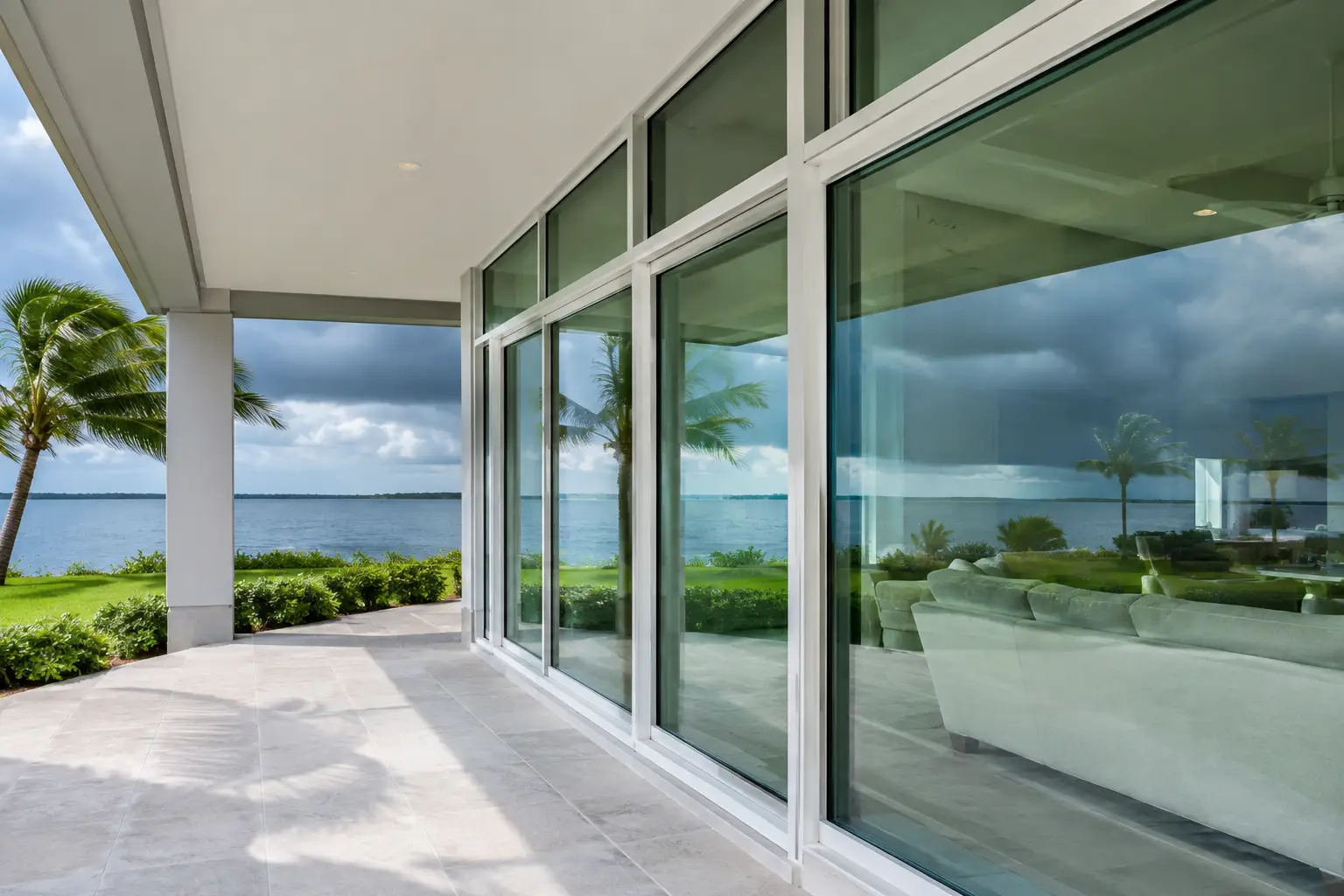
A hurricane warning changes the way Florida homeowners look at every window and glass door. The question is not simply whether the glass will crack. It is whether an opening in the home could allow wind, rain, and flying debris inside when conditions are at their worst. Impact glass is designed to address that risk while also improving everyday comfort, security, and energy performance.
For homes along the Treasure Coast, window and door decisions need to account for salt air, intense sun, driving rain, and the possibility of severe storms. Choosing the right system starts with understanding what impact-rated products actually do, how they differ from standard windows, and where professional installation makes the difference.
What Is Impact Glass?
Impact glass is laminated safety glass engineered to remain intact when struck by wind-borne debris. It typically uses two layers of glass bonded around a durable interlayer. If the outer glass breaks under impact, that inner layer helps hold the broken pieces in place rather than allowing the opening to fail.
The glass is only one part of the system. A true impact-rated window or door also includes a reinforced frame, secure glazing, appropriate hardware, and installation methods designed to perform under high wind pressure. Products are tested as complete assemblies, which is why placing impact glass into an existing non-rated frame does not create a hurricane-rated opening.
During testing, manufacturers subject the unit to impacts that simulate common hurricane debris, then to repeated positive and negative pressure cycles. The goal is to verify that the assembly can resist both direct strikes and the pressure changes that occur as winds move around a building.
Why Window Openings Matter During a Storm
When a standard window breaks during a major storm, the immediate damage can be extensive. Rain can enter quickly, but the greater concern is the sudden breach in the building envelope. Wind entering the home can increase interior pressure and place additional stress on the roof, walls, and other openings.
Impact-rated windows and doors are intended to help maintain that protective envelope. They are not indestructible, and the exterior pane can still crack after a significant hit. The difference is that the laminated glass is designed to stay in the frame, helping prevent a dangerous open path for wind and water.
That protection can also reduce the need for last-minute storm preparation. Many homeowners appreciate not having to install and remove temporary panels every time a named storm approaches. However, local code requirements, insurance provisions, and the specific product approval for a home still matter. A qualified contractor can help confirm whether a particular system meets the applicable requirements for the property.
Everyday Benefits of Impact Glass
Hurricane protection is often the first reason Florida property owners consider impact windows and doors, but the value continues long after storm season.
Added Security and Peace of Mind
The laminated interlayer makes the glass more difficult to penetrate than ordinary annealed glass. It is not a substitute for good locks, exterior lighting, or responsible property security, but it adds another layer of resistance against forced entry. For seasonal residents and rental property owners, that added reassurance can be particularly valuable when the property is unoccupied.
Better Noise Control
Traffic, lawn equipment, neighborhood activity, and coastal winds can make indoor spaces feel less restful. Laminated glass can reduce the transmission of outside sound compared with many standard glass configurations. Results depend on the glass package, frame, installation quality, and the condition of surrounding walls and doors, but the difference is often noticeable in bedrooms, offices, and street-facing living areas.
UV Protection and Interior Comfort
Florida sunlight can fade flooring, furniture, artwork, and window treatments over time. The laminated layer in impact glass filters a significant portion of ultraviolet rays. When paired with the right low-emissivity coating and insulated glass configuration, replacement windows can also help manage solar heat gain and improve indoor comfort.
Energy savings are not identical from one home to another. Window orientation, shade, air leakage, insulation levels, and HVAC performance all influence the result. A west-facing room with aging single-pane windows may see a more meaningful improvement than a shaded room that already has newer windows.
Impact Windows, Doors, and Sliders: Choosing the Right System
The best product is the one that fits the opening, the architecture, and the way the property is used. A compact bedroom window, a large waterfront picture window, and a frequently used patio entry each call for different considerations.
Impact single-hung and horizontal roller windows are practical choices for many replacement projects. Casement windows can provide wide views and strong compression seals when closed. Picture windows offer expansive glass areas, while architectural shapes can preserve the character of a custom home.
For doors, impact-rated French doors, entry doors with glass inserts, and sliding glass doors can improve storm readiness without sacrificing natural light. Large sliders deserve special attention because they involve broad openings, heavy panels, tracks, thresholds, and hardware that must all work together. The right product should feel solid in daily use, operate smoothly, and meet the required performance rating for the site.
Aesthetic choices still matter. Frame color, sightlines, grid patterns, hardware finishes, and glass tint can all affect the finished appearance. The strongest option is not always the right option if it clashes with the home or makes a commonly used opening difficult to operate. Good planning balances protection, performance, appearance, and budget.
What to Look For Before You Buy
Price alone does not tell the full story. When comparing impact products, ask whether the quoted unit is approved for the required wind zone and exposure, whether the glass and frame configuration matches the approval, and whether the installer will obtain permits and coordinate inspections where required.
It is also wise to review the manufacturer, warranty terms, drainage design, hardware quality, and finish suitability for a coastal environment. Salt air can be demanding on frames, fasteners, rollers, and door hardware. Premium materials and proper maintenance help preserve appearance and operation over time.
For condominiums and commercial properties, approval procedures may add another layer to the project. Association requirements, uniform exterior appearance, building access, and tenant scheduling should be addressed early. A professional site evaluation can identify these details before materials are ordered.
Installation Is Part of the Protection
Even a premium impact-rated unit can underperform when installation is rushed or incorrect. Openings must be measured accurately, frames must be properly anchored, flashing and sealants must be used correctly, and the finished unit must be adjusted to operate as intended.
Coastal homes also present conditions that cannot be evaluated from a catalog. Existing stucco, concrete block, wood framing, sill damage, unusual opening sizes, and previous retrofit work may affect the installation plan. An experienced installer examines the actual conditions and recommends a method that supports both product performance and a clean finished appearance.
At Jensen Beach Aluminum & Windows, skilled professionals help homeowners select premium-quality windows and doors that suit their property, then provide installation and support with the care a long-term investment deserves. Clear communication before work begins helps prevent surprises around scope, timing, and finish details.
Maintaining Impact-Rated Windows and Doors
Impact systems are built for demanding conditions, but routine care supports their lifespan. Clean frames and glass with manufacturer-approved products, keep tracks free of sand and debris, and inspect weatherstripping and drainage paths periodically. Sliding door rollers and hardware may need professional adjustment after years of use, especially in salt-air environments.
Avoid drilling into frames or altering glazing components without guidance from a qualified professional. Changes that seem minor can affect drainage, operation, warranty coverage, or the product’s tested configuration. If a pane is cracked after an impact, arrange an evaluation promptly, even if the interlayer is still holding the glass together.
A well-planned impact window or door project does more than prepare a home for hurricane season. It gives homeowners a stronger everyday barrier between the living space and the coastal conditions outside. The most helpful next step is a property-specific consultation that considers your openings, exposure, goals, and the protection your Florida home needs.