


A backyard that looks great in March but feels unusable in August is not a smart investment in Florida. The best outdoor living design trends are not just about appearance. They are about building spaces that hold up to heat, humidity, wind, rain, and daily use while giving homeowners more comfort and value from the property they already own.
That is why the trend conversation has shifted. Homeowners on the Treasure Coast are no longer asking only what looks current. They are asking what lasts, what protects, and what makes outdoor space more usable throughout the year. In coastal markets, good design has to work harder.
Outdoor living design trends are becoming more practical
A few years ago, outdoor upgrades often centered on simple aesthetics – a pergola, new pavers, or a decorative patio refresh. Those features still matter, but today’s strongest trends combine style with performance. Property owners want shade that can adapt to the weather, enclosures that reduce maintenance, and materials that can stand up to salt air and strong sun without becoming a constant repair issue.
This change makes sense in Florida. Outdoor space is a major part of how a home is lived in and how a property is valued. But unlike milder climates, local conditions can punish poorly planned projects. A trend is only worth following if it improves comfort, supports resilience, and keeps maintenance reasonable over time.
Flexible shade systems are replacing fixed solutions
One of the most noticeable shifts is the move toward adjustable outdoor coverage. Fixed patio covers still have their place, especially when full-time shelter is the goal, but many homeowners now want more control over sun, airflow, and rain protection.
Louvered roof systems fit that demand well. They allow the space to open for sunlight when the weather is mild and close when rain moves in. That flexibility matters in Florida, where the same afternoon can bring bright sun, strong heat, and a passing storm. A fixed roof offers consistency, but an adjustable system offers range.
Pergolas also remain popular, especially when paired with features that make them more functional, such as retractable canopies or integrated screening. The trend is not just installing a structure for appearance. It is creating a space that can shift with the season and still feel comfortable during more hours of the day.
The trade-off is budget and complexity. A basic pergola is often more affordable than a motorized louvered system, but it may not deliver the same level of protection or usability. For many property owners, the right answer depends on whether the goal is visual enhancement, all-weather use, or both.
Screens and enclosures are now part of the design plan
For Florida homeowners, outdoor comfort is often decided by what gets kept out. Bugs, debris, harsh glare, and blowing rain can quickly limit how often a patio, lanai, or pool area gets used. That is why screening is no longer treated as an afterthought.
Retractable screens are a strong example of this shift. They let homeowners maintain open views when conditions are pleasant and add protection when needed. This works especially well in covered outdoor living areas where people want privacy, insect control, and a cleaner environment without making the space feel closed in.
Pool cages, lanai enclosures, and rescreening projects are also being approached with more design intent. Instead of viewing them as strictly functional, property owners are looking at sightlines, framing, color, and how the enclosure supports the overall architecture of the home. A well-designed enclosure can make the outdoor area feel larger, cleaner, and easier to maintain.
This trend is especially important for investors and property managers. Outdoor areas that stay cleaner and require less upkeep are easier to market and easier to keep in service. Appearance matters, but reduced maintenance has real operating value.
Durable materials matter more than ever
Style trends come and go, but material failure is always expensive. In Florida, outdoor living spaces need to handle moisture, UV exposure, salt air in coastal zones, and seasonal storm conditions. As a result, one of the biggest trends is not visual at all. It is the preference for materials that perform over time.
Aluminum continues to stand out for structures and framing because it offers strength, low maintenance, and solid resistance to rust compared with lesser materials. That matters for pergolas, screen enclosures, awnings, carports, and similar outdoor applications. Homeowners are learning that a lower upfront price can become more expensive if the product fades, warps, corrodes, or needs frequent repair.
The same thinking applies to hardscape choices. Pavers remain popular because they offer a clean, finished look while also allowing for practical repair. If one section is damaged or settles, it is often easier to address than a large cracked slab. Concrete still has its place, especially when budget and function lead the decision, but design-conscious owners often prefer surfaces that combine durability with a more custom look.
Outdoor rooms are being designed for daily use
The strongest outdoor living spaces no longer feel like occasional-use patios. They feel like true extensions of the home. That means better zoning, more intentional furniture layouts, overhead coverage, and protection from the elements.
Sunrooms are part of this movement because they create a transitional space between indoors and outdoors. For some homeowners, that is the right solution when full weather exposure makes traditional outdoor use less practical. A sunroom can deliver natural light and views while adding comfort and climate control.
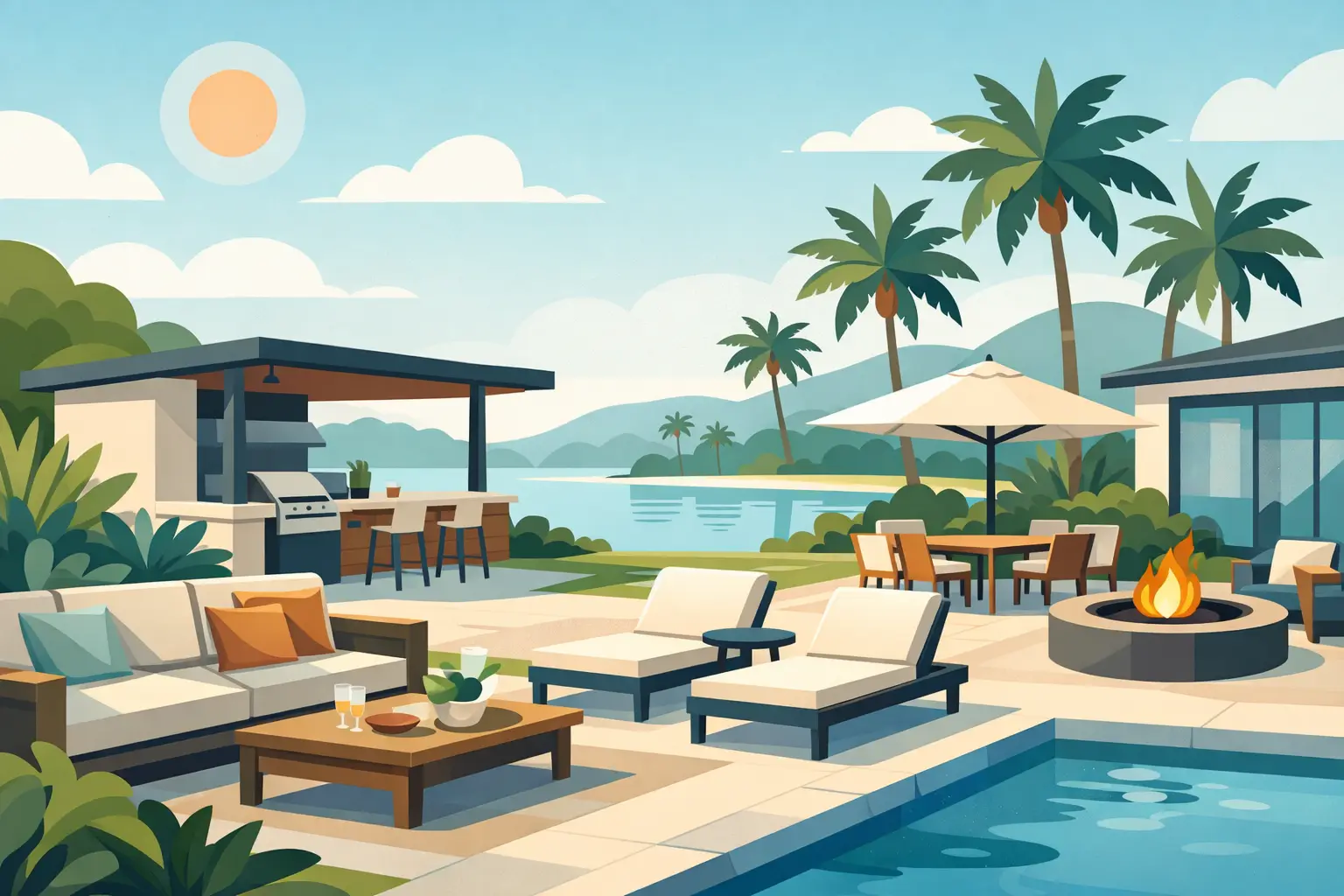
For open-air spaces, design is becoming more purpose-driven. Instead of a single slab with patio furniture, homeowners are creating separate areas for dining, relaxing, grilling, and pool access. This does not require a massive footprint. It requires planning. The trend is less about adding more and more about making the space work better.
That shift also supports resale. Buyers respond well to outdoor areas that clearly show how the space can be used. A shaded lounge area, a screened dining section, or a protected patio entry feels more complete than an undefined open surface.
Storm readiness is shaping outdoor living design trends
In Florida, no serious discussion of outdoor living design trends is complete without storm protection. The outdoor structures that add value are the ones designed with local conditions in mind. That includes proper engineering, quality materials, secure installation, and systems chosen for the site rather than copied from another climate.
This is where many trend-driven projects go wrong. A homeowner sees a design idea online, but the product or installation method is not suited to coastal exposure. What looks impressive in a photo may not perform well during storm season. For that reason, the installation process matters just as much as the product selection.
Awnings, shutters, screen systems, covered patios, and aluminum structures all need to be evaluated through a Florida lens. Wind loads, anchoring, drainage, and code requirements are not side issues. They are central to whether the project protects the property or creates future problems.
That is also why experienced local contractors bring real value to design conversations. A trend should enhance the home, not introduce avoidable risk. For many Treasure Coast property owners, the most successful projects are the ones that balance curb appeal with proven durability.
Clean lines are in, but comfort still leads
From a style standpoint, outdoor spaces are moving toward simpler profiles and more cohesive finishes. Homeowners tend to prefer clean structural lines, neutral colors, and outdoor features that feel integrated with the architecture of the home rather than added on later.
That does not mean every project should look minimal. It means the space should feel intentional. A modern pergola can look excellent on one home, while a more traditional covered lanai may be the better fit on another. Trend awareness is helpful, but matching the property is what creates long-term satisfaction.
Comfort is still the real test. If a design looks sharp but leaves the seating area exposed to glare, rain, or insects, the space will not get used the way it should. The best projects are attractive because they are well planned, not because they chase a style for its own sake.
For homeowners considering an upgrade, the smartest place to start is not with color samples or online inspiration boards. It is with a realistic look at how the space will be used, what weather conditions it has to handle, and what level of maintenance makes sense over time. Companies like Jensen Beach Aluminum & Windows see this every day – the most successful outdoor projects are the ones built around Florida living, not generic design ideas.
A well-designed outdoor space should do more than look current. It should give you more usable days, fewer maintenance headaches, and greater confidence that your investment was built to last.