


A covered patio can look like the answer to more time outdoors – until summer rain, mosquitoes, direct afternoon sun, and hurricane-season planning enter the picture. Understanding the sunroom or pergola difference helps Florida property owners choose an addition that fits how they actually live, not just how a project looks in a photo.
A sunroom and a pergola both improve an outdoor area, but they solve very different problems. One creates a more protected, enclosed living space. The other adds shade, architectural character, and an open-air setting. The right choice depends on your home, your exposure to weather, your desired level of comfort, and whether you want a true room or a refined outdoor retreat.
Sunroom or Pergola Difference: Start With the Structure
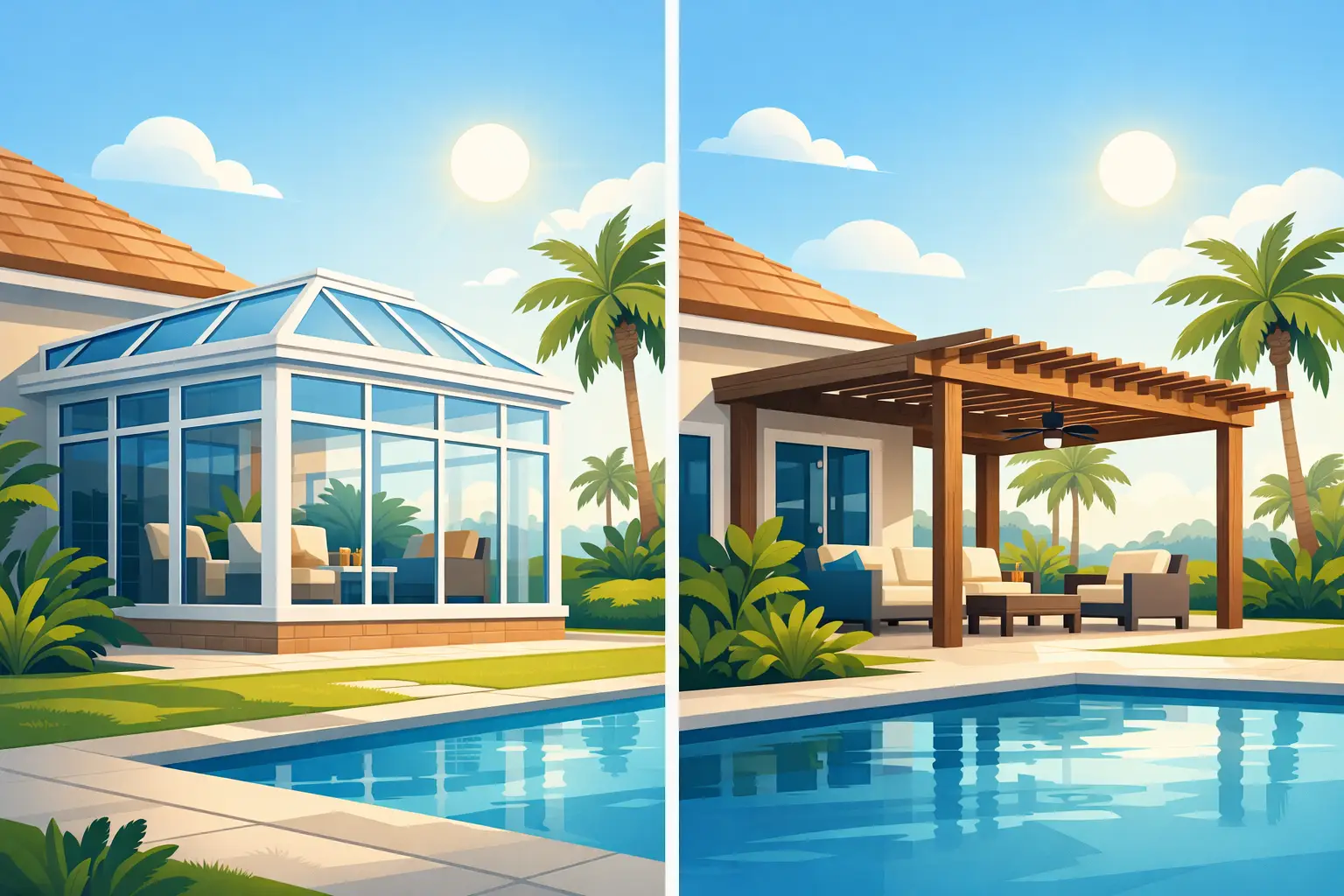
A sunroom is an enclosed or partially enclosed structure, typically built with an aluminum frame, roof system, windows, screens, or a combination of these elements. It extends usable living space while maintaining a connection to the outdoors. Depending on its design, it can provide protection from rain, insects, wind-driven debris, and intense sun.
A pergola is an open outdoor structure with vertical posts and an overhead framework. Traditional pergolas use spaced slats, which create filtered shade but do not form a waterproof roof. Modern pergolas may incorporate adjustable louvers, fabric canopies, or fixed roof panels to give homeowners more control over sun and rain.
That distinction matters on the Treasure Coast. A pergola is designed to enhance outdoor living in fresh air. A sunroom is designed to make an outdoor-adjacent space more usable when the weather is less cooperative.
When a Sunroom Makes More Sense
A sunroom is often the stronger choice when the goal is to gain protected space that can be enjoyed for more months of the year. Homeowners may use it as a casual sitting room, breakfast area, reading space, hobby room, poolside lounge, or a protected place for visiting with family.
The enclosure is the key benefit. Screens can help keep out mosquitoes and no-see-ums, while glass or vinyl window systems can reduce exposure to wind and rain. A properly planned roof system also provides full overhead coverage, which is especially valuable during Florida’s frequent afternoon showers.
Sunrooms can support better comfort, but expectations should be realistic. A room with standard glass and no dedicated heating or cooling system will not perform exactly like the conditioned interior of your home. Sun exposure, roof design, insulation, window selection, orientation, and ventilation all affect temperatures. For a west-facing addition, solar control features and strategic shading can make a meaningful difference.
A sunroom can also offer a more finished appearance for homeowners who want the new area to feel integrated with the home. Matching the existing roofline, exterior finishes, doors, and window style can make the addition look intentional rather than added on.
Considerations for Florida Sunrooms
A sunroom requires a greater investment in materials, engineering, installation, and permitting than an open pergola. It also needs careful site evaluation. Existing patios, slabs, drainage conditions, tie-in points, and the home’s structure all influence the design.
For coastal homes, wind loads and code requirements should never be treated as an afterthought. Not every enclosure system is intended to serve as hurricane protection, and not every existing slab can support every type of addition. A skilled professional should evaluate the proposed location and specify a system appropriate for the property and local requirements.
When a Pergola Is the Better Fit
A pergola is an excellent choice for homeowners who enjoy being outside but need more shade and visual definition around a patio, pool deck, garden, outdoor kitchen, or paver area. It creates a destination in the yard without closing that space off from the breeze.
For many Florida homes, a pergola helps make a sunny hardscape more inviting. Positioned over a seating area or dining table, it can break up direct sunlight and establish a clear outdoor gathering zone. It can also add height and architectural interest to a flat, open backyard.
A louvered roof pergola provides more flexibility than a traditional open-slat design. Adjustable louvers can be opened for sunlight and airflow or closed when a light rain begins. This makes it a practical middle ground for homeowners who want greater weather control but do not need fully enclosed walls.
Pergolas generally have fewer components than sunrooms, which can mean a faster, less involved installation. They are also well suited to homeowners who do not want to change the open feel of their lanai, pool area, or backyard.
What a Pergola Will Not Do
A pergola does not provide the same insect protection as a screened enclosure or sunroom. Even with a louvered roof, the sides remain open unless screens or other accessories are added. Wind-driven rain may still enter from the sides, and outdoor furniture will remain exposed to humidity, pollen, and salt air.
It is also not a substitute for a hurricane-rated enclosure or storm-protection system. Product ratings, attachment methods, foundation conditions, and local building requirements all matter. The right structure should be selected for its intended use, not assumed to provide protection it was not designed to deliver.
Compare Comfort, Maintenance, and Daily Use
The practical difference between a sunroom and pergola becomes clear in daily life. A sunroom gives you more control. You can sit outside-adjacent during a rainy evening, keep cushions and electronics better protected, and use the space without as much concern about bugs. It is the more suitable option for owners who want a controlled extension of the home.
A pergola provides a more natural outdoor experience. You will feel the breeze, hear the rain, and remain connected to the pool, garden, or yard. It is ideal when those features are part of the appeal rather than obstacles to overcome.
Maintenance also differs. Sunrooms have more surfaces to clean and inspect, including windows, screens, tracks, seals, doors, and roof panels. Pergolas have fewer enclosed components, but they still require routine care. Aluminum structures should be cleaned periodically to remove dirt, pollen, and salt residue, especially near the coast. Moving louvers, drainage channels, and fasteners should be inspected as part of regular upkeep.
Cost Depends on More Than Size
It is reasonable to expect a pergola to cost less than a fully enclosed sunroom in many cases, but a simple price comparison can be misleading. A premium aluminum pergola with motorized louvers, integrated lighting, drainage, screens, and custom finishes may be a substantial project. Likewise, a basic screened room will differ significantly from a glass-enclosed sunroom with upgraded roof panels and custom doors.
The most useful way to evaluate cost is to look at the value you expect from the space. If you want shade for weekend cookouts and a better-looking pool deck, a pergola may deliver exactly what you need. If you want a protected room for everyday use, a sunroom may justify the larger investment because it changes how often the space can be enjoyed.
For rental properties and commercial settings, consider guest expectations and operations as well. An open pergola can create an attractive amenity area, while an enclosed sunroom may provide more dependable seating or gathering space during changing weather.
Questions to Ask Before You Choose
Before selecting either option, think through how the area will be used at 2 p.m. in August, during a windy rainstorm, and when you are away from the property for several weeks. Those answers are often more useful than deciding based on appearance alone.
Consider whether you need insect control, true rain protection, privacy, outdoor airflow, storage protection, or a future place for screens and shades. Also look at sun direction, pool placement, landscaping, drainage, roof attachment, and access around the home. A design that works beautifully at one property may not be the best fit for another.
Professional planning is especially valuable in Florida, where structural requirements, permits, and weather exposure influence both safety and long-term performance. A detailed site review can identify whether a freestanding structure, attached structure, screen system, or enclosed room is the most sensible solution.
Jensen Beach Aluminum & Windows helps property owners evaluate outdoor living structures with the same attention to workmanship, durability, and local conditions that coastal projects demand. The goal is not simply to add a structure, but to create an area that performs well for the way you use your home.
Choose a pergola when open-air shade and visual appeal are your priorities. Choose a sunroom when protected, more consistent comfort matters most. The best next step is to stand in the proposed space at different times of day and picture the conditions you want to enjoy it in – sun, rain, breeze, bugs, and all.