


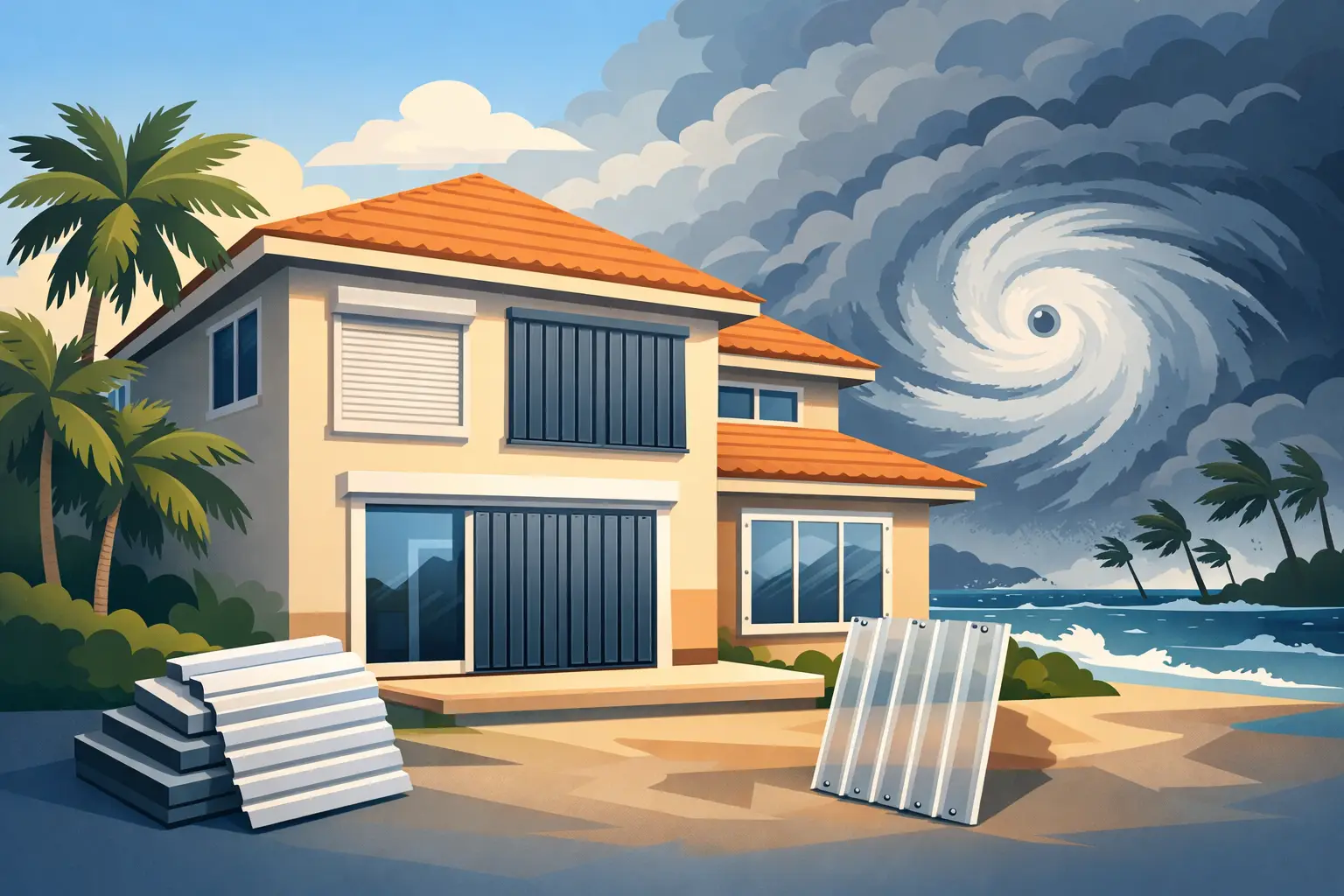
A shutter panel may look simple from the street, but during a hurricane it must resist extreme wind pressure, flying debris, repeated impact, and water exposure. Choosing the best hurricane shutter materials for a Florida home means looking beyond appearance or upfront price. The right choice depends on your opening sizes, property location, daily convenience needs, budget, and the level of professional installation required to meet local code.
For homeowners and property managers on the Treasure Coast, storm protection is not a once-and-done purchase. It is a long-term investment in safety, reduced storm preparation time, and confidence that windows and doors are properly protected when conditions change quickly.
What Makes a Hurricane Shutter Material Reliable?
A quality shutter system is more than its visible panel. Its tracks, fasteners, hinges, locking hardware, wall anchors, and installation method all contribute to performance. Even an excellent material can fail to provide the expected protection if it is not engineered for the opening and installed correctly.
Look for systems designed and tested for Florida’s wind and impact requirements. The product should be appropriate for the exposure of your property, whether it faces open water, sits in a wind-borne debris region, or has large openings such as sliding glass doors, lanais, storefronts, or oversized windows.
Material selection also affects how often you will use the shutters. Some homeowners want permanent, easy-to-close protection for seasonal travel and storm alerts. Others prefer a removable system that keeps the exterior appearance as open as possible between storms.
Aluminum: The Leading Choice for Permanent Shutters
Aluminum is often the best all-around option for permanent hurricane shutter systems in coastal Florida. It is lightweight compared with steel, highly resistant to corrosion when properly finished, and well suited to custom fabrication for different window and door openings.
Accordion shutters are commonly made from aluminum because the material allows for a strong, operable system that folds neatly to each side of an opening. When a storm approaches, the panels pull across the window or door and lock in place. This makes aluminum especially practical for homeowners who want fast deployment without lifting, storing, or installing separate panels.
Aluminum also works well for roll-down shutters, Bahama shutters, colonial-style shutters, and certain panel systems. Its versatility supports a broad range of architectural styles, from waterfront homes to commercial properties that need practical protection without a heavy industrial look.
The trade-off is cost. A professionally installed aluminum system generally costs more than basic temporary panels. However, its long service life, ease of operation, and low-maintenance finish can make it the stronger value over time. Hardware should still be inspected periodically, especially near salt air, where tracks and fasteners need regular cleaning and care.
Best for: Everyday convenience and long-term coastal use
For most homeowners seeking a permanent solution, aluminum provides the right balance of strength, corrosion resistance, appearance, and manageable operation.
Polycarbonate: Protection With Natural Light
Clear polycarbonate panels are a smart option when visibility and daylight matter. Unlike solid metal panels, polycarbonate can allow light into the home while protecting the opening during a storm. That can be particularly helpful for rooms that would otherwise become dark during extended shutter deployment.
Polycarbonate is much stronger than standard acrylic or plexiglass products, but homeowners should not assume every clear panel is hurricane-rated. Thickness, framing, attachment points, span limits, and the specific tested system all matter. A panel that performs well on a smaller window may not be appropriate for a wide patio opening.
This material is often selected for select areas rather than an entire home. For example, a homeowner may use aluminum accordion shutters on most openings and clear panels where preserving daylight is a priority. It can also be a good fit for certain commercial settings where visibility is valuable.
Polycarbonate can scratch over time and may require more careful cleaning than painted aluminum. It is also not the lowest-cost choice. Still, when the goal is storm protection without turning the home into a darkened space, it offers a meaningful advantage.
Best for: Windows where daylight and visibility are priorities
Choose a tested, properly engineered polycarbonate shutter system rather than a generic clear sheet material. The difference is critical during a hurricane.
Steel: High Strength With Added Weight and Maintenance
Steel shutter panels are exceptionally strong and can be an effective choice for certain applications. They are often associated with commercial buildings, storage facilities, industrial properties, and openings where a heavier-duty appearance and substantial impact resistance are appropriate.
The drawback is weight. Steel panels are harder to handle, especially on larger openings, and they place greater demands on mounting hardware and anchors. In Florida’s humid, salty environment, corrosion protection is also essential. A durable coating helps, but damaged finishes must be addressed before rust becomes a larger issue.
For a residential property, steel is not always the most convenient material. A homeowner may have trouble installing heavy panels alone just before a storm, particularly if ladders are involved. That concern becomes more significant for older homeowners, seasonal residents, and rental property owners who may not be present when storm preparation is needed.
Best for: Commercial or specialized high-strength applications
Steel can be the right material when the building, opening type, and operating plan support it. It is usually less practical than aluminum for permanent residential shutters.
Fabric Hurricane Screens: Flexible Coverage for Large Openings
Hurricane fabric systems are made from high-strength synthetic materials designed to reduce wind-borne debris risk while covering windows, doors, patios, and other large openings. They are lightweight, easier to store than metal panels, and can be a useful option where rigid shutters are difficult to operate or install.
Fabric systems are not all alike. Their performance depends on the fabric construction, fastening system, spacing of attachment points, and the type of opening being covered. A professionally designed system should be sized and installed for the property’s applicable wind and impact requirements.
For some homeowners, fabric offers a practical middle ground between permanent shutters and heavy panel storage. It can also be useful for wide spans where large metal panels would be cumbersome. The trade-off is deployment time. Unlike accordion or roll-down shutters, fabric must generally be installed before a storm and removed afterward.
Best for: Large spans and lightweight seasonal protection
Fabric can be an effective solution when selected as part of a complete engineered storm protection plan, not as a one-size-fits-all substitute for every opening.
Don’t Overlook Plywood and Basic Panel Options
Plywood is often discussed as an emergency storm preparation measure, but it is not a dependable long-term shutter solution. Properly installed, correctly sized plywood can offer limited temporary protection in an urgent situation. Yet it requires storage, repeated handling, careful fastening, and replacement as the material deteriorates.
Basic metal storm panels can be more durable than plywood and are usually more affordable than permanent systems. They may suit a budget-conscious property owner who can reliably install them before every storm. However, they still require storage space and physical effort. Missing hardware, damaged panels, or a delayed installation can leave an opening unprotected when it matters most.
The lowest upfront cost is not always the lowest ownership cost. Consider how likely you are to deploy the system quickly and correctly under pressure.
How to Choose the Right Material for Your Property
Start with the openings that create the greatest risk. Large sliding doors, picture windows, entry doors with glass, upper-story windows, and vulnerable rear or waterfront elevations should receive close attention. Then consider how you live in the home. If you travel during hurricane season, an easy-to-close permanent system may be worth the investment. If you need protection for a rental or commercial property, the system should be manageable for the people responsible for securing it.
Appearance matters, too. Permanent shutters become part of the exterior of your property. Aluminum accordion shutters can stay discreetly folded when not in use, while Bahama or colonial-style systems may contribute more visibly to the home’s design. The best material should protect the structure without working against the look you want to maintain.
Most importantly, ask about the complete system rather than the panel alone. Confirm the product approvals, mounting surface requirements, hardware, customization for each opening, and professional installation process. Coastal storm protection is only as dependable as the details behind it.
At Jensen Beach Aluminum & Windows, skilled professionals help property owners evaluate shutter materials, opening conditions, and long-term convenience before recommending a custom solution. A well-planned system can protect more than glass. It can give you a clearer, more prepared path forward when the next storm watch is issued.