


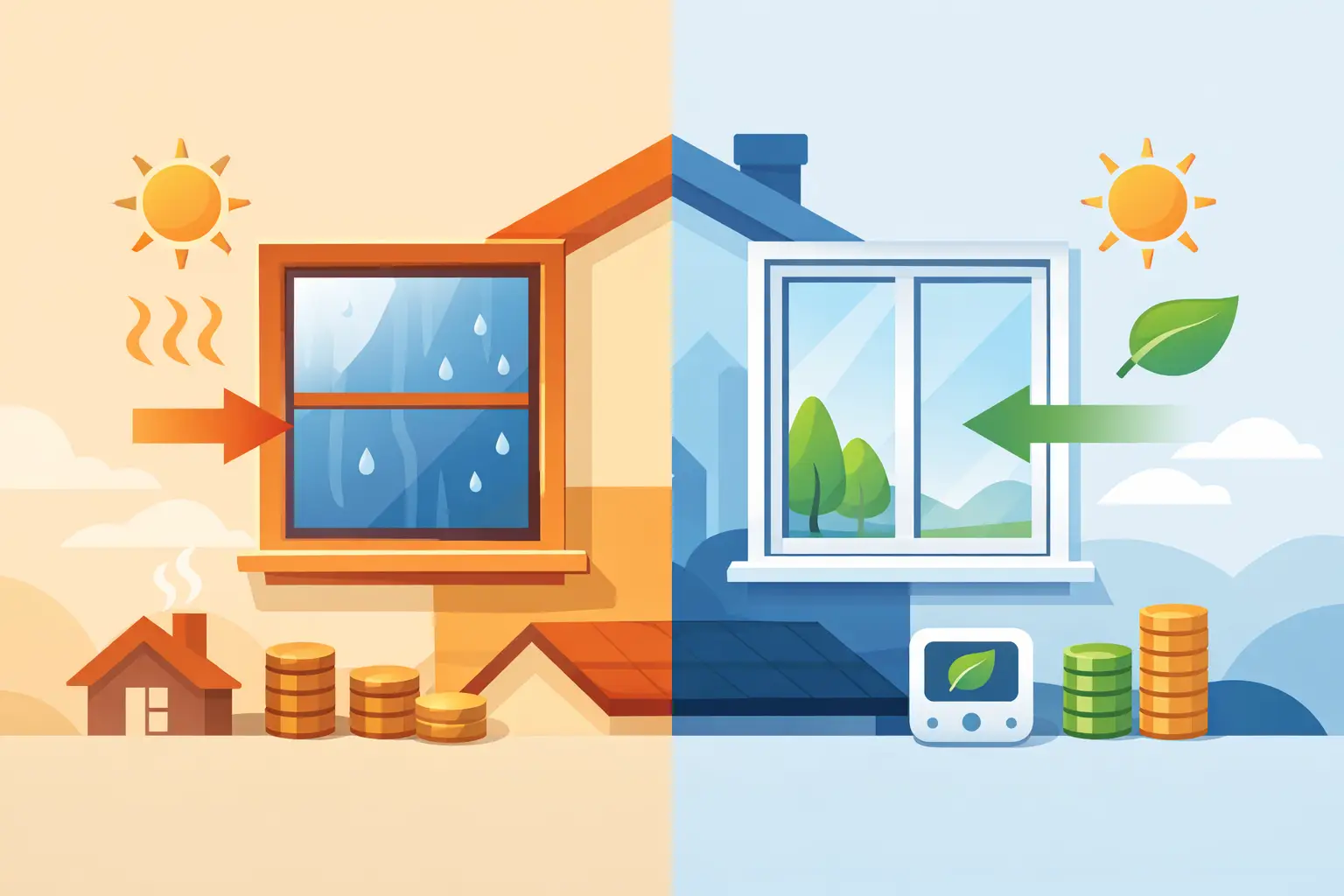
A Florida home can feel the difference of new windows long before the first utility bill arrives. Rooms facing the afternoon sun are less punishing, the air conditioner cycles more steadily, and drafts around aging frames are reduced. This window replacement energy savings example shows how the numbers may work for a Treasure Coast property, while keeping expectations realistic about what replacement windows can and cannot save.
A Window Replacement Energy Savings Example for Florida
Consider a 1,600-square-foot single-story home in Stuart or Jensen Beach with 12 older aluminum-frame, single-pane windows. The home has approximately 240 square feet of glass, receives strong afternoon sun, and relies on central air conditioning for much of the year. The existing windows are still intact, but their seals, frames, and weatherstripping have aged.
Assume the homeowner spends about $2,400 per year on electricity, with cooling representing a significant portion of that cost. They replace the old windows with properly installed, energy-efficient impact windows featuring insulated glass, low-E coating, improved weatherstripping, and frames designed for Florida conditions.
If the window upgrade reduces the home’s overall cooling demand by 10% to 18%, the annual utility savings could fall in this range:
- At a 10% reduction, annual savings would be about $240.
- At a 15% reduction, annual savings would be about $360.
- At an 18% reduction, annual savings would be about $432.
Those figures are examples, not a guarantee. A home with a poorly insulated attic, leaky ductwork, an aging air conditioner, or doors that do not seal properly may not see the same result. On the other hand, a home with large west-facing glass areas and very old windows may experience a more noticeable improvement in comfort and cooling use.
The practical benefit is not limited to the dollar amount on a bill. In coastal Florida, better windows can help reduce solar heat gain, limit humid outside air entering the home, filter a portion of damaging UV exposure, and provide storm protection when the correct impact-rated products are selected.
Why Energy Savings Vary From One Home to Another
Window performance is only one part of a home’s energy picture. That is why a responsible estimate begins with the property itself rather than a broad savings promise.
The condition of the existing windows
Replacing old single-pane windows with modern insulated glass generally creates a larger opportunity for savings than replacing windows that are already double-pane and reasonably tight. Windows with failed seals, visible gaps, corrosion, difficult operation, or loose frames may allow more air and moisture transfer than homeowners realize.
In many Florida homes, the largest improvement comes from stopping uncontrolled air leakage around the window opening. Precision installation matters as much as the glass package. Even a premium window will not perform as intended if it is improperly flashed, sealed, or secured.
Glass orientation and direct sun exposure
A south- or west-facing room can receive intense solar heat for hours. When older glass allows that heat to enter, the air conditioner has to work harder to maintain the thermostat setting. Low-E glass and an appropriate solar heat gain coefficient can help manage that load without turning a bright room into a dark one.
The best glass choice depends on the property. A homeowner may prioritize lower solar heat gain in a sun-exposed living room, while another may want to preserve a clearer view of the water or backyard. Product selection should balance energy performance, appearance, local code requirements, and the amount of natural light the homeowner wants to keep.
Air conditioning equipment and household habits
A newer, well-maintained HVAC system can respond more efficiently to improved windows than an older system with restricted airflow or failing components. Thermostat settings, occupancy, appliance use, shade from landscaping, and the number of people living in the home also affect monthly energy use.
For that reason, comparing one month’s bill before and after installation is rarely enough. Weather changes, hurricane season, travel, and electric-rate adjustments can distort the comparison. Looking at a full year of usage, while accounting for changes in occupancy and weather, gives a more useful view.
The Right Window Features for Coastal Energy Performance
Florida homeowners should not have to choose between energy efficiency and storm readiness. Many impact-rated replacement windows are built to deliver both, but performance ratings and installation details should be reviewed before work begins.
Start with the U-factor, which measures how readily heat moves through a window. Lower values generally indicate better insulating performance. Also review the solar heat gain coefficient, often called SHGC. In hot, sunny climates, a lower SHGC can help reduce the amount of solar heat entering through the glass.
Low-E coatings are another key consideration. They help reflect portions of infrared heat while allowing useful daylight into the home. Depending on the glass configuration, they can also help reduce fading on flooring, furniture, artwork, and window treatments.
Frame construction deserves attention as well. Coastal properties face humidity, wind-driven rain, salt air, and long-term sun exposure. Premium materials, corrosion-resistant components, and carefully engineered drainage paths help support lasting performance. The window must also meet applicable Florida Building Code requirements and local wind-load requirements for the project location.
Energy Savings Are Not the Only Return on Investment
It is tempting to judge a replacement window project only by dividing the installation cost by estimated annual utility savings. That calculation has value, but it does not tell the entire story for a Florida property.
For example, if a project produces $360 in yearly energy savings, the energy-only payback may be lengthy. Yet homeowners often replace windows because the old units are difficult to open, allowing water intrusion, showing corrosion, creating hot spots, or failing to provide the level of hurricane protection they want. A well-planned replacement can address those concerns in one project.
Impact windows may also eliminate the need to install and store temporary storm panels for each event, depending on the home’s protection plan. They can improve day-to-day security, reduce outside noise, and enhance curb appeal. Potential insurance benefits vary by carrier, policy, location, and documentation, so they should never be assumed without confirming details directly with the insurer.
For property investors and commercial property managers, improved windows can also support tenant comfort, reduce maintenance calls related to leaks or failed operation, and help preserve the building’s appearance. The exact return depends on rent levels, occupancy, property condition, and the scope of the renovation.
How to Estimate Savings for Your Own Home
A useful estimate begins with recent electric bills, but it should not stop there. Gather 12 months of usage if possible, identify which rooms feel hottest during the afternoon, and make note of windows that rattle, stick, leak, or show fogging between glass panes.
During a professional consultation, ask for a comparison of window styles and glass options rather than accepting a one-size-fits-all recommendation. A bedroom, waterfront living area, enclosed lanai, and shaded north-facing office may have different needs. The right configuration should fit the opening, the home’s architecture, local requirements, and the homeowner’s priorities.
It also helps to consider these four questions before requesting a quote:
- Are the current windows single-pane, damaged, drafty, or difficult to operate?
- Which rooms receive the strongest direct afternoon sun?
- Is hurricane protection a primary reason for the project?
- Are you addressing other efficiency issues, such as attic insulation, duct leakage, or exterior doors?
Clear answers make it easier to build a project around real performance goals instead of an overly broad savings claim.
Professional Installation Protects the Expected Performance
The best replacement window is only as reliable as the installation behind it. Correct measurements, opening preparation, fastener selection, sealing, flashing, and final operation checks all affect how a window performs through summer rain, high winds, and daily use.
Jensen Beach Aluminum & Windows approaches replacement projects with the same focus that coastal homes demand: premium-quality products, skilled professionals, and careful attention to long-term protection. A detailed quote should explain the window type, glass package, applicable ratings, installation scope, and any site conditions that could affect the project.
If your current windows make certain rooms uncomfortable or leave you concerned before storm season, start with an honest property assessment. The most valuable upgrade is one that improves comfort every day while giving your home the protection and workmanship it needs for years ahead.