


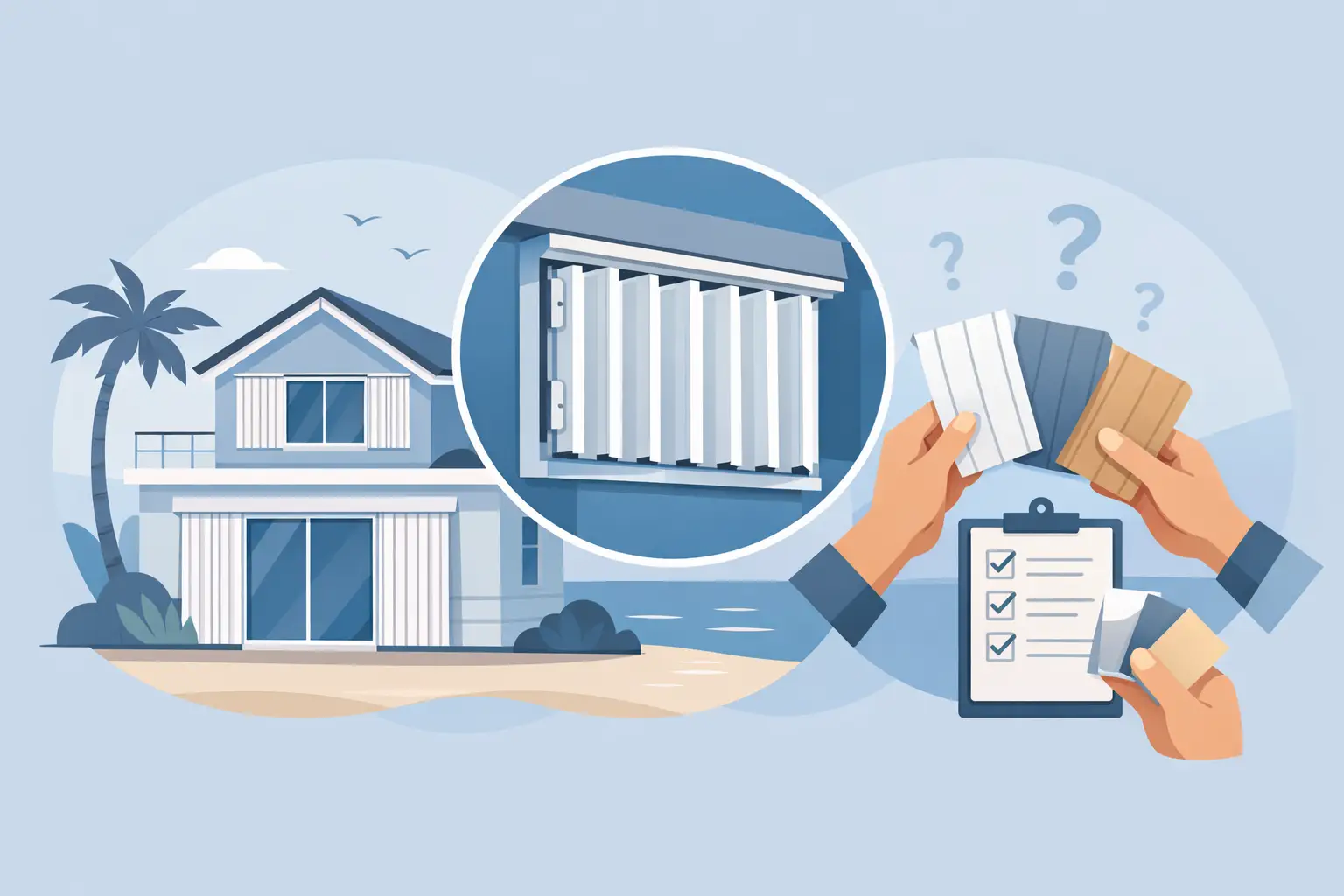
When a storm watch is posted, the wrong shutter choice becomes obvious fast. If opening, closing, or securing your shutters feels like a struggle, that is usually not a product problem alone – it is a selection problem. A smart accordion shutter selection guide helps Florida property owners choose a system that fits the building, the exposure, and the way the shutters will actually be used year after year.
Accordion shutters remain one of the most practical forms of hurricane protection for homes, condos, storefronts, and multifamily properties. They stay attached to the opening, close quickly, and do not require off-site storage like panels. But not every system performs the same way in coastal conditions, and not every property needs the same setup. The best choice depends on opening size, mounting conditions, code requirements, ease of operation, appearance, and long-term service needs.
Why an accordion shutter selection guide matters in Florida
In Florida, storm protection is not just about covering a window. It is about meeting wind load demands, protecting the building envelope, and choosing products that can stand up to salt air, moisture, sun exposure, and repeated use. A shutter that looks fine on paper may be a poor fit if the tracks corrode early, the panels bind during operation, or the locking setup is difficult for the owner to manage.
That is why selection should start with the property, not the catalog. A single-family home in Jensen Beach may need a different solution than a commercial unit with wide spans and frequent access needs. Corner exposure, upper-story openings, lanai enclosures, and large glass doors all change the conversation.
Start with the opening, not the product
The first step in any accordion shutter selection guide is evaluating the actual opening conditions. Width and height are only part of it. You also need to consider what the shutter is protecting, where the tracks can be mounted, and whether there are obstructions such as handles, light fixtures, hose bibs, railings, or decorative trim.
Sliding glass doors often need a different approach than standard windows because they involve larger spans and regular traffic patterns. Second-story windows may create access challenges that make permanently attached shutters especially attractive. On commercial buildings, repeated opening and closing may put more emphasis on smooth operation and hardware durability.
Mounting surface matters too. Concrete block, wood framing, and masonry details affect anchoring methods and long-term stability. If the substrate is weak, uneven, or damaged, that should be addressed before installation. Good shutters installed on poor mounting conditions will not deliver the performance you expect.
Material quality and coastal durability
Accordion shutters are expected to live outdoors full time, so material quality is not a detail to overlook. In coastal Florida, salt exposure can shorten the life of lower-grade components quickly. The shutter panels, tracks, fasteners, wheels, and locks all need to be built for harsh conditions.
Aluminum is a common choice because it offers a strong balance of weight, durability, and corrosion resistance. That said, not all aluminum systems are equal. Gauge, finish quality, and the design of moving parts all influence how well the shutter performs over time. A cheaper system may save money upfront but create more maintenance issues later, especially if it is exposed to direct wind-driven rain and salt air.
Hardware deserves just as much attention as the panel itself. Tracks should operate cleanly, locking systems should feel secure without being difficult to use, and rollers should move smoothly under regular use. If a shutter is hard to close on a calm day, it will not become easier when a storm is approaching.
Code compliance and design pressure ratings
One of the most important parts of an accordion shutter selection guide is verifying that the system is approved for the application. Florida properties must meet specific code requirements, and shutters should be selected based on tested performance, not assumptions.
Design pressure ratings matter because different openings on the same building can have different wind load demands. Larger openings, upper elevations, corner zones, and coastal exposures often require stronger configurations. A system approved for one window may not be appropriate for a larger glass opening nearby.
This is where professional measurement and specification make a real difference. Proper product approval, engineering data, and installation methods need to line up with the actual opening and local code expectations. Cutting corners here can create problems during permitting, installation, and inspection.
Ease of use is part of performance
Storm shutters should not only protect the opening – they should also be practical enough that people will actually use them. This is especially important for seasonal residents, older homeowners, rental property owners, and property managers responsible for multiple units.
An accordion system should close without excessive force, align properly when locked, and stack neatly when open. If the shutters are for a vacation property, ease of operation may be one of the most important buying factors. If they are for a commercial property, the system needs to work predictably across repeated use cycles.
Security can also be part of the decision. Some owners want shutters primarily for storm protection, while others also value the added privacy and security they can provide when the property is vacant. In those cases, locking design and panel strength become even more relevant.
Choosing for appearance without sacrificing protection
Shutters are a functional product, but they also become part of the building exterior. On a home, that affects curb appeal. On a commercial property, it affects presentation and tenant perception. A good shutter system should look intentional, not like an afterthought.
Track profile, panel stack, finish color, and how the shutters sit against the wall all influence appearance. Some systems are bulkier than others. Some disappear more cleanly when open. If aesthetics matter, it is worth discussing early so the layout and finish work with the architecture instead of competing with it.
That said, appearance should not outweigh engineering. The right balance is a shutter that complements the structure while still meeting the protection demands of the location.
Professional installation is part of the product
Accordion shutters are only as dependable as the installation behind them. Even a premium system can underperform if measurements are off, anchors are poorly placed, or tracks are not aligned correctly. That is why selection and installation should never be treated as separate issues.
A skilled installer will assess the opening, confirm the proper system, identify substrate concerns, and make sure the shutter operates the way it should from day one. Precision matters at every stage, from layout and fastening to final adjustment. On storm protection projects, workmanship is not cosmetic – it directly affects function and reliability.
For many Florida property owners, working with an experienced local company such as Jensen Beach Aluminum & Windows adds another layer of confidence because regional knowledge matters. Coastal exposure, permitting expectations, and long-term service needs are not the same here as they are in inland markets.
Maintenance and long-term value
A well-chosen accordion shutter should provide years of service, but it still needs basic care. Tracks should be kept clear, moving parts should be checked periodically, and signs of wear should be addressed early. In salty environments, regular cleaning can help preserve finish quality and smooth operation.
Long-term value comes from more than purchase price. It comes from durability, serviceability, and dependable use when weather turns serious. A lower-cost option that sticks, corrodes, or needs frequent adjustment may cost more over time than a better-built system installed correctly from the start.
When comparing options, ask how the shutters will hold up in your exact environment, how they will be serviced if needed, and whether replacement parts and support will be available down the road. Those questions matter just as much as the initial quote.
The best accordion shutter selection guide is specific to your property
There is no single best accordion shutter for every Florida property. The right choice depends on your openings, your location, your building type, and how you plan to use the system. Some owners need the fastest possible storm prep. Others care most about appearance, code compliance, or long-term durability near the water. Often, the best answer is a balance of all four.
If you are choosing shutters for a home, condo, rental, or commercial building, the strongest results come from a measured, site-specific approach. Good storm protection should feel dependable before a storm is on the map. The right system does that quietly, year after year, without making protection harder than it needs to be.
When you are ready to compare options, focus on fit, engineering, materials, and installation quality first. The right shutters should protect your property, operate with confidence, and give you one less thing to worry about when the weather starts to change.
1 comment on “Accordion Shutter Selection Guide”