


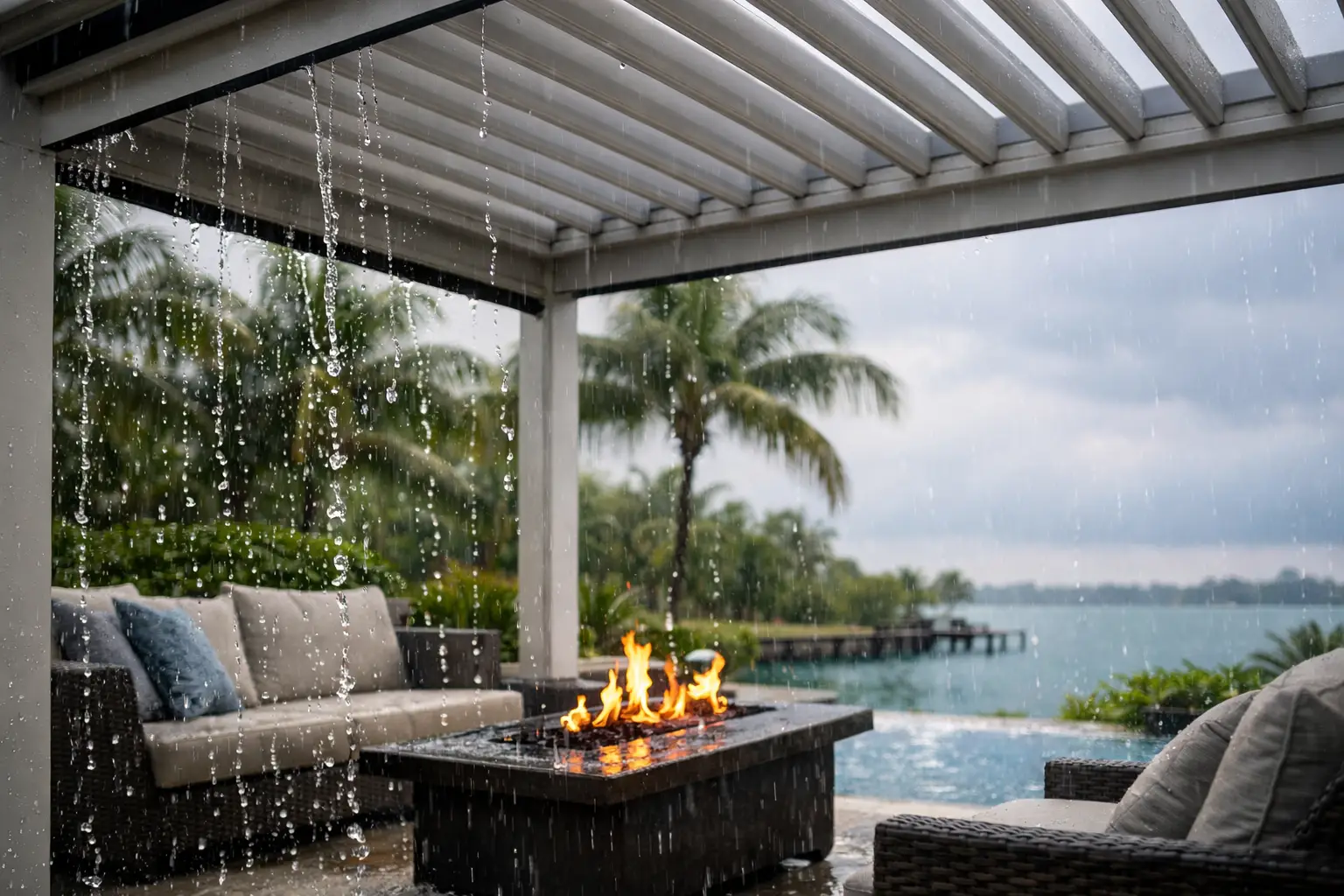
A Florida patio can go from bright and calm to rain-soaked in minutes. That is why homeowners considering an outdoor living upgrade often ask one practical question first: are louvered roofs waterproof?
A properly designed and professionally installed louvered roof can provide excellent rain protection when its louvers are fully closed. The system is built to channel water off the roof and through an integrated gutter system rather than allowing it to drip through the overhead structure. But “waterproof” is not a blanket promise. Performance depends on the roof design, drainage layout, installation quality, maintenance, and the conditions outside.
For Treasure Coast properties exposed to heavy summer rain, wind-driven storms, salt air, and intense sun, those details matter. A premium louvered roof can turn a patio, pool deck, or outdoor kitchen into a space you can use more often, but it needs to be selected and installed with Florida weather in mind.
Are Louvered Roofs Waterproof When Closed?
When the louvers are fully closed, a quality louvered roof is designed to act as a solid rain barrier. Each louver overlaps and interlocks with the next, creating a continuous surface across the roof. Water lands on that surface, flows toward the frame, enters built-in gutters, and drains through concealed posts or designated downspouts.
This is different from a traditional open pergola, where fixed slats provide shade but allow rain to pass through. It is also different from a fabric awning that may shed water but can be vulnerable to wind, staining, or wear over time. A louvered roof gives you adjustable control: open the louvers for sun and airflow, angle them for filtered shade, or close them when rain moves in.
Under normal rainfall, a well-installed system should keep the area below dry enough for furniture, outdoor cooking, and everyday use. You may still see water at the outer edge of the structure, especially where the roof meets an existing wall or where wind pushes rain sideways. That does not necessarily mean the roof has failed. It means the entire patio enclosure and drainage plan need to be evaluated as a system.
How a Louvered Roof Keeps Rain Out
The best systems manage water through engineered components rather than relying on a simple overlap between slats. The louvers are shaped and positioned to direct water toward perimeter channels. Those channels carry water to gutters built into the frame, which then move it away through posts or downspouts.
The result is a clean appearance with less visible gutter hardware. More importantly, it helps prevent water from falling directly through the roof when the louvers are closed.
Several details determine whether that system performs as intended:
- Louver design and seals: Tighter interlocking profiles and quality seals help limit water entry between louvers.
- Frame slope and drainage: Even a flat-looking roof requires precise engineering so water flows toward the intended drainage points.
- Attachment to the home: Wall flashing and connection details are critical on attached systems. Poor transitions can allow leaks at the wall, even if the louvers themselves are working properly.
- Post and gutter placement: Water must have a clear path away from the roof and away from the foundation, patio surface, and pool deck.
These are not cosmetic details. In coastal Florida, where a passing storm can deliver heavy rainfall in a short period, proper water management protects both the outdoor structure and the home it serves.
What “Waterproof” Does and Does Not Mean in Florida
Homeowners deserve a clear answer: a louvered roof can be highly water-resistant and capable of keeping a covered area dry during typical rain, but no outdoor shade structure should be treated as completely unaffected by every weather event.
Wind-driven rain is the biggest variable. During a strong thunderstorm or tropical system, rain can be blown horizontally under the outer edges of nearly any open-sided patio cover. If your space has no side walls, screens, or retractable screens, moisture can enter from the sides even when the roof is closed.
A louvered roof also should not be assumed to provide the same weather barrier as a fully enclosed sunroom or a permanent conventional roof assembly. It is an advanced outdoor living system designed for shade, ventilation, and rain control. Its capabilities are substantial, but the right product should match how you plan to use the space.
For example, a homeowner who wants to protect a seating area during afternoon showers may find a louvered roof ideal. A property owner who needs a fully conditioned, enclosed room with year-round protection from wind, rain, and insects may be better served by a sunroom or a more complete enclosure.
Installation Is the Difference Between a Dry Patio and a Frustrating One
Even premium materials cannot overcome poor installation. Louvered roof systems require accurate measurements, secure structural connections, correctly pitched drainage components, and careful finishing around attachment points.
On Florida properties, installers also need to account for local building requirements, wind-load considerations, existing slab conditions, roofline geometry, and where water will discharge. A system that looks level from the ground may still need a calculated slope and specific placement to drain effectively.
The attachment point deserves particular attention. When a roof is mounted to the home, the connection must be integrated carefully to avoid creating a path for water behind exterior finishes. When the roof is freestanding, the footings, posts, and drainage layout still need to be planned around the patio, landscaping, and traffic flow.
Jensen Beach Aluminum & Windows approaches outdoor living projects with the same focus on premium materials, skilled installation, and lasting service that Florida property owners expect for other exterior upgrades. The goal is not simply to add shade. It is to create a structure that performs reliably in the environment where it will be used.
Choosing the Right Louvered Roof for Coastal Conditions
Not every louvered roof system offers the same level of weather performance. For a coastal home or commercial property, look beyond color and style. Ask how the system handles rainwater, what materials are used, how it is rated for local conditions, and how it will be anchored to your property.
Aluminum is a popular choice because it is durable, low-maintenance, and well suited to humid conditions. A quality finish helps the system maintain its appearance under strong UV exposure, while engineered louvers provide dependable shade control. Motorized operation can also be a practical benefit. With the touch of a button, you can close the roof quickly when rain begins instead of manually adjusting multiple panels.
For added comfort, consider how the roof will work with other features. Retractable screens can help reduce insects and side-blown rain. Integrated lighting makes the space useful after sunset. Fans improve comfort during warm weather. Properly planned pavers or concrete can improve drainage beneath the structure and create a finished outdoor area that feels connected to the home.
Maintenance Helps Protect Rain Performance
Louvered roofs are designed for low maintenance, but they are not maintenance-free. Leaves, palm debris, seed pods, and dirt can collect in gutters and drainage channels. If water cannot move freely, it may overflow in places where it normally would not.
A simple seasonal inspection goes a long way. Keep gutters clear, rinse accumulated debris from accessible channels, and check that downspouts direct water away from the house and walking areas. After a major storm, look for visible damage, loose components, or drainage changes that should be addressed promptly.
If the louvers are motorized, follow the manufacturer’s guidance for operation and service. Avoid forcing louvers that are blocked by debris, and do not leave the system open when severe weather is approaching unless the manufacturer specifically directs otherwise.
Questions to Ask Before You Buy
Before choosing a louvered roof, ask the contractor how the system drains when fully closed and where the water will exit the structure. Ask whether the design is appropriate for your location and what permits or engineering may be required. It is also wise to discuss the difference between rain protection from above and protection from wind-driven rain at the sides.
Request a plan that considers the full outdoor space, not just the roof. The best result accounts for existing doors, windows, rooflines, pool cages, screen enclosures, pavers, landscaping, and the direction of prevailing weather. A professional consultation should make those decisions easier, not leave you guessing.
A louvered roof is most valuable when it gives you confidence to enjoy your patio more often – shade when the sun is harsh, airflow when the weather is pleasant, and dependable cover when the afternoon rain arrives. With the right system, thoughtful drainage, and precision installation, that confidence can become part of everyday Florida living.