


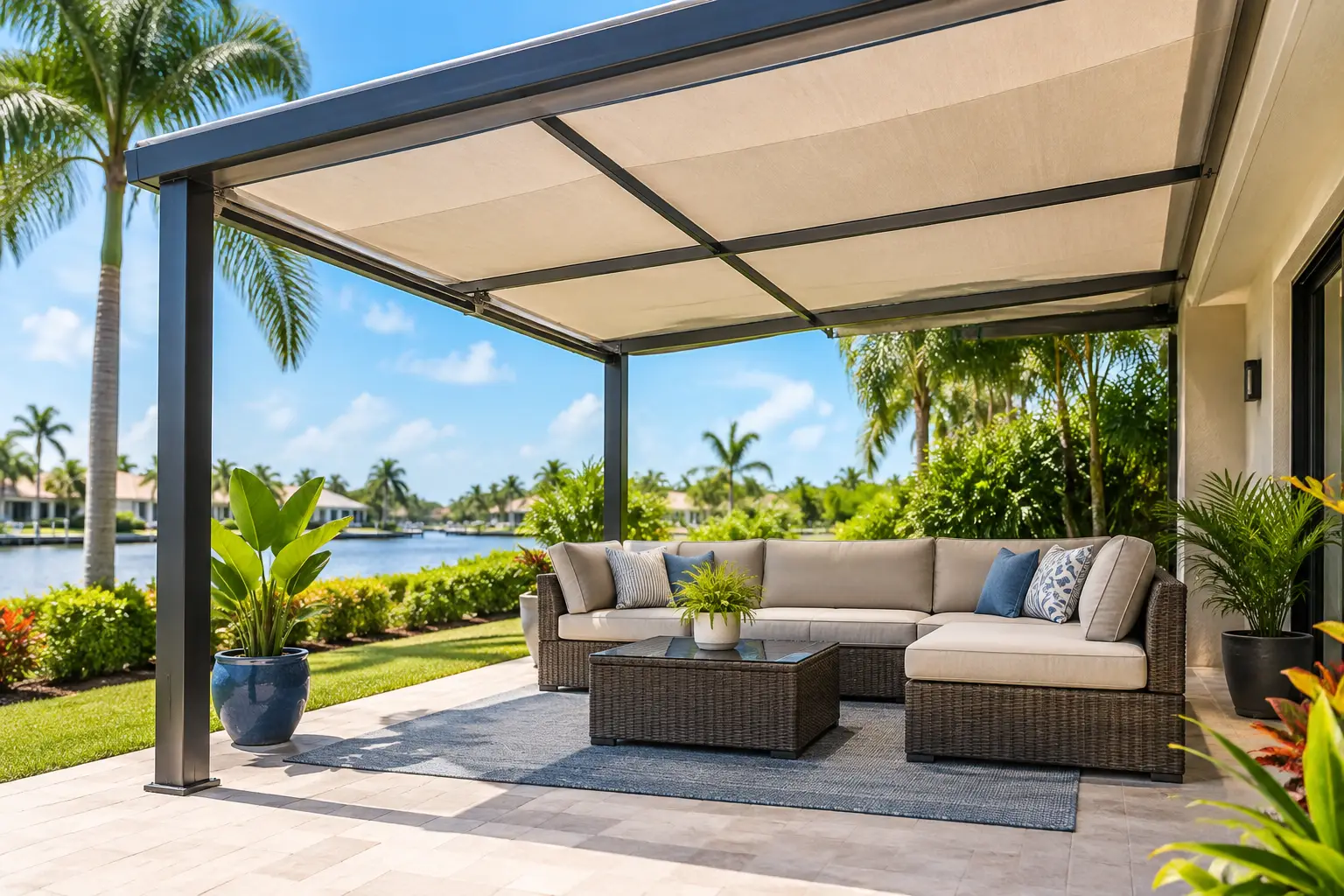
A patio that is too hot, too exposed, or constantly wet after an afternoon storm rarely gets the use it deserves. The best patio shade structure ideas for Florida homes do more than block sunlight. They create a comfortable outdoor area while standing up to heat, humidity, salt air, heavy rain, and the wind demands of a coastal property.
The right choice depends on how you use the space, how much protection you need, and whether the structure will be attached to the home or freestanding. A skilled installation team can also help ensure the design, materials, footings, and connections meet local permitting and engineering requirements.
How to Choose the Right Patio Shade Structure
Start by deciding what “shade” means for your patio. If you want a place to sit outside during the brightest part of the day, partial shade from a pergola or louvered roof may be enough. If you want to keep patio furniture dry, reduce heat along an exterior wall, or create an all-weather entertaining area, a solid insulated roof system is often the better investment.
Orientation matters, too. A west-facing patio receives intense late-day sun and may need a deeper roof projection, adjustable louvers, or retractable screens. A pool deck may benefit from broad overhead coverage with open sides for airflow. For coastal homes, material selection and installation quality should be treated as seriously as appearance. Aluminum framing, properly engineered anchoring, corrosion-resistant components, and professional flashing all contribute to long-term performance.
10 Best Patio Shade Structure Ideas for Florida Properties
1. Insulated Aluminum Roof Panels
An insulated aluminum patio roof is one of the most practical choices for homeowners who want dependable shade and rain protection. These systems use insulated roof panels to reduce the heat transferred into the covered area, making the patio noticeably more comfortable during Florida’s hottest months.
This is a strong option for outdoor kitchens, dining spaces, and patios directly connected to the home. It provides a finished, permanent appearance and can often accommodate ceiling fans, lighting, and gutters. The trade-off is that a fixed roof blocks sunlight year-round, so careful planning is needed to avoid making nearby interior rooms feel darker.
2. Louvered Roof Systems
Louvered roof systems offer control that a fixed roof cannot. Motorized or manually operated louvers can open for sunlight and breezes, tilt to block direct sun, and close when rain begins. This flexibility works especially well for patios used throughout the day.
For a Florida property, select a premium system designed for outdoor exposure and have it professionally installed. Not every louvered roof system carries the same wind or water-management capabilities. The right product and installation details should match the property’s location, local code requirements, and exposure conditions.
3. Aluminum Pergolas
An aluminum pergola delivers architectural definition and filtered shade without fully enclosing the patio. Its open-beam design suits homeowners who want a lighter, more open feel than a solid roof provides. It can also create a clear transition between the home, pool area, and landscape.
Aluminum is particularly well suited to coastal conditions because it does not rot, warp, or require the recurring maintenance of wood. Add a canopy, retractable shade fabric, or climbing plants if more coverage is needed. Keep in mind that a standard open pergola will not keep furniture dry during rainstorms.
4. Retractable Awnings
Retractable awnings are a smart solution for patios that need shade on demand. They extend when the afternoon sun is strongest and retract when you want open sky or need to prepare for changing weather. They can be especially useful over smaller patios, decks, and seating areas where a permanent roof would feel too heavy.
The key is selecting a quality awning with durable fabric, a dependable operating system, and secure mounting. A retractable awning is not a substitute for a permanent engineered roof in a high-wind situation. It must be retracted when conditions require it, which makes homeowner awareness part of its long-term care.
5. Fixed Aluminum Awnings
A fixed aluminum awning provides consistent shade with a clean, low-maintenance finish. It is a practical choice over windows, entry doors, walkways, and smaller patio areas where direct sun adds heat to the home. Properly positioned awnings can also help reduce solar heat gain at windows and doors.
Unlike fabric awnings, aluminum systems hold their shape and require less ongoing attention. They do not offer the flexibility of a retractable model, but they are a dependable solution when predictable coverage is the priority.
6. Screen Enclosures With a Covered Section
For homeowners who want shade plus pest control, a screen enclosure with a covered roof section can transform the way a patio is used. The covered portion offers relief from rain and sun, while the screened areas maintain airflow and help keep mosquitoes, debris, and leaves out of the space.
This approach works well around pools and lanais, especially where the goal is to create a comfortable outdoor room rather than simply shade one seating area. Screen selection, roof design, and structural details should be matched to the property and local regulations. A thoughtful layout can preserve views while providing more usable square footage.
7. Patio Roof Extensions
Extending the existing roofline can make a patio feel like a natural part of the home. This option provides substantial coverage and can complement the home’s existing architecture more closely than a standalone structure. It is often considered when homeowners are planning a larger renovation or want a more permanent outdoor living area.
Because a roof extension connects directly to the home, drainage, flashing, structural loads, and permits need careful attention. The result can be excellent, but this is not a project for shortcuts. Professional design and installation are essential for preventing leaks and ensuring a finished appearance.
8. Freestanding Pavilion Structures
A freestanding pavilion is ideal when the best outdoor gathering spot sits away from the house. It can cover a poolside lounge, outdoor kitchen, fire feature, or garden seating area without requiring a direct attachment to the home.
Pavilions provide a strong visual focal point and can be designed with solid roofing, ceiling fans, lighting, and finished columns. They do require a stable foundation and engineered anchoring. On coastal properties, the location should be evaluated for wind exposure, drainage, and access for installation.
9. Shade Sails
Shade sails bring a modern, airy look to patios, playground areas, and pool decks. Their tensioned fabric creates useful sun protection while allowing heat to escape instead of collecting beneath a solid roof. Multiple sails at different heights can add visual interest and expand coverage.
They are best used where rain protection is not the primary goal. Fabric performance, anchoring points, and wind exposure are critical considerations in Florida. Depending on the product and weather conditions, sails may need to be removed ahead of severe storms. A professionally planned installation is far safer than attaching a sail to undersized posts or unsuitable parts of the home.
10. Carports That Double as Patio Covers
A carport can serve more than one purpose. For homeowners with limited outdoor space, a well-designed aluminum carport may protect vehicles when needed and function as a shaded entertaining space at other times. This makes it a practical option for compact properties, multifamily residences, and commercial locations.
The best designs account for traffic flow, drainage, and the appearance of the structure from the street. With the right finish and placement, a carport can provide useful coverage without looking like an afterthought.
Plan for Coastal Durability Before You Build
A beautiful patio structure is only valuable if it performs reliably season after season. Florida’s sun can fade lower-grade materials, moisture can expose weak installation details, and coastal air can accelerate corrosion. That is why premium materials and precision installation deserve priority over the lowest initial quote.
Ask how the structure will be anchored, how roof water will drain, and whether the design is appropriate for your wind zone. If the patio connects to the home, ask how flashing and attachment points will be handled. Also consider whether you may want screens, lighting, fans, pavers, or a future outdoor kitchen. Planning these features early can prevent expensive modifications later.
Jensen Beach Aluminum & Windows helps Treasure Coast property owners evaluate shade structures as part of a complete outdoor living plan, with skilled professionals focused on quality materials, dependable protection, and a finished result built to last.
The most useful patio shade structure is the one that fits your daily routine, respects your property’s exposure, and gives you a reason to spend more time outside. Start with the comfort you want, then choose a structure designed to protect that investment for years to come.