


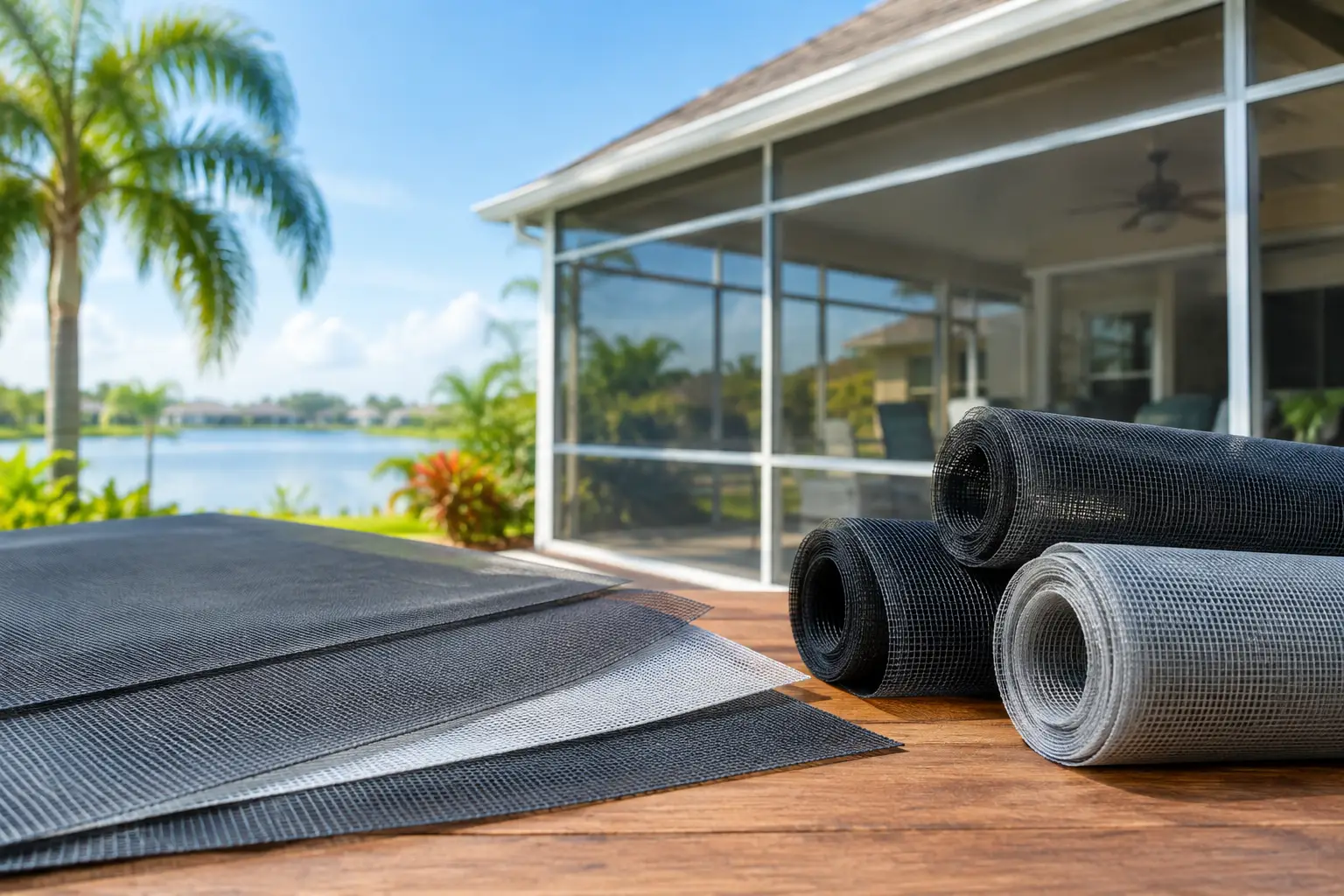
A torn pool-cage panel is more than a cosmetic problem when mosquitoes are active, pets are pushing against the enclosure, or wind-driven debris has weakened aging screening. The best screen mesh options are not one-size-fits-all. For Florida homes, the right choice depends on where the screen is installed, what is damaging it, how much airflow you want, and whether small insects, pets, privacy, or sun exposure are the primary concern.
A professional rescreen is a chance to correct the original material selection, not simply replace every panel with the same basic mesh. A lanai near the water, a high-traffic patio with dogs, and a pool enclosure surrounded by no-see-ums each place very different demands on a screen system.
Choosing the Best Screen Mesh Options for Your Space
Start with the purpose of the enclosure. A pool cage usually needs broad views, dependable insect control, and good airflow. A lanai may need more shade and privacy. Patio doors and lower wall panels often need extra resistance to pet claws, toys, and everyday contact.
Mesh is commonly identified by its weave count, such as 18/14 or 20/20. The first number represents strands in one direction and the second represents strands in the other. A tighter weave blocks smaller insects, but it can reduce airflow and make the screen appear slightly darker. Material matters just as much as weave. Fiberglass is a familiar, economical option, while premium polyester mesh is selected when strength and long-term durability are higher priorities.
The best material is not automatically the strongest or the tightest. It is the material that addresses the conditions your property actually faces without sacrificing the comfort and appearance you expect.
Standard fiberglass mesh for everyday insect control
Standard fiberglass insect screen is a practical choice for many pool cages, lanais, windows, and porch enclosures. A common 18/14 mesh provides reliable protection from typical flying insects while keeping the space open and well ventilated. It is often the most cost-conscious option for homeowners who need to replace worn or damaged panels across a large enclosure.
For a typical Florida patio that does not experience unusual pest pressure or repeated physical damage, standard mesh can be a sensible fit. It allows strong airflow and maintains a relatively clear view of the yard, pool, or water.
The trade-off is durability. Fiberglass mesh can stretch, snag, or tear more easily than premium materials. It may not be the right long-term answer for lower panels that dogs lean on or for an exposed coastal property where years of sun, salt air, and weather take a steady toll.
No-see-um mesh for small biting insects
If tiny insects are making an outdoor space uncomfortable, a tighter no-see-um screen is usually worth considering. Often referred to as 20/20 mesh, this screening is designed with smaller openings than standard insect mesh. It helps keep out gnats, midges, and no-see-ums that can pass through wider openings.
This option is especially useful near marshes, canals, wetlands, and other areas where small biting insects are common. It can make a major difference in how often you use a lanai or pool deck during the evening.
No-see-um mesh does come with a compromise. The denser weave limits airflow compared with standard 18/14 screening, and it can hold more dust, pollen, and debris. Homeowners who value maximum breeze may prefer to use it only on the sides of an enclosure where insects are most troublesome, while retaining more open mesh elsewhere. A skilled installer can help plan a practical combination.
Polyester and high-strength mesh for lasting performance
Premium polyester screen mesh is built for homeowners who want greater tear resistance and a longer service life. It is commonly chosen for pool cages and lanais where standard fiberglass screens have repeatedly failed or where the property receives intense sun and frequent weather exposure.
High-strength mesh can be a strong investment in Florida because replacing individual failed panels over and over can become frustrating and costly. The material is often better able to handle everyday stress, including branches brushing against the enclosure and normal movement around the frame.
Not all high-strength screens have the same visibility, insect protection, or price point. Some are designed to emphasize openness and view preservation; others focus more heavily on toughness. The enclosure frame, spline channel condition, and installation method all affect the finished result. Premium material deserves precision installation so the screen is properly tensioned and secured.
Pet-resistant mesh for lower panels and busy patios
Pet-resistant screen is a smart choice when dogs, cats, or active children regularly use the enclosed area. It is typically heavier and more durable than standard fiberglass mesh, helping it withstand claws, paws, and incidental impacts that would quickly damage conventional screening.
Many homeowners do not need pet mesh across an entire pool cage. Installing it on the lower wall panels, doors, and the sections closest to pet traffic can provide targeted protection while controlling the overall project cost. This approach also preserves lighter, more open screening in upper panels where extra impact resistance is less necessary.
Pet mesh is not indestructible, and it should not be treated as a barrier that can safely contain a determined pet. It is a durable screen material, not a substitute for proper gates, fencing, or supervision. Still, for common claw and paw damage, it can reduce the cycle of frequent repairs.
Solar and privacy mesh for shade and comfort
Solar screen and privacy mesh help manage glare, heat, and visibility in exposed outdoor living areas. These materials are often selected for west-facing lanais, patios near neighboring homes, or seating areas that become uncomfortable in direct afternoon sun.
Depending on the product, solar mesh can filter a portion of sunlight while maintaining outward visibility. Privacy-oriented mesh provides a more obscured view from outside, although privacy changes with lighting conditions. At night, when interior or patio lighting is brighter than outdoors, privacy may be reduced.
These meshes can make a lanai more usable, but they also reduce light and airflow to some degree. They are usually best placed strategically rather than installed everywhere. A professional consultation can identify the panels that receive the harshest sun or face the closest neighboring sightlines.
Match Mesh to Florida Conditions, Not Just the Damage
A good rescreening decision accounts for the whole property. Coastal homes need materials that can stand up to heat, humidity, ultraviolet exposure, and salt air. Properties near preserves or waterways may need tighter insect control. Homes with large dogs may benefit from reinforced lower panels. Rental properties may prioritize durable, easy-to-maintain materials that reduce service calls.
It also helps to look beyond the torn panel. If screens are brittle, faded, loose, or failing in several locations, the enclosure may be ready for a full rescreen. During that process, the frame, fasteners, doors, and spline channels should be evaluated as well. New mesh cannot compensate for corroded hardware, loose structural members, or a door that no longer closes properly.
For pool enclosures and larger outdoor structures, screen mesh should never be confused with hurricane protection. Screening can improve comfort and insect control, but it is not designed to replace approved storm shutters, impact-rated windows and doors, or professionally engineered structural protection. After a storm, a careful inspection is the best way to identify damaged components before minor issues become larger repairs.
Why Professional Installation Matters
The quality of the installation has a direct effect on screen life and appearance. Mesh that is pulled too tight can be stressed and prone to premature failure. Mesh that is too loose may sag, flap, or collect debris. Proper spline selection, secure corners, clean panel alignment, and attention to frame condition all matter.
Jensen Beach Aluminum & Windows helps Florida property owners choose screening solutions that fit the way they use their outdoor space. From a few damaged panels to a complete lanai or pool-cage rescreen, experienced professionals can recommend materials based on pest pressure, sun exposure, pets, views, and long-term maintenance expectations.
The right screen mesh should make your porch, lanai, or pool area easier to enjoy – with fewer insects, less worry about damage, and materials selected for the conditions outside your door.