


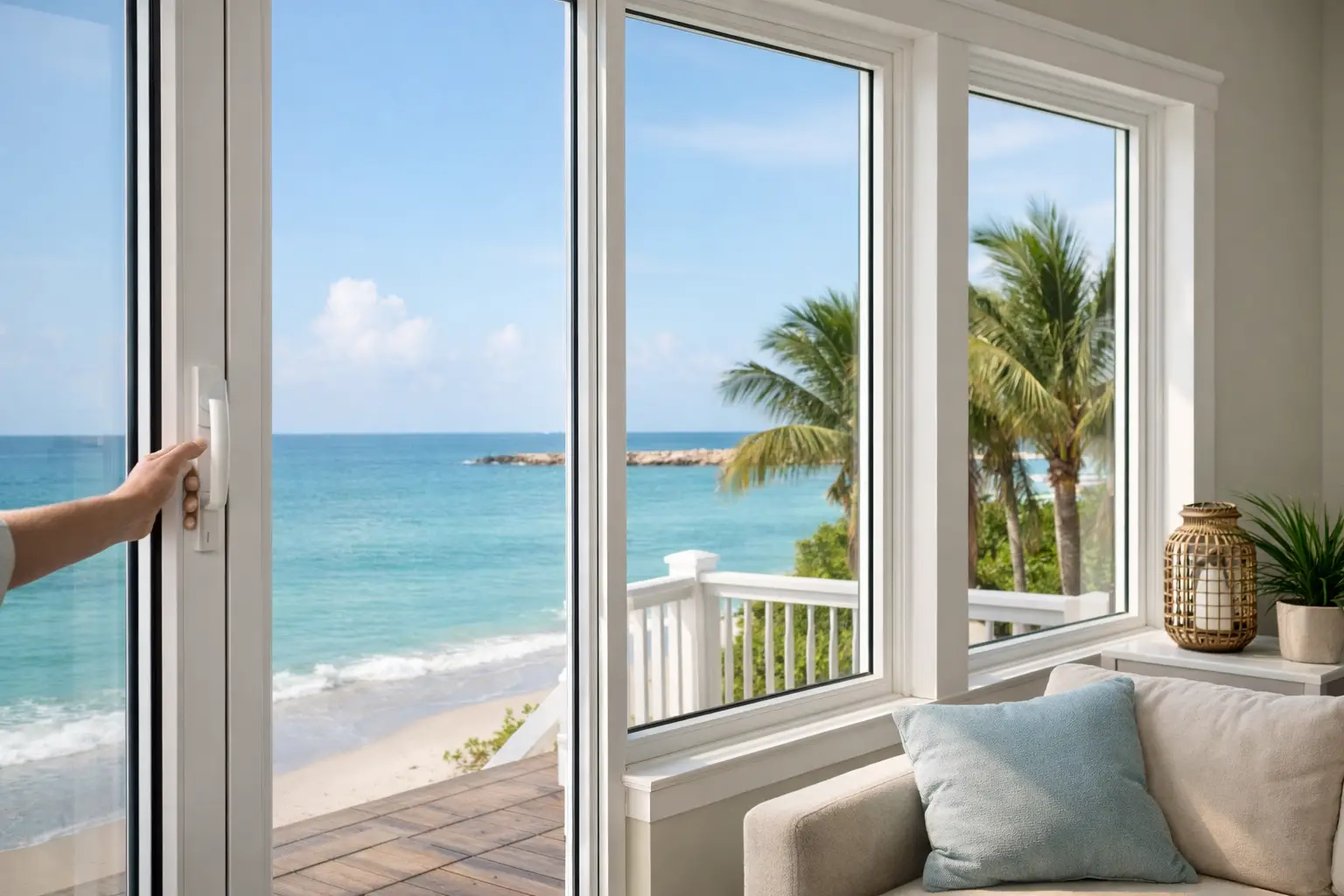
A window that looks fine from the driveway can still be costing a Florida property owner money, comfort, and peace of mind. Drafts, fogged glass, difficult operation, water intrusion, and outdated impact protection are not minor inconveniences on the Treasure Coast. The right windows help defend your home or commercial property against intense sun, heavy rain, wind-driven debris, and the daily humidity that puts building materials to the test.
For coastal Florida properties, replacement windows should be treated as a long-term exterior investment. Appearance matters, but so do structural performance, professional installation, and the ability to protect the people and property behind the glass.
Why Florida Windows Need More Than Good Looks
Florida weather creates a demanding environment for window systems. Salt air can accelerate corrosion. Ultraviolet exposure can fade interiors and place constant stress on finishes and seals. Summer storms can push rain into the smallest weak point around a frame. During hurricane season, a window may also be part of your property’s larger storm protection plan.
That does not mean every property needs the exact same product. A condominium on the ocean, a single-family home in Jensen Beach, and a commercial building farther inland can have different code requirements, exposure levels, budgets, and design priorities. Still, every owner should look beyond basic glass and consider how the full window system will perform over time.
A quality replacement window includes the frame, insulated glass, weatherstripping, locks, hardware, drainage design, and installation method. If one element is poorly matched or improperly installed, the system may not deliver the comfort, protection, or lifespan you expect.
Start With the Problems Your Current Windows Create
The best replacement decision starts with an honest assessment of what is happening now. Some warning signs are obvious, such as cracked panes, rotted frames, or windows that no longer lock. Others appear gradually, including rooms that feel hotter than the rest of the house, rising cooling costs, condensation between glass panes, or water stains near a sill after heavy rain.
Older single-pane windows may offer very limited insulation and little protection from solar heat. Worn seals can allow conditioned air to escape while moisture and outdoor air move inside. Windows that stick or will not stay open are also a safety and usability concern, especially in bedrooms and upper-level spaces.
For rental properties and commercial buildings, deferred replacement can become more expensive when repeated repairs, tenant complaints, and potential water damage begin to add up. Replacing problem windows before a major storm exposes the weakness is usually the more controlled and practical approach.
Consider the Whole Exterior Envelope
Window performance is connected to the surrounding wall, trim, doors, shutters, and roof drainage. For example, a new impact-rated window is a valuable upgrade, but it cannot compensate for damaged exterior caulking, deteriorated siding, or improper flashing around the opening.
A professional evaluation should identify whether the issue is the glass, the frame, the installation, or a larger exterior condition. This avoids spending money on a repair that only addresses the visible symptom.
Choose Glass That Controls Heat and Protects Your Interior
In Florida, solar heat gain is often one of the biggest factors in window comfort. Glass technology can help reduce the amount of heat that enters a home while still allowing useful natural light. Low-emissivity, or Low-E, coatings are commonly used to manage solar heat and help reduce fading of flooring, furniture, artwork, and window treatments.
Insulated glass units use multiple panes with a sealed space between them to improve thermal performance compared with older single-pane glass. The best configuration depends on the direction of the window, the amount of shade around the property, and your goals for visibility, privacy, and energy efficiency.
Tinted or specialized glass can be useful in high-sun areas, but darker is not always better. Too much tint can change the appearance of daylight indoors and may not suit every architectural style. A knowledgeable contractor can explain the available options without treating one glass package as the answer for every opening.
Energy efficiency also depends on proper sizing and placement. Large expanses of glass can create an attractive view, but they need to be thoughtfully designed for the home’s exposure and cooling demands.
Understand Impact Windows and Storm Protection Options
Hurricane impact windows are designed and tested to resist specific wind and debris conditions when selected and installed according to applicable building requirements. They can provide year-round protection without requiring owners to install panels or close shutters before every storm.
For many Florida homeowners, that convenience is a major advantage. Impact windows can also improve security, reduce outside noise, and support the overall value of a well-maintained property. However, they represent a larger upfront investment than standard replacement windows, so the right choice depends on your location, insurance considerations, existing storm protection, and renovation plans.
Some properties benefit from a combined approach. Impact-rated windows may be appropriate for key openings, while accordion shutters or other approved storm protection serve other areas. The right plan should account for local codes, the condition of existing systems, and how quickly the property needs to be secured when a storm approaches.
Do not assume a window is impact-rated because it has thicker-looking glass or a heavy frame. Ask for clear product information and make sure the proposed system is appropriate for your opening size and local requirements.
Frame Materials Matter in a Coastal Climate
The frame is not simply a border around the glass. It affects durability, maintenance, operation, and the appearance of the finished installation.
Vinyl windows can be a practical option for many homes because they are low-maintenance and resist moisture. Aluminum frames are valued for their strength and can work especially well for larger openings and certain architectural styles. Each material has trade-offs involving cost, frame profile, color options, thermal performance, and structural needs.
In coastal areas, hardware and fasteners deserve attention as well. Salt-laden air can be hard on metal components. Premium materials and corrosion-resistant hardware help support reliable operation over the life of the window. This is one reason product selection should not be based on a showroom appearance alone.
Match Operation Style to How You Live
Single-hung, double-hung, sliding, casement, awning, picture, and architectural windows all serve different purposes. A picture window can frame a water view and bring in abundant light, but it does not provide ventilation. Casement windows can offer strong ventilation and a tight closure, while sliding windows may be a familiar, practical fit for certain rooms and layouts.
Think about furniture placement, ease of cleaning, emergency egress needs, and who will operate the window daily. A beautiful style that is difficult to reach or maintain may not be the right long-term choice.
Installation Is Where Window Performance Is Won or Lost
Even a premium window can underperform if it is measured incorrectly or installed without careful attention to the opening. Poor installation can lead to air leaks, water intrusion, operational problems, damaged finishes, and compromised storm performance.
A professional installation process should begin with accurate field measurements and a review of the existing opening condition. The crew should protect the work area, remove old materials carefully, prepare the opening, secure the new window correctly, seal it using appropriate materials, and verify smooth operation before the project is complete.
For occupied homes and businesses, communication matters just as much. You should understand the project schedule, what areas will be affected, how debris will be managed, and what to expect if hidden damage is discovered after an old window is removed.
Jensen Beach Aluminum & Windows approaches replacement work with skilled professionals, premium-quality products, and the local experience needed to help property owners make confident decisions for coastal conditions.
Questions Worth Asking Before You Approve a Window Quote
A detailed quote should make it easier to compare proposals, not harder. Confirm the window manufacturer and product line, glass package, frame material, operation style, finish, hardware, and whether the product is impact-rated where required. You should also ask what removal, disposal, trim work, sealing, permits, and final cleanup are included.
Warranty details deserve a close look. Product warranties and labor warranties may be separate, and coverage can vary by component. Ask who will handle service if an adjustment or issue arises after installation. A dependable contractor should be prepared to support the work after the final payment, not disappear once the crew leaves.
The lowest quote is not always the best value. A price that omits permits, proper preparation, upgraded glass, or necessary finishing work can create surprises later. Compare the full scope of work and the experience behind it, not just the bottom-line number.
Your windows should make the property feel more secure, comfortable, and prepared every day of the year. A careful consultation now can help you choose a system that protects your view, your investment, and the people who depend on the space inside.