


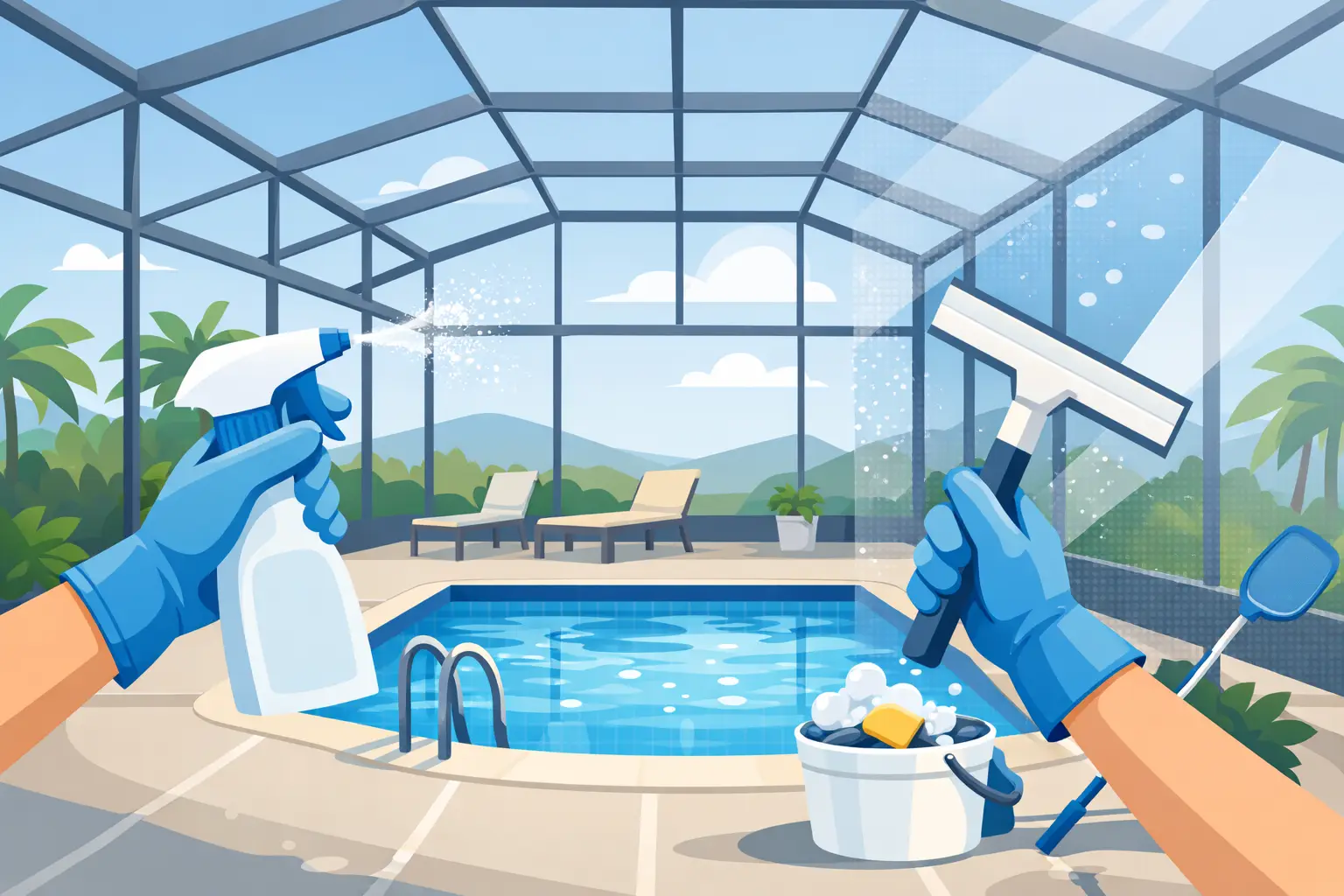
Salt air, afternoon storms, pollen, algae, and windblown debris can make a Florida pool cage look tired long before the rest of the property does. A clean pool screen enclosure does more than improve curb appeal. It helps preserve the materials, keeps more debris out of the pool, and makes the outdoor space more enjoyable for family, guests, tenants, and prospective buyers.
The right approach is gentle, consistent, and suited to the enclosure’s age and condition. Aggressive pressure washing or harsh chemicals may seem efficient, but they can loosen screen spline, damage painted aluminum, and create costly repairs. With regular care and professional help when needed, a pool enclosure can remain an attractive, functional part of your property for years.
Why a Clean Pool Screen Enclosure Matters
A pool cage is exposed to nearly everything Florida weather can deliver. Moisture collects in shaded corners. Organic material settles on roof panels. Coastal homes may also contend with salt residue that dulls aluminum and contributes to corrosion over time. If the enclosure is ignored, mildew, algae staining, clogged gutters, and weakened screens can follow.
Cleaning also gives you an opportunity to inspect the structure. Small tears, loose fasteners, sagging screen sections, and minor frame damage are easier and less expensive to address before they become larger problems. After a heavy storm season, this inspection is especially worthwhile.
For rental and commercial properties, appearance has an additional impact. A well-maintained enclosure signals that the property is cared for. It creates a cleaner first impression around an area guests use often and notice immediately.
Start With the Right Cleaning Method
Most routine cleaning does not require specialized equipment. Begin by removing furniture, rugs, planters, pool toys, and loose items from the deck. Sweep away leaves and debris so they do not turn into muddy residue once water is introduced.
Use a garden hose with a standard spray nozzle to rinse the frame and screen from top to bottom. This direction matters. It carries loosened dirt downward instead of pushing it into already-clean areas. For ordinary dirt and pollen, a soft-bristle brush or microfiber mop with warm water and a mild dish soap solution is usually enough.
Work in manageable sections and rinse each section before the soap dries in the sun. Pay close attention to horizontal frame members, door tracks, lower kick plates, and corners where moisture tends to remain. These areas often collect the most grime and are common starting points for mildew growth.
A pressure washer can be appropriate in limited situations, but it should be handled carefully. High pressure can stretch or tear screen fabric, force water behind building finishes, strip protective paint, and damage older aluminum components. If you use one, choose a low-pressure setting, maintain a safe distance, and avoid directing spray at screen seams, door hardware, roof panels, or damaged areas. For older enclosures or visible deterioration, professional cleaning is the safer choice.
Treat Mildew and Algae Without Damaging the Cage
Dark spotting and green buildup are common in humid, shaded areas. A mild cleaner formulated for exterior mildew can help, but always follow the manufacturer’s dilution and safety instructions. Test a small, less-visible section first to confirm it will not discolor the finish or screen.
Avoid abrasive powders, wire brushes, and strong solvents. They can scratch the aluminum finish and shorten the useful life of the enclosure. Bleach-based products may be effective for certain stains, yet they require caution around pool water, landscaping, painted surfaces, and metal. Never mix cleaning products, and rinse surrounding plants with fresh water before and after treatment.
If staining returns quickly, the issue may be more than surface dirt. Persistent moisture, poor drainage, heavy tree cover, or clogged gutters can create the conditions mildew needs to come back. Correcting those contributors will make regular cleaning more effective.
A Practical Florida Maintenance Schedule
The best schedule depends on tree cover, proximity to the coast, pool usage, and whether the home is occupied year-round. Still, most Florida properties benefit from light care every few weeks and a deeper cleaning at least twice a year.
During weekly pool care, take a minute to remove leaves caught at the base of the enclosure and check door operation. A clean door sweep and properly closing latch help keep insects, small animals, and debris out of the pool area.
Every month or two, rinse the frame and screens, particularly after periods of high pollen, construction dust, or dry weather. Coastal homeowners may need more frequent fresh-water rinsing to remove salt film. This simple step can help protect the appearance of aluminum components.
Plan a more thorough inspection before hurricane season and again after it ends. Look for loose screen panels, missing screws, corroded fasteners, bent frame members, deteriorated anchors, and damaged gutters. Do not assume a screen tear is merely cosmetic. A loose panel can catch wind differently than an intact one, and storm readiness depends on the condition of the entire structure.
Protect Screens, Frames, and Fasteners
Cleaning is only one part of keeping a pool cage in good condition. The materials should be protected from habits that create unnecessary wear. Do not lean ladders against screen panels, hang heavy decorations from the frame, or allow climbing vines to grow through the mesh. These actions can pull screens out of their channels and hold moisture against the aluminum.
Trim back tree branches that rub against the roof or sidewalls. Even light contact can wear through screens over time, while larger branches become a serious concern in high winds. Keep irrigation heads aimed away from the enclosure when possible. Constant hard-water spray can leave mineral deposits and encourage staining.
Fasteners deserve particular attention near the coast. When screws and anchors corrode, the issue can extend beyond appearance. Professional technicians can evaluate whether fasteners need replacement and whether the surrounding aluminum is still sound. This is not a repair to delay, particularly on older enclosures.
Know When Cleaning Should Become a Repair Call
Routine dirt is a maintenance issue. Torn screens, loose spline, bent framing, leaking roof panels, and doors that no longer close properly are repair issues. Cleaning around these problems will not correct them and can sometimes make them worse.
Call a qualified pool enclosure professional if you notice screen panels pulling away from the frame, widespread oxidation, water entering where it should not, or structural movement after a storm. A skilled inspection can identify whether targeted rescreening is sufficient or whether more extensive restoration is the better long-term investment.
For properties with aging cages, a professional evaluation can also help you decide whether to upgrade screen material. Standard fiberglass screening may be suitable for many homes, while stronger options can provide better durability, improved insect control, or added privacy. The right choice depends on the enclosure design, location, budget, and how the outdoor space is used.
Avoid the Most Common Cleaning Mistakes
The quickest way to turn a simple cleaning project into an enclosure repair is using too much force. Do not climb on the roof of a screen enclosure. The roof system is not designed as a walking surface, and attempting to clean it from above can damage screens, frame members, or both.
Another frequent mistake is treating every stain with the strongest available chemical. Aluminum and screen fabric respond better to patient cleaning with the right dilution than to harsh products applied repeatedly. If a stain will not lift, stop before causing finish damage and ask a professional to assess it.
Finally, do not overlook the pool deck and drainage area. Leaves and soil buildup around the enclosure base can trap moisture, attract pests, and make the entire space look neglected. Keeping the perimeter clear supports cleaner screens and a cleaner pool environment.
Professional Care for Lasting Outdoor Enjoyment
A clean enclosure supports the purpose of the space: spending more time outdoors with less debris, fewer insects, and a better view of the pool. Regular rinsing, gentle cleaning, and prompt repairs are practical investments in a feature that adds comfort and value to a Florida property.
Jensen Beach Aluminum & Windows provides experienced support for pool cages, lanai rescreens, and exterior improvements throughout the Treasure Coast. When cleaning reveals damage, worn screening, or concerns about storm exposure, professional guidance can help you protect the enclosure and make a confident decision about the next step.
Give your pool area the same attention you give the pool itself. A little consistent care keeps the enclosure ready for the days when you want to step outside, open the door, and enjoy the water without another project waiting for you.