


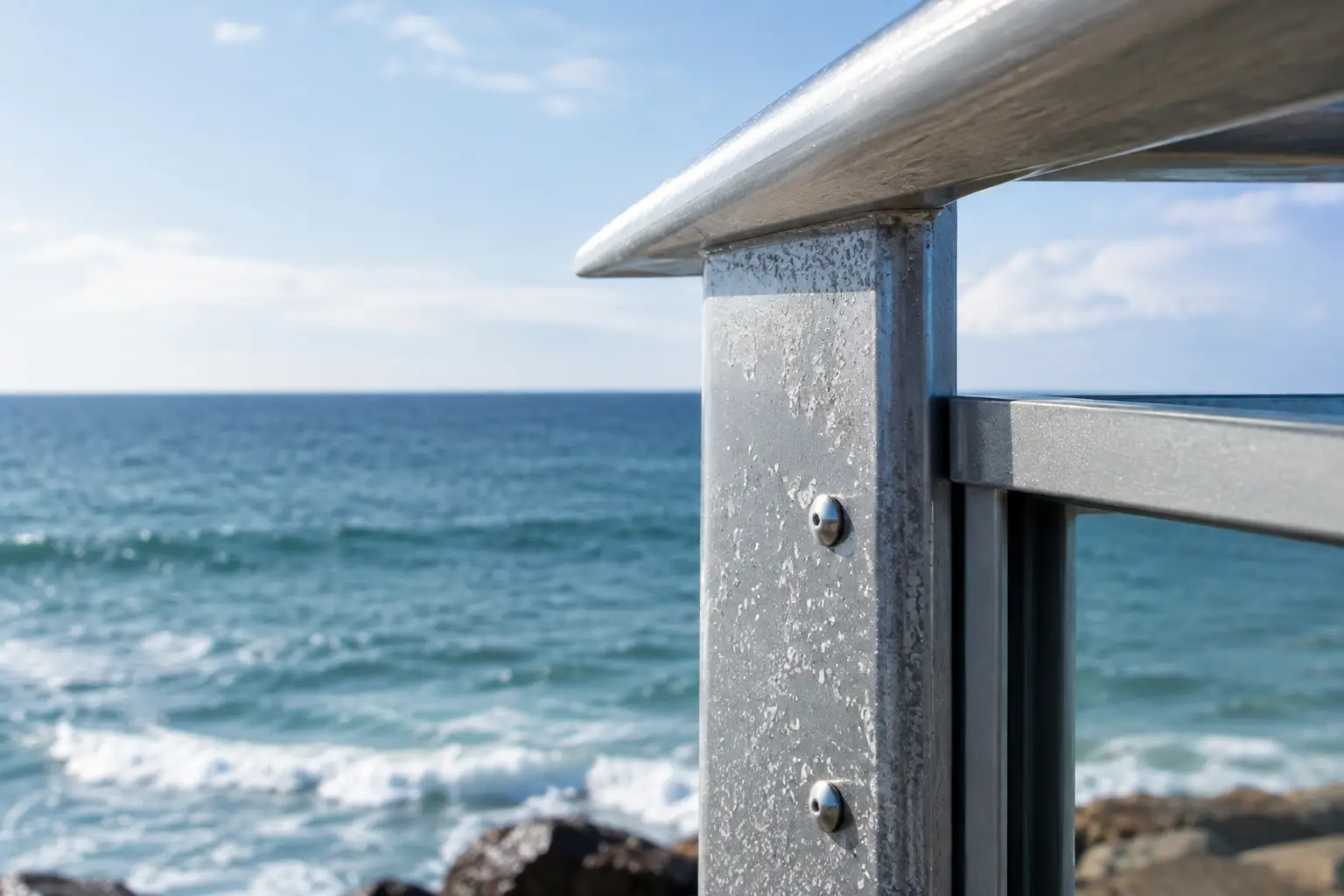
A pool cage can look perfectly sound from the driveway while corrosion is already beginning at fasteners, screen channels, corners, and other hard-to-see areas. So, does salt air damage aluminum? Yes, it can, particularly on Florida properties close to the ocean. But salt air does not automatically mean an aluminum enclosure, awning, railing, or storm-protection system will fail early.
The difference comes down to material quality, finish, design, installation details, and routine care. Aluminum remains one of the most practical materials for coastal construction because it is lightweight, strong, and naturally corrosion resistant. It simply needs to be selected and maintained with the realities of salt exposure in mind.
Does Salt Air Damage Aluminum Over Time?
Salt air contributes to corrosion by leaving chloride deposits on aluminum surfaces. When moisture from humidity, rain, dew, or sea spray mixes with those deposits, it creates conditions that can break down aluminum’s thin, protective oxide layer. Once that layer is compromised, corrosion may begin in small, localized areas.
Unlike untreated steel, aluminum does not typically form the familiar red rust. Instead, you may see dulling, white or gray powdery residue, small pits, bubbling beneath a coating, or discoloration around joints and hardware. These signs can be easy to overlook until the finish has been affected or the corrosion has spread.
The closer a property is to the water, the more frequent and concentrated the exposure can be. A beachfront home receives direct salt spray and wind-driven moisture. A home several miles inland may still receive airborne salt, especially during strong coastal winds or tropical weather, but usually at a lower level. Florida’s humidity keeps surfaces damp longer, which increases the opportunity for corrosion to develop.
Why Some Aluminum Holds Up Better Than Others
Bare aluminum has a natural defense: it quickly forms a thin oxide film when exposed to air. That film is one reason aluminum performs much better than many metals in outdoor applications. However, coastal conditions can overwhelm that defense if salt remains on the surface and moisture becomes trapped in seams or contact points.
A quality finish provides another layer of protection. Powder-coated aluminum is common for pool cages, lanais, awnings, shutters, pergolas, and other exterior structures because the coating helps isolate the metal from moisture and salt. Anodized aluminum can also perform well, depending on the grade and application. Neither finish is maintenance-free. Chips, scratches, worn areas, and poorly sealed cut edges can become starting points for corrosion.
Construction details matter just as much as the finish. Water should be able to drain rather than collect inside horizontal rails or at connection points. Fasteners should be appropriate for the system and the coastal environment. Where different metals touch, the assembly must be designed to limit galvanic corrosion, an electrochemical reaction that can occur when dissimilar metals are wet and in contact.
For example, an aluminum frame installed with incompatible hardware may corrode around the fastener even when the surrounding frame looks fine. This is why skilled installation is not simply about appearance. Correct components, isolation methods, drainage, and secure connections all protect the long-term performance of the structure.
Saltwater Pools Add Another Consideration
Saltwater pool systems are generally easier on the skin than traditionally chlorinated pools, but they still create a corrosive environment around nearby metal. Splash-out, evaporated water, and persistent humidity can leave deposits on aluminum pool enclosures, screen doors, and hardware.
That does not mean a saltwater pool and aluminum cage are incompatible. It means cleaning and inspection should be more consistent, especially around lower rails, screen fasteners, door hardware, and areas nearest the water. Pool chemistry should also remain within the manufacturer’s recommended range. Water that is out of balance can accelerate wear on a variety of surrounding materials.
Common Warning Signs on Coastal Aluminum
Catching corrosion early gives property owners more options. Cosmetic surface staining may only require cleaning or finish touch-up. Advanced pitting, loose hardware, failing connections, or widespread coating loss may call for professional repair or replacement.
Watch for these conditions during routine exterior walk-throughs:
- White, chalky, or powder-like residue on aluminum members
- Pitting, pinhole marks, or rough spots in the metal or finish
- Blistering, peeling, cracking, or bubbling paint or powder coating
- Rust stains around screws, anchors, hinges, or brackets
- Loose doors, weakened connections, damaged screen channels, or water trapped in rails
Rust-colored staining does not always mean the aluminum itself is rusting. Often, it points to steel hardware or another nearby metal component. Still, it deserves attention because runoff and corrosion around fasteners can damage the aluminum and affect the integrity of the assembly.
How to Protect Aluminum From Salt Air
The most effective maintenance step is also the simplest: rinse aluminum regularly with fresh water. On oceanfront properties, a gentle rinse every few weeks is a sensible starting point, with more frequent rinsing after heavy salt spray, major wind events, or storms. Properties farther inland may need less frequent attention, but seasonal cleaning is still worthwhile.
Use a soft cloth or soft-bristle brush with mild soap and water to remove buildup. Rinse thoroughly and allow the surface to dry. Avoid abrasive pads, harsh acids, strong alkaline cleaners, and aggressive pressure washing at close range. These can scratch or strip protective finishes, force water into joints, or damage screens and seals.
A few other habits make a meaningful difference. Keep gutters and drainage paths clear so water does not repeatedly spill onto aluminum sections. Trim vegetation that holds moisture against an enclosure or awning. Address scratches and coating damage promptly. Check that doors close correctly and that screens, spline, and hardware remain secure.
After a hurricane or severe coastal storm, inspect the entire system once conditions are safe. Wind-driven rain can carry salt into places that normal weather does not reach. Look closely at roof connections, corners, base plates, fasteners, door frames, and any area where branches or debris made contact.
When Cleaning Is Not Enough
If corrosion is limited to a small area, a qualified professional may be able to clean it, replace affected hardware, repair a localized finish issue, or correct a drainage problem. The right repair depends on the condition of the metal, the type of finish, and whether the damage is cosmetic or structural.
Do not assume a fresh coat of paint will solve every problem. Painting over active corrosion without proper surface preparation can trap the issue beneath the new finish. Likewise, replacing a corroded screw without checking the surrounding aluminum or using the correct replacement hardware may only delay the next failure.
For older pool cages, carports, awnings, and outdoor structures, a professional inspection can clarify whether targeted repairs are practical or whether replacement offers better long-term value. This is especially relevant when an enclosure has older hardware, recurring leaks, loose connections, multiple damaged members, or a finish that is failing across large areas.
Choosing Aluminum for a Florida Coastal Property
Aluminum remains a strong choice for many coastal applications. It is widely used in screen enclosures, lanais, shutters, impact-rated window and door systems, pergolas, awnings, and framing because it delivers a useful balance of durability, low weight, clean appearance, and design flexibility.
The trade-off is that coastal aluminum cannot be treated as install-it-and-forget-it material. A lower-cost system with thin coatings, unsuitable fasteners, or poor drainage may look acceptable on installation day but require earlier repairs in a salt-heavy environment. Premium materials and precision installation cost more upfront, yet they can reduce corrosion concerns and protect the appearance and function of the property over time.
At Jensen Beach Aluminum & Windows, skilled professionals evaluate the conditions around each project, including exposure, drainage, intended use, and the performance demands of Florida weather. That approach helps homeowners and property managers select exterior solutions built for more than a good first impression.
If your aluminum structure is showing stains, pitting, loose hardware, or finish damage, schedule an evaluation before a small coastal maintenance issue becomes a larger repair. A timely inspection can protect both the structure and the outdoor space you rely on.