


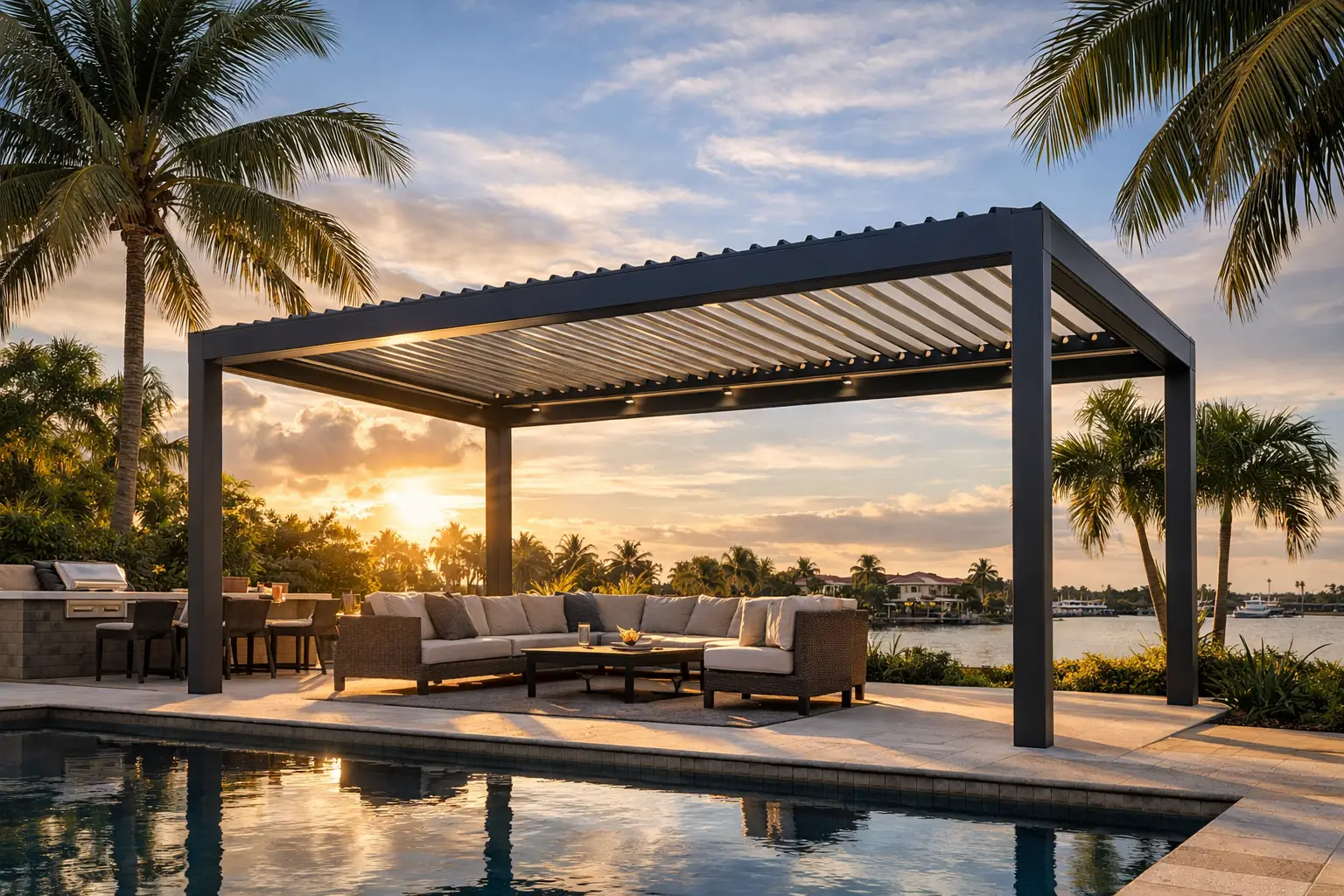
A Florida patio can be perfect at 9:00 a.m. and nearly unusable by noon. Direct sun, sudden rain, humidity, and coastal wind all put outdoor spaces to the test. The future of motorized pergolas is centered on solving those everyday problems with adjustable roof systems that give homeowners more control over shade, airflow, rain protection, and comfort.
For Treasure Coast property owners, a motorized pergola is no longer simply a decorative backyard feature. It is becoming a planned outdoor-living investment – one that can make a patio, pool deck, restaurant terrace, or community gathering area more useful through more months of the year. The strongest systems combine premium aluminum construction, precision controls, and professional installation designed for the realities of Florida weather.
Why Motorized Pergolas Are Moving Beyond Basic Shade
Traditional pergolas create character and partial shade, but their fixed slats cannot react when the sun shifts or a rain shower moves in. Motorized louvered roof systems provide a different level of control. With the push of a button, the louvers can rotate to increase shade, let in natural light, encourage ventilation, or close to help direct rainwater into an integrated gutter system.
That flexibility changes how a space is used. A homeowner can enjoy morning light over coffee, add shade during the hottest hours, then open the roof again for an evening breeze. For commercial properties, the ability to adjust conditions quickly can help keep outdoor seating available when Florida weather is unpredictable.
The future is not about adding technology for its own sake. It is about making exterior spaces more practical. When a patio is comfortable more often, it becomes an extension of the home or business rather than an area reserved for ideal weather.
Smarter Controls Will Make Outdoor Living Easier
Remote controls remain a dependable option, but controls are becoming more intuitive. Many modern systems can be operated through wall switches, mobile apps, home automation platforms, or programmed settings. Instead of walking outside to adjust the roof, a property owner may be able to set the preferred louver position before guests arrive or make an adjustment from inside the house.
Weather-responsive features are also likely to become more common. Rain sensors can close louvers when precipitation begins, while wind sensors may move the system to a manufacturer-recommended position during elevated winds. These features can add convenience, but they should never be mistaken for a substitute for storm preparation or sound construction.
Automation needs to match the way the property is actually used. A homeowner who wants simple, reliable shade may prefer a dedicated remote and manual control. A second-home owner or commercial manager may value app access and automatic sensors. The best choice depends on the system, the property, local exposure, and the owner’s comfort with technology.
Better Integration With Screens, Lighting, and Fans
The most useful motorized pergolas will increasingly function as complete outdoor rooms. Retractable screens can help reduce sun glare and keep insects out without permanently blocking the view. Integrated LED lighting can extend the use of a patio after sunset. Ceiling fans, heaters where appropriate, and carefully planned electrical access can make the area more comfortable in changing conditions.
These additions should be planned early. Retrofitting lighting or screens can be possible, but a coordinated design usually creates a cleaner appearance and avoids unnecessary changes later. Experienced installers can help determine where posts, wiring, drainage, screen tracks, and existing doors or windows need to work together.
The Florida Difference: Wind, Rain, and Salt Air Matter
A motorized pergola installed in a mild inland climate is not automatically the right solution for a coastal Florida property. Here, product selection and installation details matter as much as appearance. Salt air can accelerate corrosion, heavy rain can expose poor drainage planning, and high winds can place major demands on an outdoor structure.
Aluminum remains a leading material because it resists rot, does not require the regular staining associated with wood, and can provide a clean, long-lasting finish. However, not all aluminum systems are built to the same standard. Homeowners should ask about the frame design, finish quality, hardware, drainage components, engineering, and the applicable wind requirements for their location.
A closed louvered roof may provide valuable rain protection during normal weather, but it is not a hurricane shutter system. Every pergola has specific operating instructions and wind limitations. During a named storm or when severe conditions are expected, owners should follow the manufacturer’s guidance and their contractor’s recommendations. In some cases, that may include placing louvers in an open position or taking other prescribed steps to reduce wind load.
Professional permitting and installation are especially important in coastal communities. Proper footings, fastening methods, attachment details, drainage routing, and structural considerations affect both performance and safety. A beautiful pergola that is poorly anchored or improperly integrated with the home can become an expensive problem.
Future Motorized Pergolas Will Be More Customized
The days of one-size-fits-all patio covers are fading. Property owners want structures sized around their actual outdoor habits, whether that means covering a compact grilling area, a full poolside lounge, an outdoor kitchen, or a restaurant dining section.
Customization will continue to improve in practical ways: frame colors that complement exterior finishes, louver orientations that support preferred shade patterns, integrated gutters that direct water away from walkways, and screen options that preserve views. Freestanding designs can create a destination away from the house, while attached systems can provide a more direct transition from interior living areas to the patio.
The trade-off is that more options require better decisions. Larger spans may need additional posts or engineering. Darker finishes may fit a modern home but can show pollen and salt residue more readily. Motorized screens improve comfort, yet they add components that need periodic care. A skilled consultation helps balance appearance, budget, maintenance, and long-term performance instead of focusing on a single showroom feature.
Efficiency and Property Value Will Remain Part of the Conversation
A pergola does not replace efficient windows, insulation, or a complete exterior improvement plan. Still, well-managed shade can reduce direct solar exposure on adjoining glass doors and windows, which may make nearby interior spaces feel more comfortable. The extent of any energy benefit depends on orientation, roof coverage, existing glazing, local conditions, and how the system is operated.
The more immediate value is lifestyle value. Covered, adjustable outdoor areas make it easier to entertain, relax, and use a property as intended. For investors and commercial property managers, an attractive outdoor amenity can strengthen curb appeal and help a property stand apart. For homeowners, it can create a polished setting that supports daily living as well as resale appeal.
The key is to view a motorized pergola as part of the property, not as an isolated purchase. It should complement the home’s architecture, preserve drainage, respect setback and permit requirements, and connect naturally with features such as pavers, pool cages, lanai screens, doors, and windows.
What to Ask Before Choosing a Motorized Pergola
Before making a decision, property owners should get clear answers about the system’s wind design criteria, drainage plan, control options, maintenance needs, finish warranty, and service support. It is also wise to discuss how the pergola will be used during routine rain, high winds, extended travel, and hurricane preparation.
Ask who will manage the project from measurement through installation and after-service needs. Motorized outdoor structures involve structural components, electrical planning, moving louvers, and water management. A contractor with experience in Florida exterior improvements can identify concerns before construction begins, rather than leaving the homeowner to solve them after installation.
Jensen Beach Aluminum & Windows approaches outdoor-living projects with the same focus on premium materials, skilled professionals, and dependable customer care that Florida property owners expect for their exterior upgrades. The goal is not simply to install a pergola. It is to create a durable outdoor space that fits the property and the way its owners live.
A well-planned motorized pergola can give your patio a more reliable role in everyday life. Start with the conditions your property faces, the comfort you want to create, and the level of service you expect long after installation is complete.