


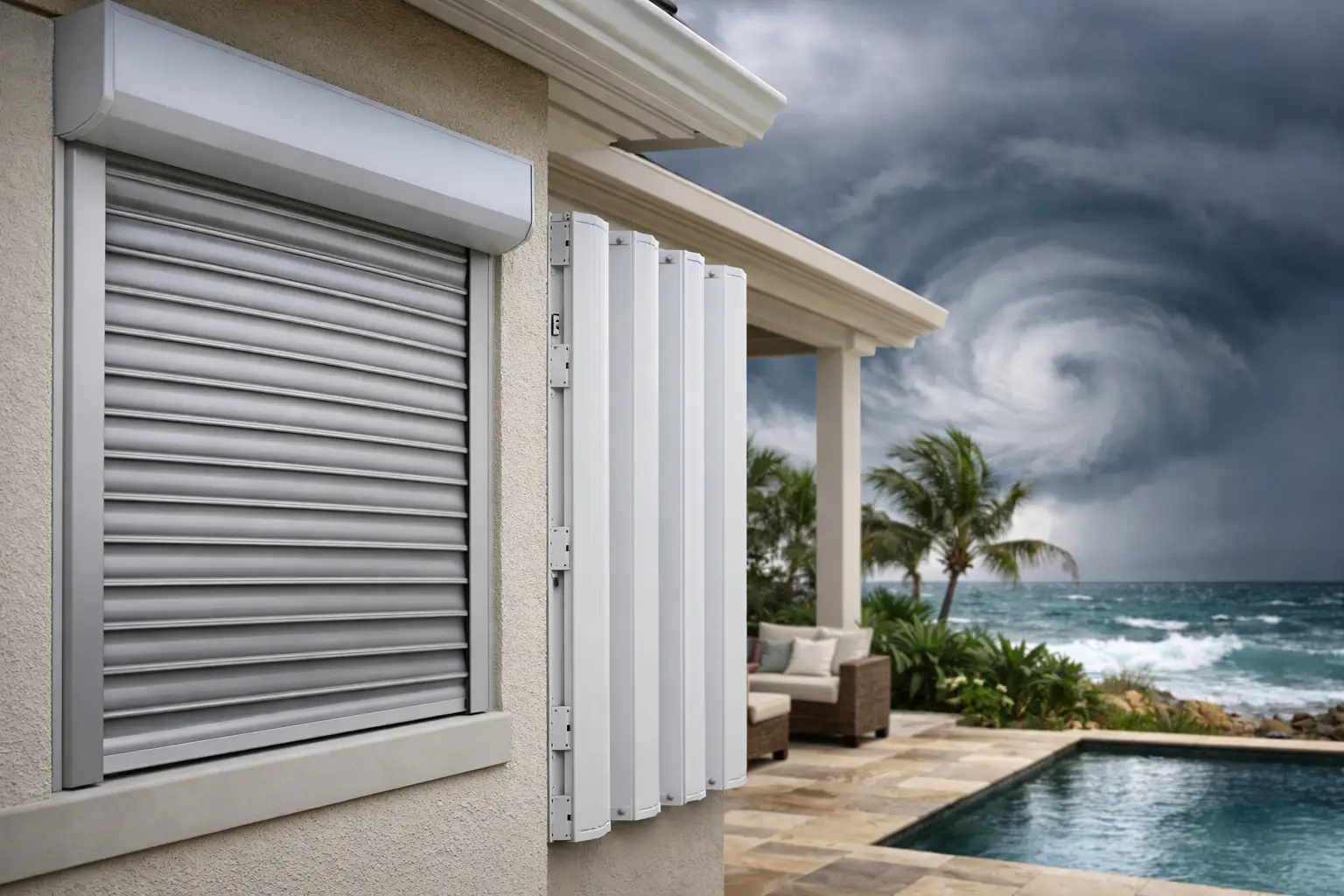
A tropical system does not give homeowners much time to make major property decisions. When a storm is approaching the Treasure Coast, windows and glass doors become critical points of vulnerability. Properly selected and professionally installed hurricane shutters give those openings a tested layer of protection while helping reduce the stress, labor, and last-minute scrambling that often comes with storm preparation.
For Florida homeowners, investors, and property managers, the best shutter is not always the one with the lowest initial price. It is the system that fits the opening, meets applicable requirements, can be deployed reliably, and complements the way the property is used year-round.
What Hurricane Shutters Are Designed to Do
Hurricane shutters are exterior storm-protection systems installed over windows, doors, sliders, and other glazed openings. Their primary purpose is to help prevent windborne debris from breaking the glass during a hurricane. Once a window or door is breached, high winds can enter the structure and increase pressure inside the building. That can contribute to far more serious damage to the roof, walls, and interior.
A quality shutter system is engineered to resist specific wind pressures and impact conditions when it is paired with the correct hardware, attachment method, and opening preparation. That is why the product alone is only part of the solution. Measurements, wall conditions, fastener placement, track alignment, and installation quality all affect real-world performance.
Storm shutters can also offer practical benefits outside hurricane season. Certain styles provide shade, privacy, and additional security. Still, those secondary benefits should never distract from the main question: Is this system appropriate for your property’s exposure, opening sizes, and local code requirements?
Choosing Between Common Hurricane Shutter Styles
Florida properties have different layouts, architectural styles, and day-to-day needs. A homeowner with large sliding glass doors may prioritize fast deployment, while an investor managing several rental units may prefer a durable, straightforward system that tenants or staff can operate. The right choice depends on more than curb appeal.
Accordion Shutters
Accordion shutters remain a popular option for homeowners who want permanently mounted protection that is ready when needed. The shutter panels fold to the side of the opening when not in use, then pull across and lock into place before a storm.
Their convenience is a major advantage. There are no large panels to carry out of storage, label, lift, or organize in the days before landfall. They work particularly well on patios, sliding glass doors, lanais, and wide window openings. Because they are visible when stored along the sides of an opening, homeowners should consider color, track placement, and how the system will look against the exterior finish.
Roll-Down Shutters
Roll-down shutters store in a housing above the opening and lower into side tracks. They can be operated manually, by motor, or with integrated controls depending on the system. For customers looking for everyday shade and privacy along with hurricane readiness, this style can be an attractive choice.
The trade-off is cost and complexity. Motorized systems need careful planning, proper electrical work when applicable, and a clear plan for operation if power is unavailable. They also require regular attention to tracks, controls, and moving components. A premium installation can be a strong investment, but it should be selected for the right reasons rather than simply because it is automated.
Storm Panels
Removable storm panels are often selected for their lower upfront cost and compact storage. They may be aluminum, steel, clear polycarbonate, or another approved material, depending on the system. Panels are installed using pre-positioned hardware when a storm threatens and removed afterward.
This option can be effective, especially for secondary openings or properties where permanent shutters are not preferred. The important consideration is preparedness. Panels must be stored safely, clearly identified for each opening, and installed correctly under pressure. Large or heavy panels can be difficult for one person to handle, and the work becomes more challenging when storm conditions are already deteriorating.
Bahama and Colonial Shutters
Bahama shutters are hinged above the window and commonly remain angled outward for shade. Colonial shutters hinge at the sides and close across the window. Both can add a distinctive Florida look while providing storm protection when built and installed as a rated system.
These styles are often selected for visual appeal and shade, but suitability varies by opening. Not every decorative-looking shutter is impact-rated or designed to meet hurricane requirements. Property owners should confirm that the exact product, size, mounting method, and hardware are approved for the intended application.
Start With the Property, Not the Product
A reliable shutter plan begins with an on-site evaluation. The height of the building, proximity to open water, wind exposure, wall construction, existing windows, and opening dimensions all matter. A first-floor concrete-block home has different conditions than a multi-story waterfront property with expansive glass and elevated balconies.
Large openings deserve special attention. Sliding doors, picture windows, and corner glass can involve higher design pressures and more complex attachment conditions than a standard bedroom window. A qualified professional should measure each opening individually rather than relying on broad estimates or a one-size-fits-all recommendation.
Commercial properties also need to consider operations. Who will close the shutters? How quickly can the building be secured? Are there multiple tenants, common areas, emergency exits, or storefront openings? A system that is technically capable but difficult for the responsible person to deploy is not the best long-term solution.
Code Compliance and Product Approval Matter
Florida storm protection must be selected and installed with applicable building code requirements in mind. Local jurisdictions may require permits, inspections, and documentation showing that the shutter system is approved for the specific use. Requirements can differ based on location, building type, wind zone, and whether the project is residential or commercial.
This is not paperwork for paperwork’s sake. Product approvals and engineering information help establish that a shutter has been tested or evaluated for defined conditions. Installation instructions specify the fasteners, spacing, substrates, and limitations that allow the system to perform as intended.
Be cautious about treating shutters as a simple do-it-yourself add-on, particularly for large openings or homes in highly exposed coastal areas. Even a high-quality product can underperform if it is attached to unsuitable materials, installed with incorrect fasteners, or altered in the field. Professional installation brings accountability, precision, and a clear point of contact if service is needed later.
Plan for Everyday Use and Maintenance
Storm protection should be easy to access long before the first named storm of the season. For accordion and roll-down systems, operate each unit periodically to make sure it moves smoothly and locks properly. Clear dirt, leaves, insects, and salt buildup from tracks. Rinse exterior components with fresh water as appropriate, especially on coastal properties where salt air accelerates corrosion.
For removable panels, conduct a preseason check. Confirm that all panels are present, hardware is complete, labels are readable, and the storage location remains dry and accessible. Replace damaged fasteners and do not assume an older panel will fit after exterior renovations, window replacements, or changes to trim.
A short maintenance routine can prevent a frustrating surprise when time matters most. It also gives homeowners an opportunity to spot loose hardware, worn seals, difficult locks, or changes in the wall surface around mounting points.
Budget for Protection That Fits the Building
The price of hurricane shutters varies with style, opening size, material, design pressure, access, and installation conditions. Removable panels may cost less initially, while permanent systems generally offer greater convenience and may better suit homeowners who travel, have mobility limitations, or want quicker preparation.
It is also worth considering the cost of inconvenience. A system that requires several people, ladders, heavy lifting, and hours of work may be less practical than it appears on a quote. Conversely, a simpler panel system can be an excellent value for a small property with manageable openings and a homeowner who is comfortable installing it correctly.
Ask for a detailed proposal that identifies the shutter type, scope of openings, finish, installation approach, and any permit-related work. Clear expectations protect the customer and help prevent surprises once a project is underway.
Work With a Local Storm-Protection Professional
Coastal construction is not an area for guesswork. Experienced local professionals understand the exposure conditions, permitting process, product options, and installation details that affect Florida properties. At Jensen Beach Aluminum & Windows, skilled professionals help customers compare storm-protection solutions based on how they live, what they need to protect, and what will serve the property for years to come.
The most useful time to evaluate shutter options is before the forecast turns urgent. A thoughtful consultation now gives you time to compare systems, confirm the right fit for each opening, and choose protection with confidence when your home or building needs it most.