


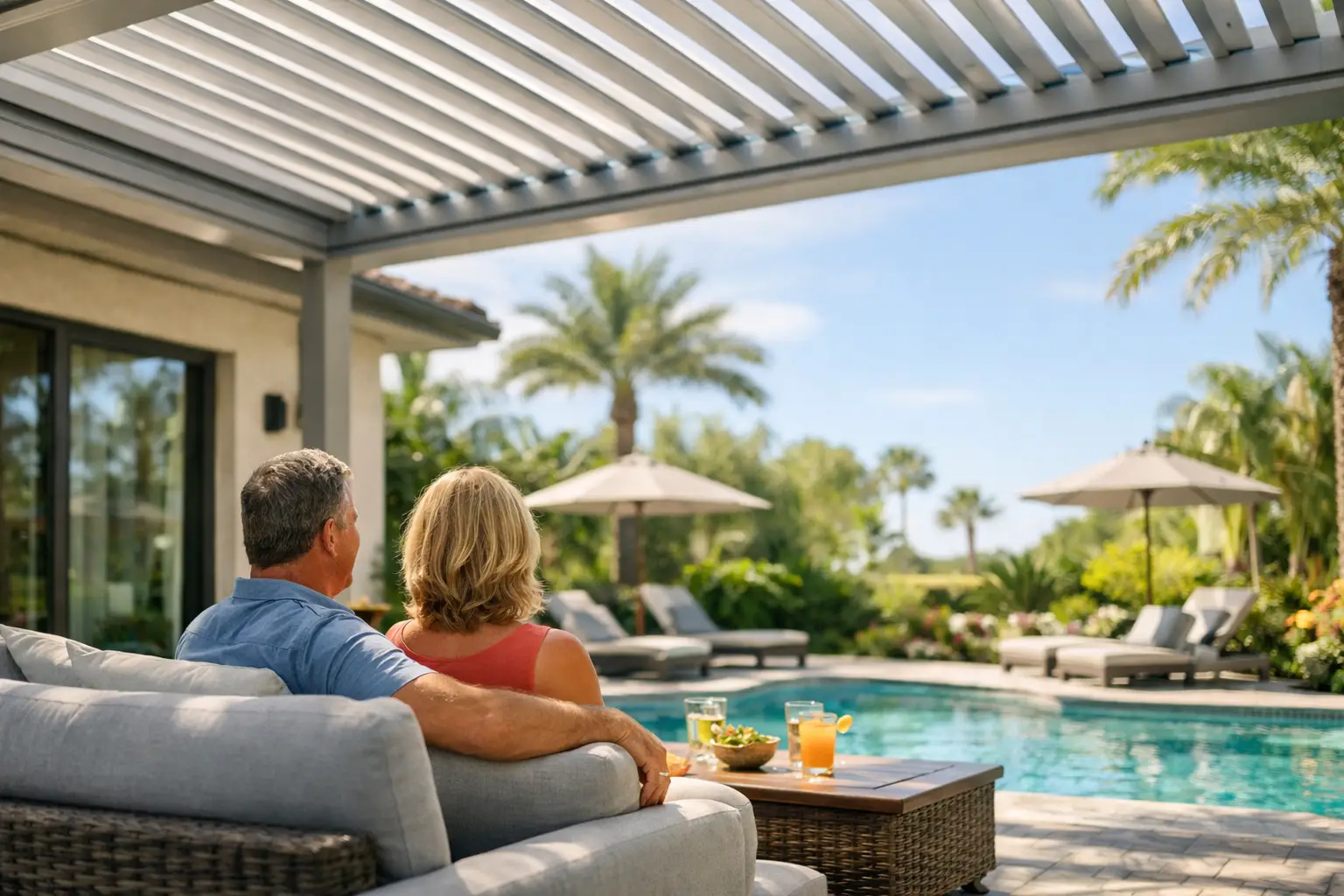
A louvered roof can turn a lanai, patio, or poolside sitting area into space you use far more often. But louvered roof reviews from Florida homeowners show that satisfaction depends on more than attractive photos or a long list of features. The system must handle intense sun, wind-driven rain, salt air, and the quality of the installation underneath it all.
For Treasure Coast property owners, the most useful reviews are specific. They describe whether the roof keeps an area dry during a real storm, how smoothly the louvers operate after a year or two, how the structure looks from inside the home, and whether the contractor responded when service was needed. Those details are far more valuable than a simple five-star rating.
What Louvered Roof Reviews Tend to Praise
The primary benefit homeowners mention is control. Fixed patio covers provide permanent shade, while a traditional pergola allows light but offers limited weather protection. A motorized louvered roof gives you both options. Open the louvers for sun and airflow on a mild morning, angle them to cut glare in the afternoon, or close them when a passing shower arrives.
That flexibility matters in Florida, where outdoor conditions can change quickly. A well-designed system lets homeowners enjoy a covered area without making it feel dark or closed in. Reviews often describe the difference as gaining an outdoor room rather than simply adding shade.
Many owners also appreciate the finished appearance. Premium aluminum louver systems have clean lines and can complement coastal contemporary homes, traditional residences, restaurants, clubhouses, and multifamily common areas. Unlike fabric shade products, they create a permanent architectural feature that can make an underused patio feel intentional and complete.
The best feedback usually includes comfort as well as appearance. When louvers are positioned correctly, they can reduce direct heat and glare while preserving ventilation. Add optional retractable screens, lighting, fans, or heaters, and the area can remain comfortable during more months of the year.
The Concerns Behind Mixed Louvered Roof Reviews
Not every review is glowing, and the concerns are worth taking seriously before you invest. A louvered roof is a precision system with moving parts, drainage channels, structural connections, and electrical components. It is not comparable to a basic open pergola in either performance or cost.
Rain Performance Depends on Design and Installation
Most quality systems are designed to channel water through integrated gutters and downspouts when fully closed. Still, no homeowner should expect a louvered roof to perform exactly like the solid roof of a house in every condition. Heavy, wind-driven rain can push water where it does not normally go, especially along open sides or at transitions to an existing structure.
Reviews that mention leaks often point to a planning or installation issue: inadequate pitch, poorly managed drainage, improper flashing, an uneven mounting surface, or a system that was not closed fully during rainfall. The lesson is not that louvered roofs fail in the rain. It is that water management must be part of the project from the first site visit.
Ask where the water will drain, how it will be directed away from the foundation and pool deck, and how the roof connects to the home or existing enclosure. A skilled professional should explain the plan clearly rather than treating drainage as an afterthought.
Motorization Requires Quality Components and Service
Remote-controlled louvers are convenient, but they rely on motors, controls, wiring, and sometimes sensors. A low-quality system or poor electrical work can create frustration later. Homeowners reviewing their systems favor dependable operation, quiet movement, and technicians who can troubleshoot a problem without delay.
This does not mean manual options are always better. Motorized systems are often the practical choice for larger roofs and for homeowners who want quick control when weather changes. It does mean that the brand of system, the warranty terms, and local after-sale support deserve as much attention as the frame color.
Coastal Durability Is Not Automatic
Florida sun, humidity, salt exposure, and airborne debris are hard on exterior products. Powder-coated aluminum is a strong choice because it resists corrosion and does not rot like wood. However, coastal durability also depends on finish quality, hardware, fasteners, drainage maintenance, and how close the property is to saltwater.
Homeowners near the ocean should ask directly which materials are used for the frame, louvers, screws, brackets, and connections. They should also ask what routine rinsing and cleaning are recommended. A premium product can still lose its appearance early if salt and debris are allowed to build up.
How to Read Reviews for the Right Details
When comparing louvered roof reviews, look beyond comments such as “beautiful product” or “great company.” Those statements are encouraging but incomplete. Search for comments about rain, wind, drainage, responsiveness, permit handling, crew professionalism, and the condition of the system after at least one Florida summer.
Pay close attention to whether a reviewer is praising the product, the installer, or both. A premium louver system can disappoint if it is attached incorrectly or if the project lacks proper engineering and permitting. On the other hand, an experienced contractor cannot overcome the limitations of an inferior system.
For a meaningful comparison, consider these four questions:
- Does the review explain how the roof performs in heat, rain, and regular daily use?
- Was the project designed for the property rather than sold as a standard-size package?
- Did the installer communicate clearly about permits, drainage, electrical work, and the timeline?
- If a service issue occurred, did the company return calls and stand behind the installation?
Long-term service is especially important. Outdoor structures are exposed to conditions that change by the season, and a dependable contractor should remain available after final payment, not disappear when the installation is complete.
Questions to Ask Before You Buy
A site-specific consultation should identify what you want the roof to accomplish. Some homeowners want shade over a grilling area. Others need rain coverage over a dining space, more privacy near a pool, or a better way to use a commercial courtyard. The right size, orientation, louver direction, and accessories will vary based on that goal.
Ask whether the proposed structure is engineered for local wind requirements and whether permits are required for your property. If a roof will attach to the home, ask how that connection will be flashed and finished. If it is freestanding, ask about footing requirements, post placement, and drainage. These are not minor construction details. They influence safety, appearance, and long-term performance.
It is also reasonable to ask for clarity on maintenance. Most aluminum louvered roofs need periodic cleaning, inspection of gutters and downspouts, and removal of leaves or debris from channels. Controls and moving components should be operated and inspected according to the manufacturer’s recommendations. A qualified installer should explain this before the project begins.
Is a Louvered Roof Worth the Investment?
It depends on how you use your outdoor area and what you expect from it. If you simply need low-cost shade, a basic awning or fixed cover may be a better fit. If you want adjustable sun, ventilation, rain management, and a refined permanent structure, a louvered roof can offer more value over time.
The strongest louvered roof reviews usually come from owners who selected a system matched to their property and hired professionals who understood Florida construction conditions. At Jensen Beach Aluminum & Windows, that means treating each project as a complete exterior improvement, with attention to materials, structural requirements, drainage, installation quality, and the service you may need years later.
Before making a decision, stand in your outdoor space at the time of day you use it most. Notice where the sun falls, where rainwater travels, how wind moves through the area, and what would make the space more useful for your family or guests. Those observations will lead to a better design and a roof you will be glad to use long after the first review is written.