


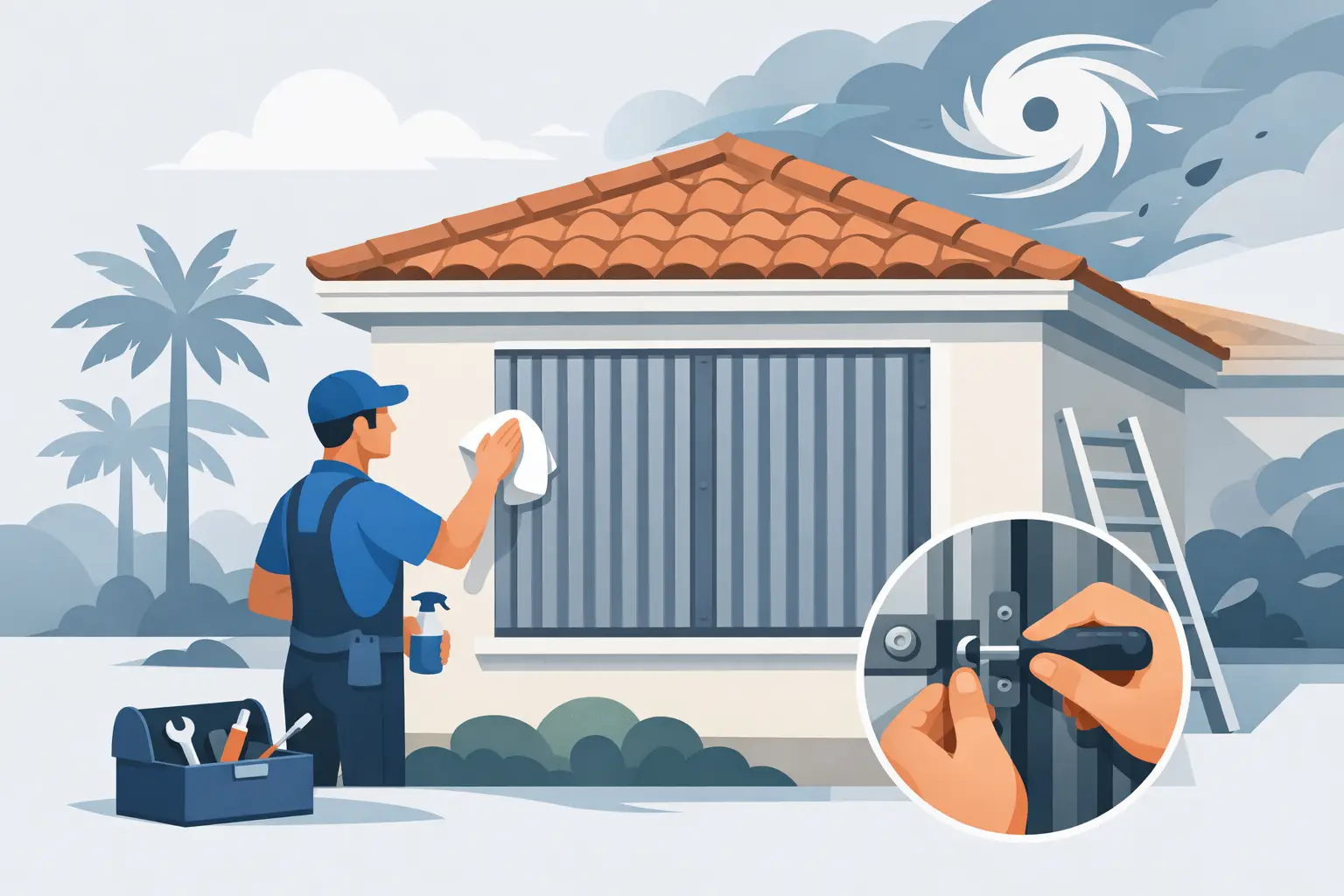
If your accordion shutters only get attention when a storm is on the map, you are not alone. Many Florida property owners install them for peace of mind, then forget about them until they need to close fast. The problem is that neglected shutters often stick, drag, corrode, or refuse to lock when timing matters most. If you want to maintain accordion hurricane shutters the right way, routine care has to happen before hurricane season, not during it.
Why regular shutter maintenance matters
Accordion hurricane shutters are built for harsh coastal conditions, but salt air, humidity, windblown debris, and simple daily exposure can wear down moving parts over time. Tracks collect dirt. Rollers can become stiff. Locks may corrode. Fasteners can loosen. Even a high-quality shutter system can become harder to use if it is not serviced on a regular schedule.
For homeowners, that means added stress when a storm warning is issued. For property managers, it can mean delays across multiple units or buildings when every opening has to be secured quickly. Good maintenance protects your investment, helps your shutters operate smoothly, and reduces the chance of expensive repairs later.
There is also a safety factor. A shutter that does not close completely or latch properly is not giving you the level of protection it was designed to provide. In coastal Florida, reliability is everything.
How to maintain accordion hurricane shutters without overcomplicating it
The goal is not constant upkeep. It is consistent upkeep. Most shutter systems do well with a simple inspection and cleaning routine several times a year, with extra attention before and after storm season.
Start by opening and closing each shutter fully. Do not assume everything is working because it looked fine last season. You are checking for resistance, uneven movement, grinding sounds, bent track sections, and locks that do not engage smoothly. If one side drags more than the other, the issue may be debris in the track, worn rollers, or minor alignment problems.
Next, clean the shutters with fresh water and a mild soap solution. This is especially important near the ocean, where salt buildup can accelerate corrosion. Use a soft cloth, sponge, or soft-bristle brush. Harsh chemicals and abrasive pads can damage finishes and protective coatings, so gentler is better. Rinse thoroughly and allow the surfaces to dry.
The tracks deserve special attention. Dirt, leaves, sand, insect nests, and small debris often collect there, especially on lower-level openings and shutters that are rarely used. A vacuum, soft brush, or clean cloth usually works well. If buildup is packed into corners, take your time. A clean track can make a major difference in how easily the shutter moves.
Pay attention to moving parts and hardware
Once the shutters are clean, inspect the mechanical components. Rollers, wheels, locks, and fasteners tend to show the first signs of wear. Look for rust, pitting, cracked housings, loose screws, or missing pieces. If a lock feels sticky or a handle wobbles, do not ignore it. Small hardware problems are usually easier and less expensive to correct before they affect the full system.
Lubrication can help, but only when used correctly. Not every product is a good fit for hurricane shutters. Heavy grease can attract grit and create more problems in the track over time. In many cases, a silicone-based lubricant is preferred for moving parts because it helps reduce friction without holding onto as much dirt. Apply it sparingly and wipe away excess.
That said, it depends on the shutter system and the manufacturer guidelines. Over-lubricating or using the wrong product can do more harm than good. If you are not sure what your shutters require, a professional service visit is the safer choice.
Watch for corrosion in coastal environments
Florida’s coastal climate is tough on metal components. Even when shutters are made from durable materials, salt exposure can still affect hinges, fasteners, locks, and other small parts. Corrosion often starts subtly. You may see discoloration, bubbling on coated surfaces, or rough spots around hardware before you notice performance issues.
This is one reason regular rinsing matters. Fresh water helps remove salt residue before it has time to sit and attack exposed surfaces. Properties closest to the water usually need more frequent attention than homes farther inland. Commercial buildings with larger shutter systems may also show wear faster simply because they are used more often.
If you spot active corrosion, do not assume a quick cleaning will solve it. Surface oxidation may be manageable, but deeper corrosion can weaken components and compromise operation. When hardware is significantly worn, replacement is often the smarter long-term fix.
Test the locks before you need them
A shutter that slides easily but will not lock securely is still a problem. Every maintenance check should include a full test of the locking mechanism. Make sure the shutter closes completely, lines up as it should, and latches without forcing it.
If the key sticks, the lock binds, or the panels do not meet correctly, something is off. Sometimes the cause is minor, such as debris in the track or light corrosion around the lock. Other times, the issue points to alignment or hardware wear that should be addressed by a trained technician.
This is particularly important for second homes, rental properties, and commercial spaces. If shutters go unused for long stretches, locking issues can go unnoticed until a storm watch is already in effect. A quick preseason check can prevent a much larger problem later.
When DIY maintenance is enough and when it is not
Basic cleaning, visual inspections, and light lubrication are reasonable tasks for many property owners. If the shutters are accessible and operating normally, routine upkeep can be straightforward. In fact, a little attention a few times a year can significantly extend service life.
But there is a line between maintenance and repair. If the shutter is hard to pull, off track, visibly bent, missing fasteners, or not locking properly, it is time to bring in a professional. The same applies if you notice damage after a storm. Forcing a damaged shutter can make alignment worse and increase repair costs.
Professional service is also a smart move for large properties or older systems. An experienced team can identify wear patterns, replace failing components, confirm the shutters are mounting and locking as intended, and help you avoid surprises when a storm approaches. For many Florida owners, that peace of mind is worth it.
A practical maintenance schedule for Florida properties
Most accordion shutters benefit from a simple annual rhythm. Early spring is the right time for a full inspection, cleaning, and operation test before hurricane season begins. Mid-season, a quick rinse and track check can help keep salt and debris from building up. After any major storm, inspect the shutters again, even if they were not deployed, because windblown debris and moisture can still affect performance.
Properties directly on the coast may need more frequent rinsing and hardware checks. Buildings with heavy use, such as vacation rentals or commercial spaces, may also need more regular service. The right schedule depends on exposure, age, and how often the shutters are opened and closed.
If your system has gone several years without professional attention, it may be time for a full service appointment. Companies with local coastal experience, like Jensen Beach Aluminum & Windows, understand the conditions these systems face and what it takes to keep them storm-ready.
Maintenance protects more than the shutters themselves
Well-maintained accordion shutters do more than slide better. They help protect windows, doors, interiors, and the people inside the property. They also protect the value of the installation itself. Replacement costs are much easier to delay when the original system is cleaned, inspected, and serviced before wear turns into failure.
There is also a convenience factor that should not be underestimated. When a storm is approaching, you want a shutter system that closes smoothly and locks quickly. You do not want to be outside fighting jammed panels or searching for a contractor at the last minute.
The best time to maintain accordion hurricane shutters is when the weather is calm and there is time to do the job carefully. A little preventive attention now can spare you a lot of stress later, and that is exactly what storm protection is supposed to do.