


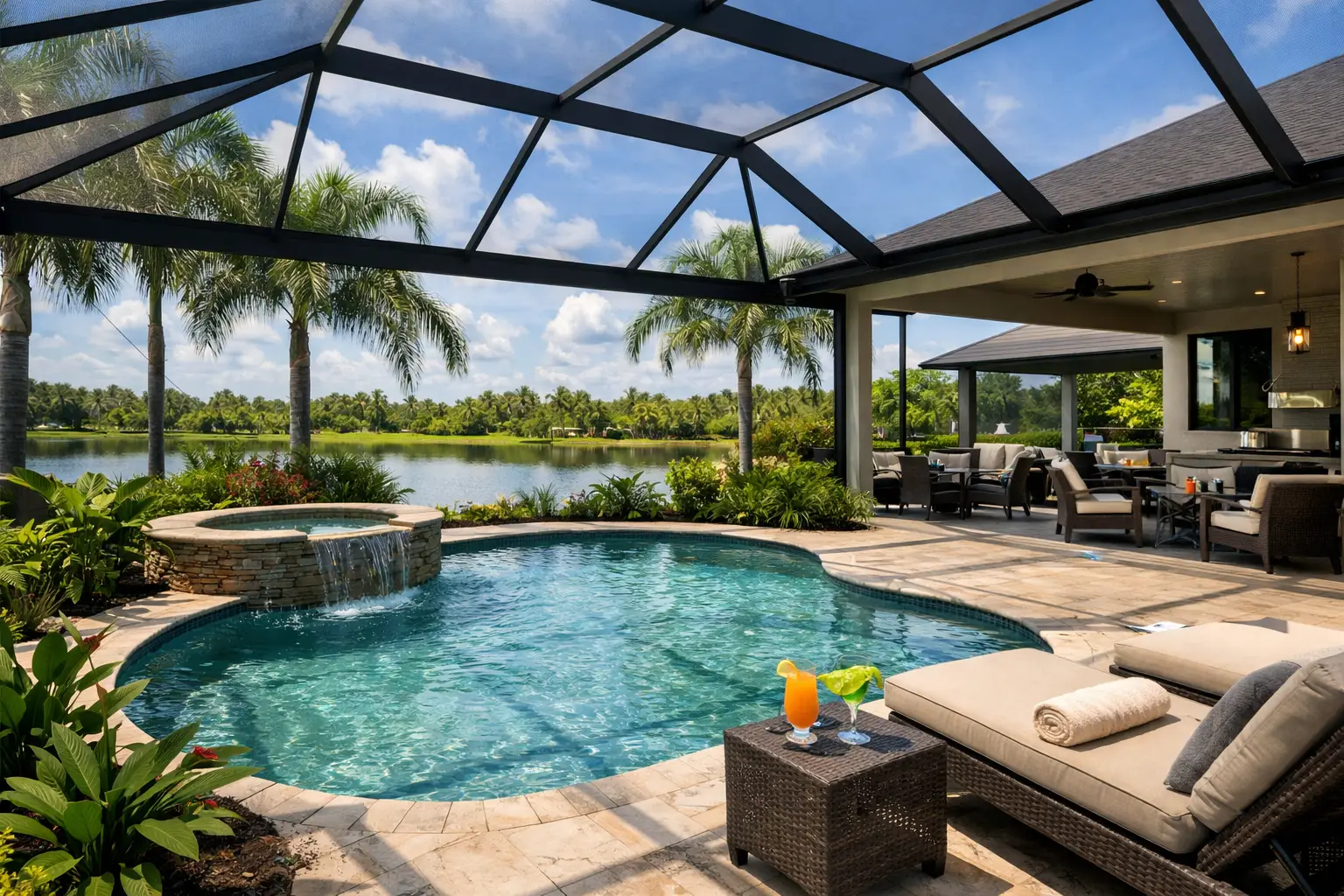
A pool should feel like an extension of your home, not a daily cleanup project. In Florida, pool cages make that possible by creating a screened outdoor area that helps keep out mosquitoes, leaves, windblown debris, and unwanted wildlife while preserving the open-air feel homeowners enjoy.
For properties on the Treasure Coast, an enclosure is more than a visual upgrade. It can make the pool area more usable through humid evenings, protect surrounding finishes from debris, and create a defined outdoor living space for family time, entertaining, or quiet afternoons by the water. The right result, however, depends on more than adding screen panels around a pool. It requires a structure designed for the property, local weather conditions, and the way you plan to use the space.
What Pool Cages Add to a Florida Property
The most immediate benefit of a pool enclosure is comfort. Florida’s mosquito activity, especially after rain, can turn a pleasant evening outside into a short one. Quality screening creates a practical barrier that lets homeowners enjoy fresh air without constantly reaching for bug spray or moving indoors.
A pool cage also reduces the debris that reaches the water. Palm fronds, oak leaves, seed pods, grass clippings, and airborne dust still require routine maintenance, but an enclosure can substantially reduce the amount that lands in the pool. That often means less skimming, less strain on filtration equipment, and a cleaner pool deck between service visits.
There is also a lifestyle benefit. Once an outdoor area is screened and clearly defined, it often becomes a more natural place to spend time. Homeowners may add seating, a dining table, an outdoor kitchen, or a conversation area beneath the enclosure. For rental properties and commercial settings, that added usability can improve the appeal of the property without closing off the view or making the space feel confined.
Choosing the Right Pool Cage Design
No single enclosure design fits every property. The best choice depends on the pool layout, roofline, available deck space, neighborhood requirements, and desired sightlines. A skilled contractor should begin by assessing the existing structure and discussing how the space needs to function.
Standard enclosures and panoramic views
A traditional pool enclosure uses aluminum framing with screened bays sized to provide strength and practical coverage. It is a dependable option for many homes and can be configured around pools, spas, patios, and lanais. The framing is visible, but well-planned layouts can still provide an attractive, open appearance.
Panoramic or picture-window screen designs use wider openings and fewer vertical members in key viewing areas. They are especially popular where a backyard overlooks water, a golf course, preserve land, or carefully landscaped grounds. The trade-off is that larger spans require proper engineering and may involve different structural considerations than a conventional cage. A clear view should never come at the expense of a structure built for local conditions.
Roof styles that fit the home
The roof shape affects appearance, drainage, headroom, and how naturally the cage ties into the home. Mansard designs offer a more traditional profile with generous overhead clearance. Gable roofs can complement homes with pitched rooflines, while shed roofs may suit certain patio layouts and additions.
The goal is not to choose a roof style from a photo alone. It is to select one that fits the home, manages rain effectively, and provides the usable space you expect beneath it. On a coastal property, the framing system and attachment details deserve as much attention as the finished appearance.
Materials and Installation Matter More Than They Seem
A screen enclosure is only as reliable as its materials, engineering, and installation. Florida sun, salt air, heavy rain, and high winds are demanding on exterior structures. Premium aluminum framing is valued because it is lightweight, durable, and resistant to corrosion when properly specified and maintained. High-quality finishes also help the cage retain a clean appearance over time.
Screen selection deserves careful consideration as well. Standard mesh is a practical choice for many homes, while tighter insect screen can provide added protection from small pests. Pet-resistant screening may be worthwhile near doors or lower wall sections where animals tend to push or scratch. Privacy screen can be useful along property lines, though it changes airflow and visibility. There is no universal best screen – the right choice depends on the problem you are trying to solve.
Professional installation is equally important. Proper anchoring, flashing, fasteners, frame alignment, screen tension, and drainage details all affect long-term performance. An enclosure that appears fine on installation day may develop issues later if corners are not square, attachments are poorly sealed, or screen panels are installed with inconsistent tension.
This is why homeowners should look beyond a simple square-foot price. A detailed proposal should explain the scope of work, materials, screen type, structural approach, and any permit requirements. It should also clarify whether an existing enclosure is being repaired, rescreened, modified, or completely replaced.
New Construction, Rescreening, or Repair?
Not every pool area needs a new cage. Sometimes the aluminum structure is sound, but the screens have become brittle, torn, loose, or discolored after years of sun exposure. A lanai rescreen can refresh the enclosure, improve insect control, and restore a cleaner appearance without the cost of rebuilding the frame.
Repair may be appropriate when damage is limited to a few panels, a door closer, hardware, or a localized framing issue. It can be a sensible solution after minor storm damage or accidental impact. If corrosion, widespread screen failure, loose framing, or repeated repairs are becoming common, a replacement may be the more responsible long-term investment.
Homeowners should be particularly cautious after a major storm. Damage is not always obvious from ground level. Bent members, compromised connections, stretched screen, and weakened anchors can affect the enclosure’s stability. A professional inspection can help determine whether a targeted repair is sufficient or whether the structure needs more extensive work.
Coastal Weather Calls for a Higher Standard
Florida pool cages are exposed to conditions that many exterior structures never face: intense ultraviolet exposure, driving rain, humidity, salt-laden air near the coast, and seasonal storm threats. These conditions make quality workmanship essential, not optional.
Local permitting and code requirements may apply depending on the project scope and property location. Engineering requirements can also vary based on wind exposure, size, and design. An experienced contractor understands that a pool enclosure cannot be approached as a one-size-fits-all add-on. The structure should be planned around the home and site conditions from the start.
Homeowners can help protect their investment through basic care. Rinse salt and residue from the frame periodically, keep nearby landscaping trimmed back, clear gutters and deck drains, and avoid hanging heavy objects from the enclosure. If a screen panel tears, schedule a repair before the opening becomes an easy entry point for pests or creates extra stress on adjacent screen material.
Plan the Space Before the Cage Is Built
The best time to think about furniture placement, access paths, doors, and future upgrades is before installation begins. Consider where guests will enter the pool deck, how pool service technicians will reach equipment, and whether you may later add pavers, a grill area, a pergola, retractable screens, or an outdoor kitchen.
Door placement can make a larger difference than many homeowners expect. A well-positioned door supports traffic flow and can reduce the need to carry furniture, cleaning equipment, or pool supplies through the house. If children or pets use the area, discuss safety-minded access options and hardware with the installer.
For homeowners who want to improve multiple exterior features, planning the enclosure alongside concrete, pavers, storm protection, or window and door projects can create a more cohesive result. It may also prevent avoidable rework later, such as removing part of a finished deck to accommodate a new enclosure footing.
A pool cage should give you more reasons to enjoy your backyard, not more items on a maintenance list. Jensen Beach Aluminum & Windows can help you evaluate the condition of an existing enclosure or plan a custom solution with the materials, design, and professional installation your Florida property deserves. A careful on-site consultation is the best first step toward an outdoor space that feels protected, comfortable, and ready to use every day.