


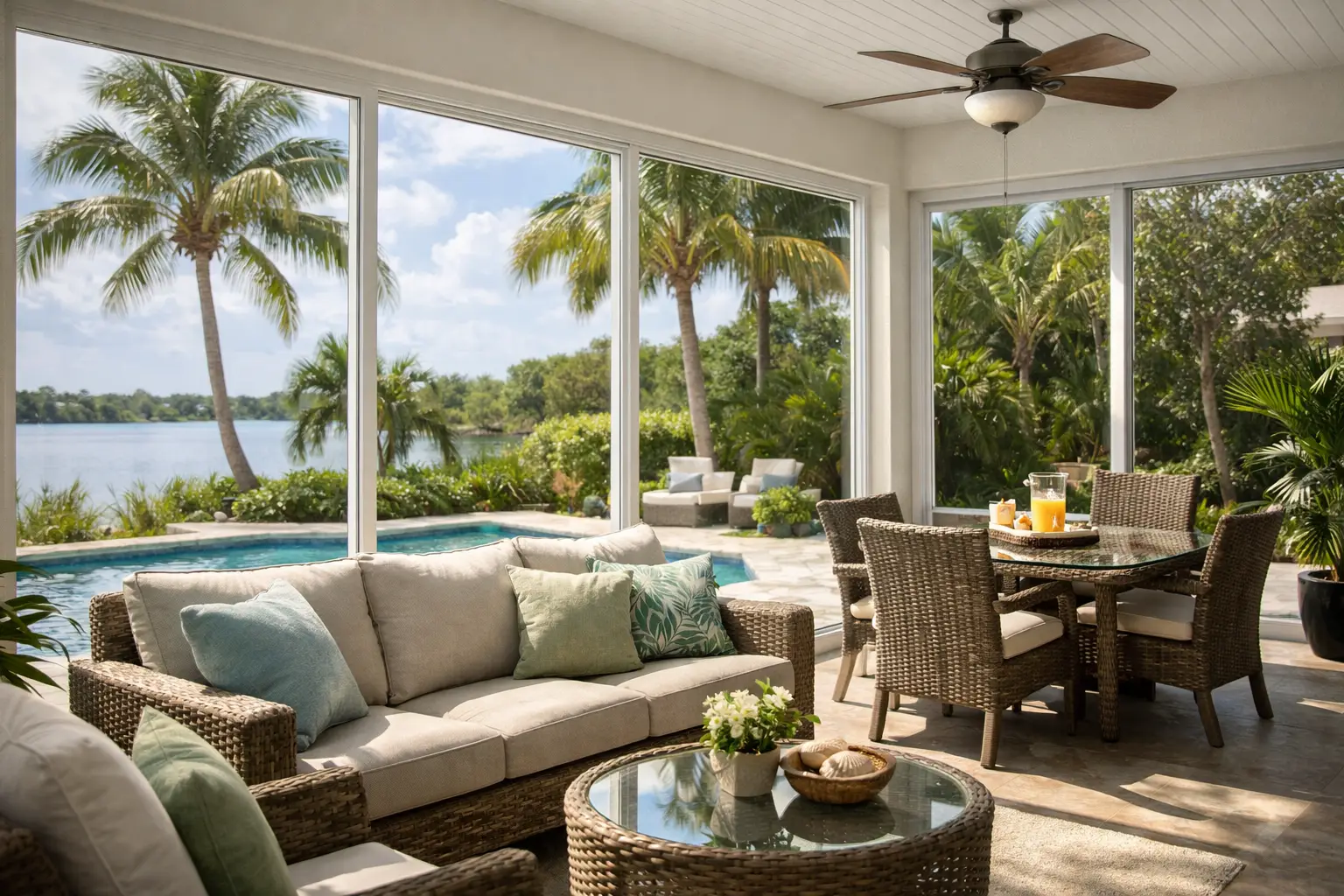
A Florida backyard is too valuable to enjoy only when the sun is mild, the bugs stay away, and afternoon rain holds off. A professionally designed sunroom changes that equation. The top benefits of sunrooms go beyond adding square footage – they create a more comfortable, protected place to enjoy the views, light, and lifestyle that make Treasure Coast living special.
For homeowners who want an outdoor feel without constant exposure to heat, insects, wind, and sudden weather, a sunroom can be one of the most practical improvements available. The right design should fit your home, your goals, and the conditions of your property, especially in coastal communities where durability and professional installation matter.
Top Benefits of Sunrooms for Florida Homeowners
More usable living space without a full home addition
A sunroom gives your household a flexible space that can serve more than one purpose. It may become a quiet morning coffee spot, a family gathering area, a hobby room, a reading space, or a place to entertain guests while staying close to the pool, patio, or backyard.
Unlike an uncovered patio, the space remains usable when mosquitoes are active or rain moves through. Unlike a traditional interior room, it maintains a stronger visual and physical connection to the outdoors. That flexibility is especially valuable for Florida homes, where outdoor areas are often central to how families relax and entertain.
The size and enclosure style make a difference. A compact room may be ideal for a small seating area, while a larger custom sunroom can extend the main living area and support dining or entertaining. A professional site evaluation helps determine how the new structure can complement existing rooflines, drainage, doors, windows, and outdoor features.
Enjoy natural light with greater comfort
Natural light can make a home feel more open and welcoming. A sunroom provides broad views of the yard, landscaping, water, or pool area while giving homeowners a sheltered place to sit and enjoy them. It is an appealing option for property owners who want to spend more time near the outdoors but prefer protection from direct sun and changing weather.
Comfort depends on the materials selected. Quality framing, properly fitted windows or screens, roof design, and ventilation all influence how a sunroom performs through Florida’s warm months. In some cases, insulated glass, tinted options, or solar-control features can help reduce glare and heat gain while preserving the bright, open feeling that homeowners want.
It is worth being realistic about expectations. A room with extensive glass exposure will still receive more solar heat than an interior room if it is not designed carefully. Orientation, shade, roof construction, ventilation, and whether the room is connected to the home’s HVAC system should all be considered before installation.
Protection from insects, debris, and unpredictable weather
Outdoor living in Florida comes with trade-offs. Mosquitoes, no-see-ums, pollen, blowing leaves, wind-driven rain, and intense sun can cut short time on an open patio. A sunroom creates a clean, defined boundary between your living area and those everyday nuisances.
This benefit is often most noticeable near a pool or lanai. Instead of moving furniture indoors every time a storm approaches, homeowners have a protected area for relaxing, drying off, or keeping an eye on children in the yard. The enclosure can also help reduce the amount of debris that reaches nearby outdoor furniture and living spaces.
A sunroom is not automatically hurricane protection, and it should never be presented that way. In storm-prone areas, the structure, anchoring, glazing, and connections must be selected and installed to meet applicable local code requirements. Homeowners should ask direct questions about wind considerations, permits, engineering requirements, and how the enclosure is intended to perform in their specific location.
Energy Efficiency Depends on Design and Installation
One of the leading benefits of a well-planned sunroom is the opportunity to improve comfort without creating unnecessary energy strain. However, energy efficiency is not a one-size-fits-all promise. It depends on the amount of glass, the direction the room faces, the roof system, insulation, shading, and the performance of windows and doors.
For a Florida property, low-quality materials or poorly sealed connections can allow unwanted heat and moisture into the space. That can make the room uncomfortable and place more demand on cooling equipment. Premium components and precision installation help manage those concerns, particularly when the sunroom is designed as an extension of the conditioned home.
There are also sunrooms that are intended primarily for seasonal or three-season use. These can be an excellent fit for homeowners who want weather protection and airflow without the cost of a fully conditioned room. The right choice comes down to how often you plan to use the space, what level of temperature control you expect, and how your home is configured.
A cleaner transition between indoors and outdoors
A sunroom can make the entire home function better by creating a transition zone at the back or side entry. Wet pool towels, sandy feet, gardening supplies, and pet traffic can be managed before they reach the main interior spaces. For many families, that practical advantage becomes part of the room’s daily value.
The enclosure can also help define your property’s outdoor layout. A sunroom may connect the kitchen to a patio, create a more inviting route to the pool, or provide a protected destination at the edge of a landscaped yard. When the design is coordinated with existing windows, doors, pavers, screens, or awnings, the improvement looks intentional rather than added on.
Potential appeal for future buyers and renters
Additional usable space and well-executed outdoor living features can make a property more attractive when it is time to sell or lease. Buyers in Florida often appreciate a home that offers protected space to enjoy the climate without the maintenance and exposure of a completely open patio.
A sunroom’s effect on market value will vary. Neighborhood expectations, construction quality, permits, size, condition, and whether the space is heated and cooled can all influence how an appraiser or prospective buyer views it. It should be considered a lifestyle investment first, with resale appeal as an additional advantage.
For investment properties, a comfortable enclosed outdoor area can also help a listing stand out. Renters and seasonal residents frequently look for a place to enjoy the view, read, dine, or work without dealing with insects and afternoon showers. Durable materials are particularly important in these settings because they support easier long-term upkeep.
What to Consider Before Building a Sunroom
The best sunroom is not simply the largest one that fits behind the house. It should be planned around the property’s exposure, existing structure, intended use, and local building requirements. A room that faces strong western sun, for example, may need a different glass package, roof approach, or shading strategy than one that receives gentler morning light.
Homeowners should also decide whether their priority is open-air enjoyment, year-round temperature control, storm-conscious construction, or a balance of all three. Budget matters, but the lowest initial price can lead to higher costs later if materials fade, seals fail, water management is overlooked, or the installation does not integrate correctly with the home.
Experienced local professionals can evaluate the attachment area, discuss available enclosure options, and identify practical details before construction begins. That includes permits, drainage, electrical needs, door placement, roof tie-ins, and the products best suited to Florida heat and coastal conditions.
A well-built sunroom should feel like a natural part of your home, not a space you use only when conditions are perfect. If you are considering one for your Florida property, start with a clear conversation about how you want to live in the space and what it will take to protect that investment for years to come.