


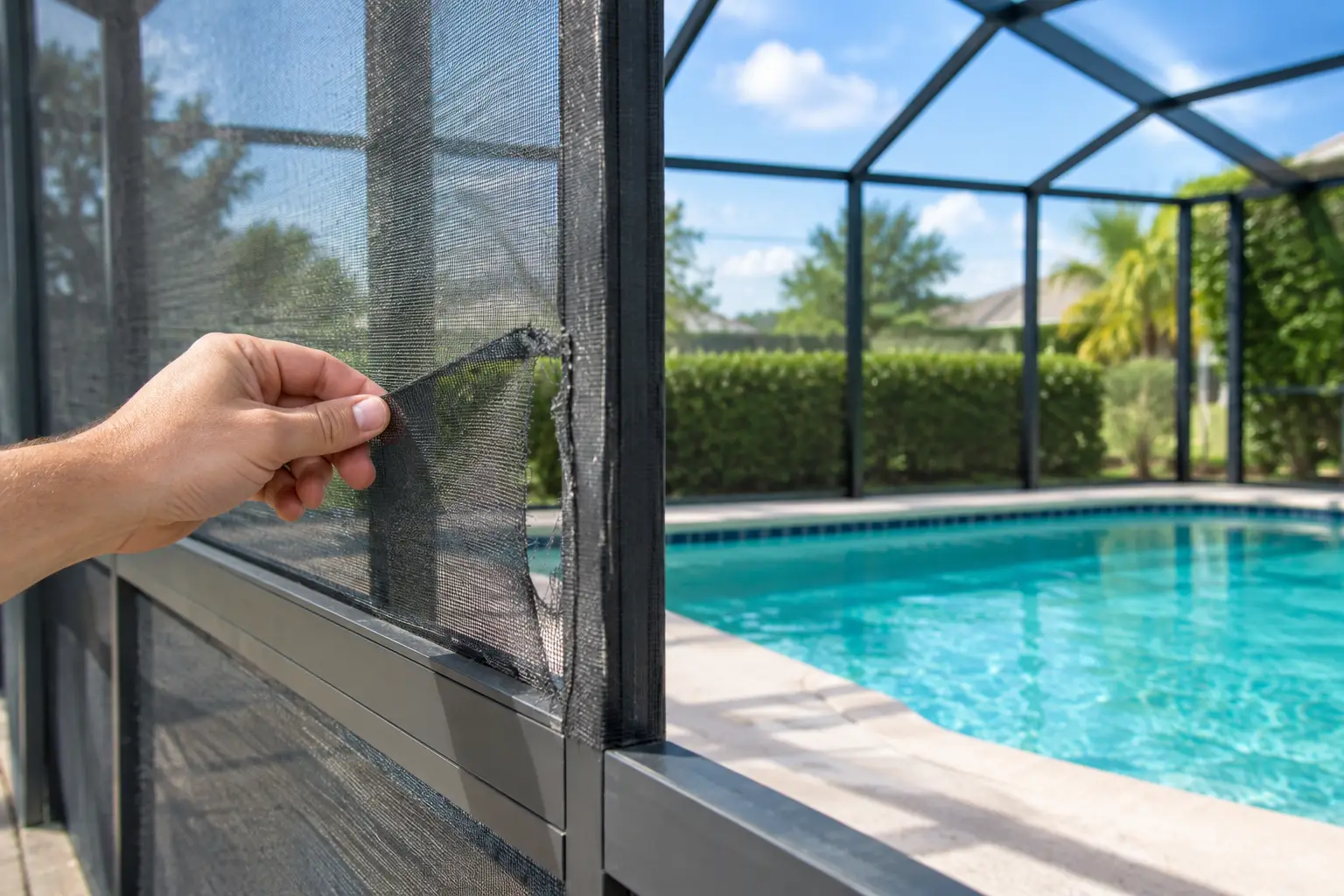
A pool enclosure should make time outdoors more comfortable, not become another source of repairs. If insects are getting through, panels are sagging, or the screen no longer looks clean and secure, you may be asking when to replace pool screens. In Florida’s sun, salt air, rain, and storm seasons, screen material can wear down long before the aluminum structure reaches the end of its service life.
A torn panel does not always mean the entire enclosure needs rescreening. But waiting too long can turn a manageable maintenance project into widespread damage, reduced curb appeal, and a less usable pool area. Knowing what to look for helps you make a practical decision based on the condition of your enclosure, not guesswork.
When to Replace Pool Screens Instead of Repairing Them
The right choice depends on the age of the screen, the number of affected panels, the cause of the damage, and the condition of the spline that holds each panel in place. A single small puncture from patio furniture, a pet, or a falling branch can often be repaired by replacing one panel.
Full rescreening makes more sense when damage is widespread or the material has become brittle. Replacing one weak panel at a time on an aging enclosure can create an uneven appearance and lead to repeated service calls. A complete rescreen also gives you the opportunity to select a screen type that better fits how you use your outdoor space, whether that means finer insect protection, improved pet resistance, or greater durability.
1. Tears and Holes Keep Appearing
One isolated tear is usually a localized issue. Several tears across different walls or roof panels are a clear sign that the mesh is losing strength. Sun exposure gradually breaks down screen fibers, making them easier to puncture even during normal use.
Openings also defeat one of the main purposes of a pool cage: keeping mosquitoes, no-see-ums, leaves, and other debris out of the lanai. If you notice more pests inside the enclosure or find yourself cleaning the pool more often, inspect the screens closely for damage around corners, door frames, and roof sections.
2. The Screen Feels Brittle, Dry, or Weak
A healthy screen has some flexibility. When lightly pressed, it should not crack, flake, or feel like it may split. If the mesh has become dry and brittle, spot repairs may only delay the inevitable because nearby panels are likely in the same condition.
This is especially common on Florida homes with long hours of direct sun exposure. Coastal properties can experience additional wear from salt-laden air, humidity, and wind-driven debris. Even if the screens do not have obvious holes yet, brittle material is more vulnerable when the next summer storm arrives.
3. Panels Are Sagging or Pulling Away From the Frame
Screens should sit taut and even within the aluminum framing. Sagging panels collect debris, look worn, and can allow insects through gaps along the edges. A loose screen may be the result of an aging mesh, deteriorated spline, or previous installation that no longer holds tension.
In some cases, a skilled technician can reset an individual panel. If looseness appears throughout the enclosure, however, full rescreening is generally the more dependable investment. New screening installed with the correct spline and proper tension restores the clean, finished appearance homeowners expect from a well-maintained pool cage.
4. The Color Has Faded or the View Looks Hazy
Screen discoloration does not always affect performance immediately, but it can indicate prolonged UV exposure and material breakdown. Black or charcoal screen mesh may turn gray, while lighter screens can take on a dingy or yellowed appearance that does not improve with cleaning.
A hazy view through the enclosure is another practical concern. Dust, mildew, oxidation, and aging fibers can make the pool area feel closed in rather than open and inviting. If cleaning no longer improves the look of the screen, replacement can refresh the entire outdoor living space without rebuilding the structure.
5. You Are Seeing Mildew, Stains, or Corrosion Around the Panels
Florida humidity creates favorable conditions for mildew and staining, particularly in shaded areas of a lanai. Surface growth can often be cleaned safely using appropriate methods, but stains that remain embedded in aging mesh may be permanent.
Pay attention to the aluminum frame as well. Corrosion, loose fasteners, bent members, or damaged anchors are not screen-only issues. Rescreening is an excellent time for a professional inspection of the enclosure, but structural concerns should be addressed before new mesh is installed. New screens cannot correct a frame that has been compromised by age, impact, or storm damage.
6. The Enclosure Was Damaged by a Storm
After a tropical storm or hurricane, inspect the pool cage once conditions are safe. Look for torn roof panels, stretched mesh, missing spline, bent framing, and damage where the enclosure attaches to the home or deck. Wind can weaken screens without completely tearing them, leaving panels more likely to fail later.
There is a trade-off after storm damage. Replacing only the visibly torn panels can be appropriate when the enclosure is newer and the remaining screens are tight and in good condition. If the cage already showed age-related wear before the storm, a full rescreen may deliver better long-term value and a more consistent appearance.
7. Your Screens Are Near the End of Their Expected Service Life
There is no single replacement schedule for every pool enclosure. Standard fiberglass screening often lasts roughly seven to 10 years in demanding Florida conditions, though exposure, maintenance, and screen quality can shorten or extend that range. Premium polyester and specialty screens may last longer, but they still need periodic evaluation.
Age alone should not force replacement. A well-kept screen enclosure may remain functional beyond the typical range. Still, once an older enclosure starts needing repeated panel repairs, it is wise to compare the cumulative cost with complete rescreening. A professional evaluation can identify whether you are dealing with isolated damage or broad material fatigue.
8. Your Household Needs Have Changed
Sometimes the screen is intact, but it no longer serves the property as well as it should. Homeowners who spend more time outside may want better protection from tiny biting insects. Pet owners may need a stronger lower-panel material. Property managers may prioritize a durable solution that reduces frequent maintenance between tenants or seasonal guests.
Replacement provides a chance to choose the right screen for the application. Standard mesh is a practical option for many enclosures, while no-see-um screen offers a tighter weave, pet-resistant screen handles more wear, and specialty options can be selected for particular visibility or durability goals. The best choice depends on airflow preferences, budget, pest pressure, and the design of the existing cage.
What to Check Before Scheduling Pool Screen Replacement
Walk around the enclosure in daylight and examine both the inside and outside. Look at roof panels from below, inspect corners and door areas, and note whether damage is concentrated on one side of the cage. Screens exposed to prevailing winds or intense afternoon sun often show wear first.
Take note of frame movement, loose hardware, drainage issues near the slab, and vegetation that rubs against the screen. Trimming branches and keeping shrubs away from the enclosure helps protect new material after it is installed. Avoid pressure washing screens too aggressively, as excessive force can stretch mesh, dislodge spline, or worsen small tears.
For older or storm-exposed enclosures, professional assessment is the safest path. An experienced installer can distinguish between a straightforward panel repair, a full rescreen, and work that should include frame or structural corrections. This protects your investment and helps ensure the finished enclosure performs as intended.
Why Professional Rescreening Makes a Difference
Pool screen replacement may look simple, but roof panels, large spans, and high sections require proper access, careful tensioning, and the correct materials. Poorly installed screens can wrinkle, sag early, pull free during high winds, or leave gaps around the perimeter.
Professional rescreening also allows for a consistent material choice across the enclosure. That matters for appearance, visibility, and expected performance. Jensen Beach Aluminum & Windows provides skilled, service-focused support for homeowners who want their pool enclosure restored with quality workmanship and materials suited to Florida conditions.
Do not wait for small holes to become a season of insects, debris, and repeated repairs. A timely inspection gives you a clear picture of what your pool cage needs and helps keep your outdoor space protected, attractive, and ready to enjoy.