


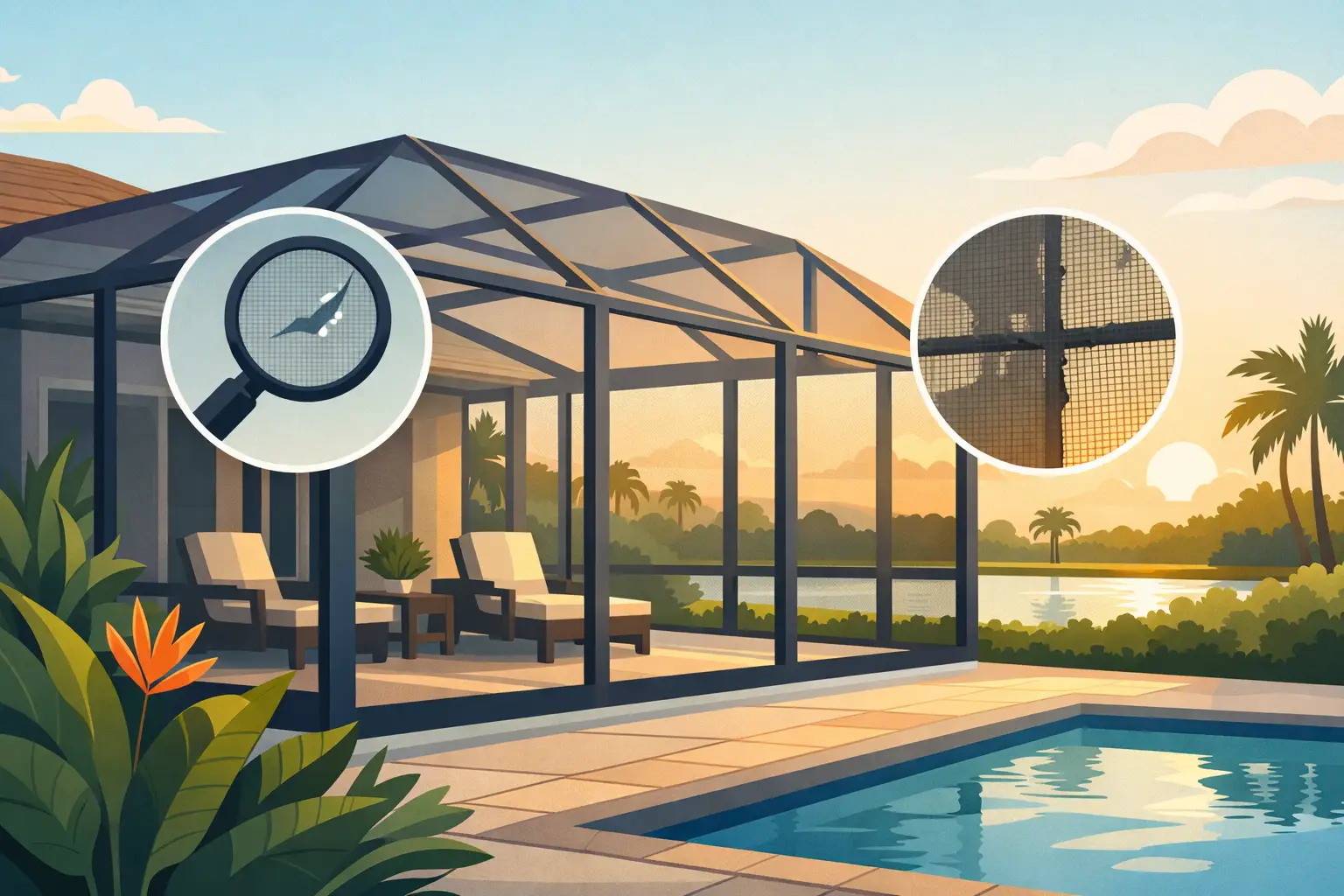
A lanai usually tells you when it is ready for new screening. You may notice small tears near the bottom panels, loose spline, faded mesh, or a frame that looks fine until a windy afternoon makes the screen rattle. If you are wondering when to rescreen a lanai, the answer is rarely based on age alone. In Florida, sun, salt air, rain, insects, and storm season all speed up wear, so the right time often comes down to condition, safety, and how well the enclosure is still doing its job.
For many property owners, the first instinct is to patch a panel or wait until the damage becomes obvious. That can work for isolated issues, but it is not always the most cost-effective choice. A lanai screen system is only as strong as its weakest section. Once multiple panels begin to fail, or the mesh has become brittle across the enclosure, a full rescreen often protects your investment better than repeated small repairs.
When to rescreen a lanai based on visible wear
The clearest sign is physical damage you can see from a few steps away. Tears, holes, fraying edges, and panels pulling loose from the frame all point to declining performance. Even minor openings matter in Florida, where mosquitoes, no-see-ums, and blowing debris can quickly turn a comfortable outdoor space into one you avoid.
Discoloration is another common warning sign. Screen mesh that has gone dull, chalky, or noticeably faded has often been weakened by prolonged UV exposure. It may still be standing, but it can lose flexibility over time and become easier to tear during strong wind or routine use. If your lanai looks tired even after cleaning, the screen itself may be at the end of its service life.
Sagging panels also deserve attention. Properly installed screening should sit tight and uniform. When sections begin to ripple, bow, or flap, it can mean the mesh has stretched or the spline is no longer holding securely. That affects appearance, but it also reduces the enclosure’s overall stability.
Functional signs your lanai is no longer performing well
A lanai is there to make outdoor living more usable. When it stops doing that consistently, it is time to take a closer look.
If insects are getting in despite doors being closed and frames appearing intact, small failures in the mesh may be harder to spot than you expect. Tiny punctures or loose corners can be enough to create a problem. The same is true if leaves, dust, and wind-driven debris seem to enter more often than they used to.
You may also notice that your view looks cloudy or dated. Older mesh can reduce the clean, open feeling a lanai should provide. Rescreening is not just about fixing damage. It can restore the appearance of the enclosure and make the entire patio, pool area, or outdoor sitting space feel refreshed.
For rental properties and commercial spaces, appearance matters even more. A worn screen enclosure can make an otherwise well-maintained exterior look neglected. In those cases, rescreening may be part of protecting curb appeal and tenant or guest satisfaction, not just repairing a defect.
Florida weather changes the timeline
In milder climates, screens may last longer with fewer issues. Florida is different. Heat, high UV exposure, humidity, coastal salt, and seasonal storms all put added stress on enclosure systems. That means when to rescreen a lanai depends heavily on location and exposure.
Homes near the coast often see faster deterioration because salt air can be tough on both mesh and framing components. Properties with full afternoon sun may experience quicker fading and brittleness. If your lanai is exposed to frequent wind or backs up to open water, the screening may simply age faster than it would in a more sheltered setting.
Storm season is another factor. You do not need major hurricane damage to justify a rescreen. Repeated high winds can loosen sections over time, even if the enclosure remains standing. After any significant storm event, it is wise to inspect for stretched mesh, popped spline, corner separation, and impact damage from branches or debris.
Repair or full rescreen?
This is where experience matters. Not every damaged lanai needs a full rescreen, but not every issue should be handled with another patch either.
A repair may make sense if the damage is isolated to one or two panels and the remaining screen is still in strong condition. If the mesh is relatively new, tight, and consistent in color and strength, targeted repair can be the practical option.
A full rescreen is often the better decision when damage shows up in several areas, the mesh has become brittle, or previous repairs are starting to add up. Mismatched panels can also affect appearance. If half the enclosure looks weathered and the other half has newer patches, replacing the full screen creates a cleaner result and can save money over time compared with repeated service calls.
Age matters, but it should be considered alongside condition. Some enclosures need attention sooner because of heavy exposure, while others hold up longer with the right materials and maintenance. A professional inspection can help determine whether you are dealing with a simple repair or a system that is nearing the point of broader failure.
The best time of year to rescreen a lanai
Technically, a lanai can be rescreened at many times during the year. Practically, earlier is often better. Waiting until storm season is already active, or until insects are at their worst, can leave you dealing with an avoidable interruption.
Many homeowners schedule rescreening when they first notice damage rather than delaying until panels start failing one after another. That approach usually protects usability and helps prevent small issues from spreading. If you use your lanai heavily during cooler months or for entertaining, planning ahead can be especially worthwhile.
For investors and commercial property managers, timing often comes down to occupancy, guest experience, and preventative maintenance schedules. Rescreening before peak use periods can reduce disruptions and keep the space looking market-ready.
What a professional inspection should look for
A proper evaluation should go beyond torn mesh. The condition of the frame, fasteners, spline channels, door operation, and structural alignment all matter. New screen installed over framing issues will not deliver the long-term result most property owners want.
This is especially important in coastal Florida, where corrosion, frame movement, and storm wear can affect performance. Skilled professionals should look at the enclosure as a whole, not just the most obvious damaged section. That is how you avoid paying for screen work only to find out later that another underlying issue was missed.
At Jensen Beach Aluminum & Windows, that service-first approach matters because a lanai is part of the overall protection and enjoyment of your property. The goal is not just to replace mesh. It is to restore the enclosure so it performs well, looks right, and holds up in local conditions.
How rescreening protects value and comfort
A well-maintained lanai adds usable living space. It gives homeowners a place to relax, entertain, or enjoy fresh air with fewer pests and less debris. When the screening is failing, that space loses value quickly.
Rescreening can improve day-to-day comfort, but it also supports broader property goals. For homeowners, it helps preserve the appearance and function of an exterior feature that buyers notice. For property managers, it supports presentation, maintenance standards, and resident satisfaction. For coastal properties in particular, staying ahead of visible wear sends the right message about upkeep and long-term care.
If you are unsure whether your enclosure needs a simple repair or a full update, pay attention to the pattern. One torn panel is one thing. Repeated failures, faded mesh, sagging sections, and storm-related wear are usually your sign not to wait much longer. A lanai should feel like an asset, not another item on the list you keep putting off.