


A foggy window that will not wipe clean is more than a cosmetic issue. Homeowners often ask, why do window seals fail when the glass itself looks intact? In most cases, the failure happens at the insulated glass unit’s perimeter, where the seal that holds two panes together and protects the airspace between them has weakened. Florida’s sun, humidity, storms, and temperature swings can accelerate the process.
A failed seal does not always mean water is entering your home or that the entire window is immediately unsafe. It does mean the window is no longer performing as designed. Understanding the cause helps you make the right call – whether that is monitoring the issue, replacing the glass unit, or upgrading an aging window system.
What a Window Seal Actually Does
Many modern windows use insulated glass units, often called IGUs. These units consist of two or more panes of glass separated by a spacer. The perimeter seal keeps the space between panes dry and may retain insulating gas that improves thermal performance.
That sealed airspace is what allows the glass to help control heat transfer and reduce the chance of interior condensation under normal conditions. Once the perimeter seal fails, outside moisture can enter between the panes. The result is the familiar haze, fogging, streaking, or mineral-like spotting that cannot be cleaned from either side of the glass.
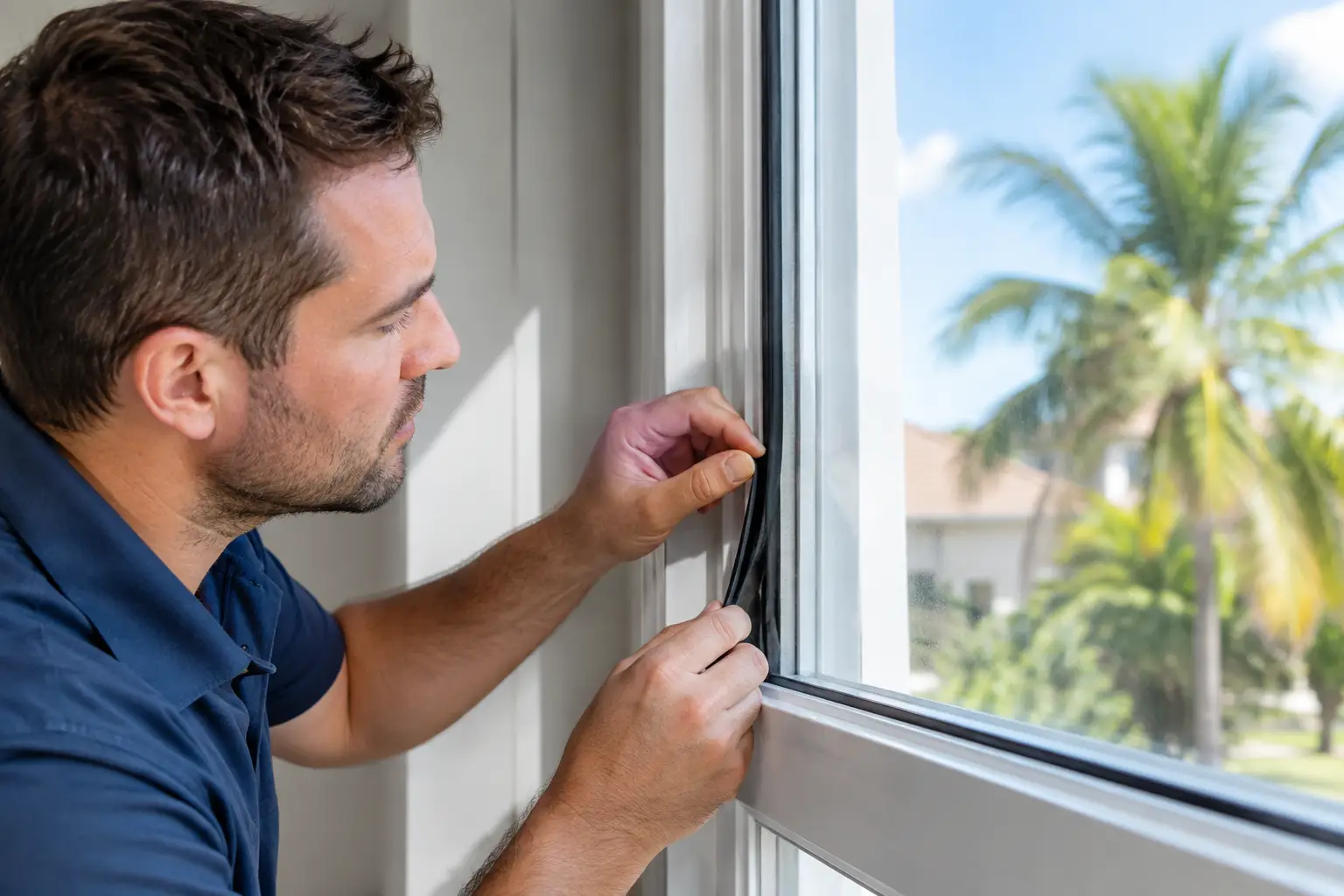
It is helpful to distinguish an insulated glass seal failure from worn weatherstripping. Weatherstripping seals the moving portions of an operable window against air and water. An IGU seal sits around the glass package itself. Both affect comfort and efficiency, but they require different repairs.
Why Do Window Seals Fail? Common Causes
Window seals are built to withstand years of use, but no sealed glass unit lasts forever. The exact service life depends on glass quality, exposure, installation conditions, and maintenance. On the Treasure Coast, several factors deserve particular attention.
Heat, UV exposure, and daily expansion
Glass, metal spacers, vinyl, and frame materials expand and contract at different rates. A window exposed to strong afternoon sun can become significantly hotter than the surrounding wall, then cool quickly during rain or overnight. Over thousands of heating and cooling cycles, that movement places stress on the perimeter seal.
Florida’s intense ultraviolet exposure can also age certain materials over time. Quality windows are designed for these conditions, but south- and west-facing elevations generally experience more thermal stress than shaded areas.
Persistent humidity and coastal moisture
High humidity does not automatically cause a seal to fail. However, once a seal begins to weaken, Florida’s moisture-rich air makes fogging between panes more noticeable and more persistent. Coastal properties also contend with salt air, which can contribute to the long-term deterioration of exterior components when windows are not properly maintained.
Wind-driven rain is another concern. During severe weather, water can be forced against window assemblies with far more pressure than a typical afternoon shower. Properly rated products and precision installation are essential for managing those conditions.
Age and normal material wear
The sealants and spacers in an insulated glass unit have a finite lifespan. Even a well-made window can eventually reach the point where its seals lose flexibility or adhesion. This is especially common in older windows, early-generation insulated glass, or windows that have seen years of direct sun and weather exposure.
A seal failure in one older window can be isolated. Failures appearing across several windows at once may indicate that the units are all approaching the same stage of wear.
Installation or structural movement
A quality glass unit needs a properly prepared frame, correct support, and adequate drainage. If a window is installed out of square, excessively tightened, poorly shimmed, or not adequately flashed, the frame can place uneven pressure on the glass. That stress can affect seals over time.
Movement in the building also matters. Settling, changes around an opening, or impact from severe storms can alter how a window frame carries load. This does not mean every seal failure is an installation problem, but it is one reason a professional assessment should consider the entire opening rather than the fogged glass alone.
Glass damage and failed edge protection
A cracked pane, damaged frame, or deteriorated glazing components can expose the insulated unit to moisture and movement. Sometimes the damage is obvious. Other times, a small issue at the glass edge is hidden behind stops, trim, or a sash frame.
In coastal communities, neglected exterior cleaning can also leave salt deposits and debris around frames and drainage paths. Keeping those areas clear supports the window system’s ability to shed water as intended.
Signs Your Insulated Glass Seal Has Failed
The clearest sign is condensation or haze between the panes. Unlike interior condensation, it will not disappear when you lower indoor humidity, run the air conditioner, or wipe the surface. It may look worse early in the morning, after rain, or when the sun hits the glass at a certain angle.
Other signs include a cloudy appearance, visible spots between panes, a rainbow-like film, or reduced clarity in the view. Some homeowners also notice that a room feels warmer near affected glass, particularly on sunny elevations. That comfort change can be real, although it is not a reliable diagnostic on its own because air leakage, shading, and HVAC performance also play a role.
Not every form of window moisture points to a failed seal. Condensation on the room-side glass often relates to indoor humidity and cooler glass temperatures. Moisture on the exterior surface can occur when highly efficient glass stays cooler than warm, humid outdoor air. A qualified window professional can identify where the moisture is located before recommending work.
What Happens If You Ignore a Failed Seal?
A failed glass seal usually develops gradually, so it is easy to postpone. The immediate concern is often appearance: cloudy glass reduces natural light and can make an otherwise well-kept home look dated. For rental, resale, or commercial properties, that visual impact can matter.
Performance is the larger issue. Once the insulated space is compromised, the window may provide less insulation than it did originally. In Florida, where air-conditioning systems work hard for much of the year, reduced glass performance can contribute to unwanted heat gain and discomfort near windows.
Seal failure can also be a useful warning sign. If the window is older, difficult to operate, leaking air, showing frame wear, or lacking appropriate storm protection, replacing only the glass may solve the fogging without addressing the broader condition of the opening.
Can a Failed Window Seal Be Repaired?
It depends on the window’s age, construction, and overall condition. For a newer, high-quality window with a sound frame and sash, replacing the insulated glass unit can be a practical solution. The new unit restores visibility and helps return the window to its intended insulating performance.
Some services offer to drill or vent fogged glass. While those approaches may temporarily improve the appearance in limited cases, they generally do not recreate the original factory-sealed insulating unit. Homeowners should ask whether the proposed work restores the sealed airspace, addresses the cause of failure, and includes a meaningful warranty.
Full window replacement is often the better long-term choice when multiple seals have failed, frames are damaged, operation is poor, or the existing windows do not meet your current needs for energy performance and hurricane readiness. This is particularly relevant for older Florida homes where upgraded impact-rated windows can improve protection, comfort, and curb appeal at the same time.
Protecting New Window Seals Over Time
No maintenance plan can guarantee that an insulated glass seal will never fail, but good care supports a longer service life. Keep tracks, weep holes, and drainage areas free of dirt, leaves, and salt buildup. Clean frames with manufacturer-approved products, and avoid aggressive pressure washing directly at window joints or glass edges.
Watch for changes after major storms. A new rattle, difficult operation, cracked glass, damaged screens, or water staining near an opening deserves attention before a small issue becomes a larger repair. When replacing windows, select products designed for Florida exposure and rely on skilled professionals who understand proper flashing, shimming, anchoring, and water management.
For homeowners throughout the Treasure Coast, Jensen Beach Aluminum & Windows can evaluate failed glass seals in the context of the entire window system. The goal is not simply to remove fog from a pane. It is to help you choose a solution that protects your property, supports everyday comfort, and stands up to the conditions outside your home.