


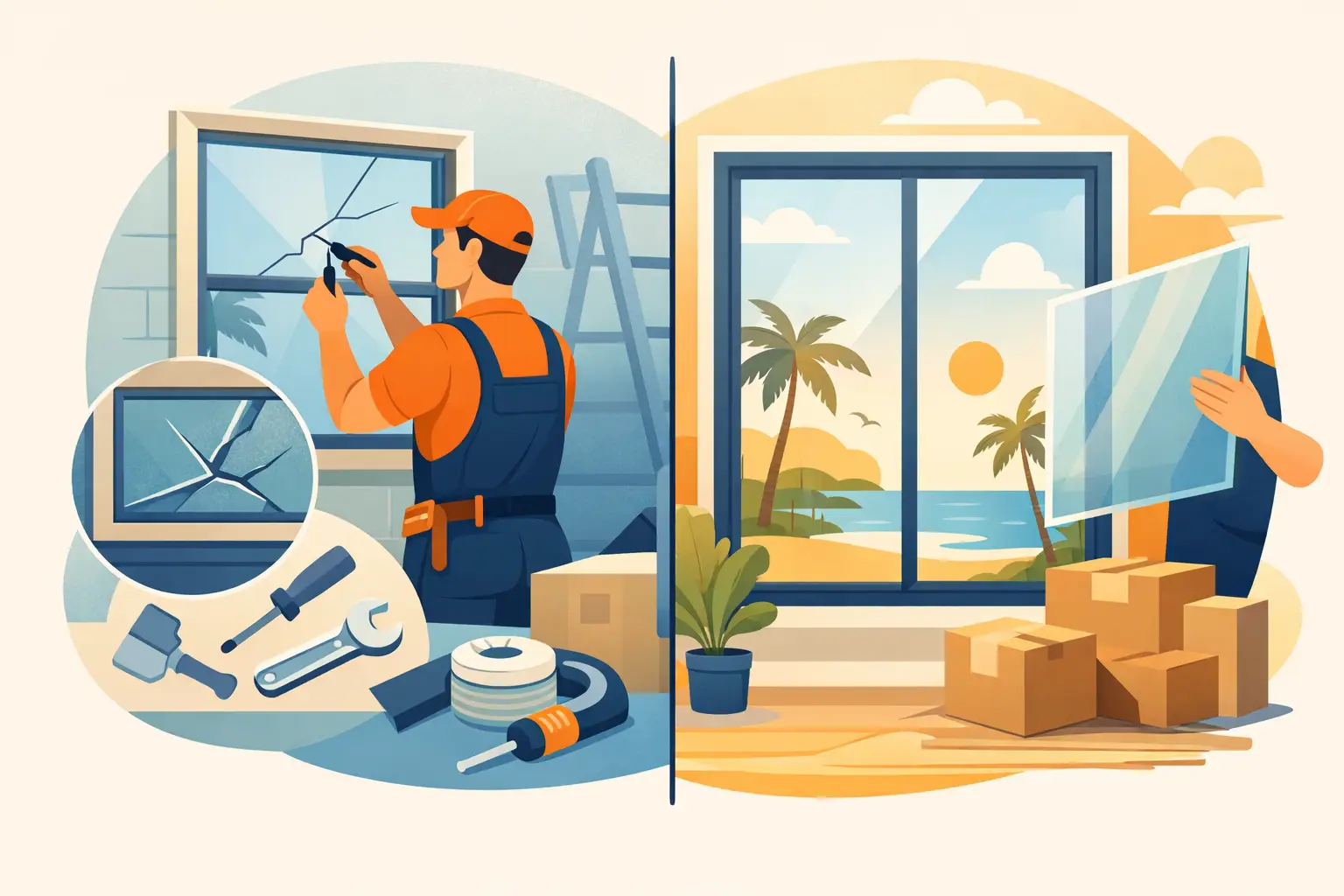
A window that sticks in July, rattles in a storm, or shows moisture between panes is more than a small annoyance on the Treasure Coast. In Florida, window replacement or repair affects comfort, energy use, storm readiness, and the long-term condition of your property. The right decision depends on what failed, how old the window is, and whether the problem is isolated or part of a larger system issue.
For many property owners, the first instinct is to repair what is already there. That can be the right move when the damage is limited and the frame, glass package, and hardware are still structurally sound. But there are also times when a repair only buys a little time and leaves you with the same performance problems during the next hot season or the next named storm.
How to decide on window replacement or repair
The most practical way to approach this choice is to look at performance, not just appearance. A window can look acceptable from the street and still be failing where it matters most. Air leakage, water intrusion, corrosion, failed seals, and weakened hardware usually show up before complete failure.
Repair often makes sense when you are dealing with a broken latch, worn rollers, minor sealant failure, damaged screens, or isolated glass damage in an otherwise solid unit. If the frame is square, the sash still operates correctly, and the surrounding opening has no signs of rot or water damage, a skilled repair can restore function without the cost of full replacement.
Replacement becomes the better investment when the problems are repeated, widespread, or tied to the age and design of the window itself. If multiple windows are hard to open, let in drafts, fog between panes, or show frame deterioration, replacing only one part may not solve the bigger issue. Older windows that were not designed for current coastal demands can also leave a property more vulnerable during severe weather.
Signs a repair may be enough
Not every problem calls for a new window. In many homes and commercial buildings, targeted service is the most efficient answer.
A repair is often appropriate when the issue is mechanical. Locks, balances, rollers, handles, and tracks wear out over time, especially near the coast where salt air can accelerate corrosion. Replacing those components can restore safe operation and improve security.
Glass-only damage can also be repairable in certain cases. If a pane is cracked from impact but the frame and sash are still in good shape, changing the glass may be all that is needed. The same is true for small leaks around the perimeter when the main source is failing caulk or sealant rather than a compromised window unit.
Screens are another common example. Torn mesh, loose spline, or damaged framing can usually be corrected without touching the window itself. For homeowners who want better airflow during mild weather, that kind of repair can make the space more usable again quickly.
The main trade-off is lifespan. A repair can restore function, but it does not make an older window new. If the unit is already near the end of its service life, repairing one component may simply delay a larger project.
When window replacement makes more sense
There are clear situations where replacement delivers better value. One is chronic water intrusion. If water is getting past the window assembly, staining interior finishes, or affecting surrounding materials, the issue may go beyond surface sealant. At that point, replacing the unit and properly addressing the opening can help protect the structure, not just the glass.
Another is seal failure in insulated glass. When condensation appears between panes, the insulating value has already been compromised. In some cases, glass replacement is possible, but if the frame is dated or the unit has multiple issues, full replacement is often the smarter long-term move.
Energy performance matters too. Older single-pane or inefficient windows can contribute to higher cooling costs and inconsistent indoor temperatures. In Florida, that shows up fast. Upgrading to modern replacement windows can improve comfort, reduce strain on HVAC systems, and help create a tighter, quieter interior.
Storm protection is often the deciding factor. For coastal properties, windows are part of the building envelope that stands between the interior and high winds, wind-driven rain, and flying debris. If existing windows do not meet the level of protection you want for your home or building, replacement is not just an aesthetic upgrade. It is part of a larger protection strategy.
Florida conditions change the equation
In some parts of the country, this decision is mostly about appearance or utility bills. In Florida, especially along the coast, the stakes are higher. Heat, humidity, salt exposure, and hurricane season all put more demand on windows than many owners expect.
That means the cheapest short-term option is not always the most cost-effective one. A low-level repair on a corroded or outdated window may leave you facing the same issue again after another wet season. On the other hand, replacing a solid window because of one broken part can be unnecessary if a qualified professional can correct the problem properly.
This is why inspection matters. The right recommendation should consider frame condition, glazing, hardware, code requirements, exposure, and how the window performs as part of the full exterior system. A good contractor looks beyond the obvious symptom and identifies the cause.
What property owners should evaluate before making a decision
Cost matters, but it should be measured against performance and risk. A repair usually carries a lower upfront price, which can be attractive when only one or two windows are involved. Replacement costs more at the start, but it can reduce future service calls, improve efficiency, and deliver stronger protection.
Age is another factor. If your windows are relatively new and the issue is isolated, repair is usually the logical first option. If they are older and showing wear in several areas, replacement may prevent piecemeal spending that adds up without solving the full problem.
Consider your long-term plans for the property as well. If you intend to stay for years, better windows can support comfort, curb appeal, and value over time. If you manage rental or commercial property, dependable operation and reduced maintenance may be just as important as appearance.
The installation side should never be overlooked. Even premium windows can underperform if they are not measured, fitted, and sealed correctly. Precision installation is what turns a product upgrade into a true performance upgrade.
Why professional assessment matters
Window issues are not always visible from the interior alone. A technician may find frame movement, failed flashing, perimeter gaps, or signs of moisture damage that change the recommendation. What looks like a simple draft could be an installation issue. What seems like a minor leak could point to a broader opening problem.
That is why experienced local contractors bring real value to window replacement or repair decisions. In coastal Florida, product knowledge must be matched by installation knowledge. Materials, exposure levels, and code expectations all matter, and the correct fix has to fit the specific property.
For homeowners and managers who want a lasting result, the goal should not be to spend the least today. The goal is to solve the problem once, protect the property, and avoid repeated service for the same failure. Companies such as Jensen Beach Aluminum & Windows build their reputation on that kind of practical, service-driven approach.
The best choice is the one that protects the whole property
A window is never just glass in a frame. It affects security, moisture control, energy performance, noise, and how your home or building stands up to Florida weather. Some problems deserve a careful repair. Others are warning signs that it is time to replace the unit and improve the overall envelope.
If your windows are showing signs of wear, the smartest next step is not guessing. It is having them evaluated by skilled professionals who understand coastal construction, premium materials, and the difference between a temporary fix and a lasting solution. A clear recommendation today can save you from bigger repairs after the next storm.