


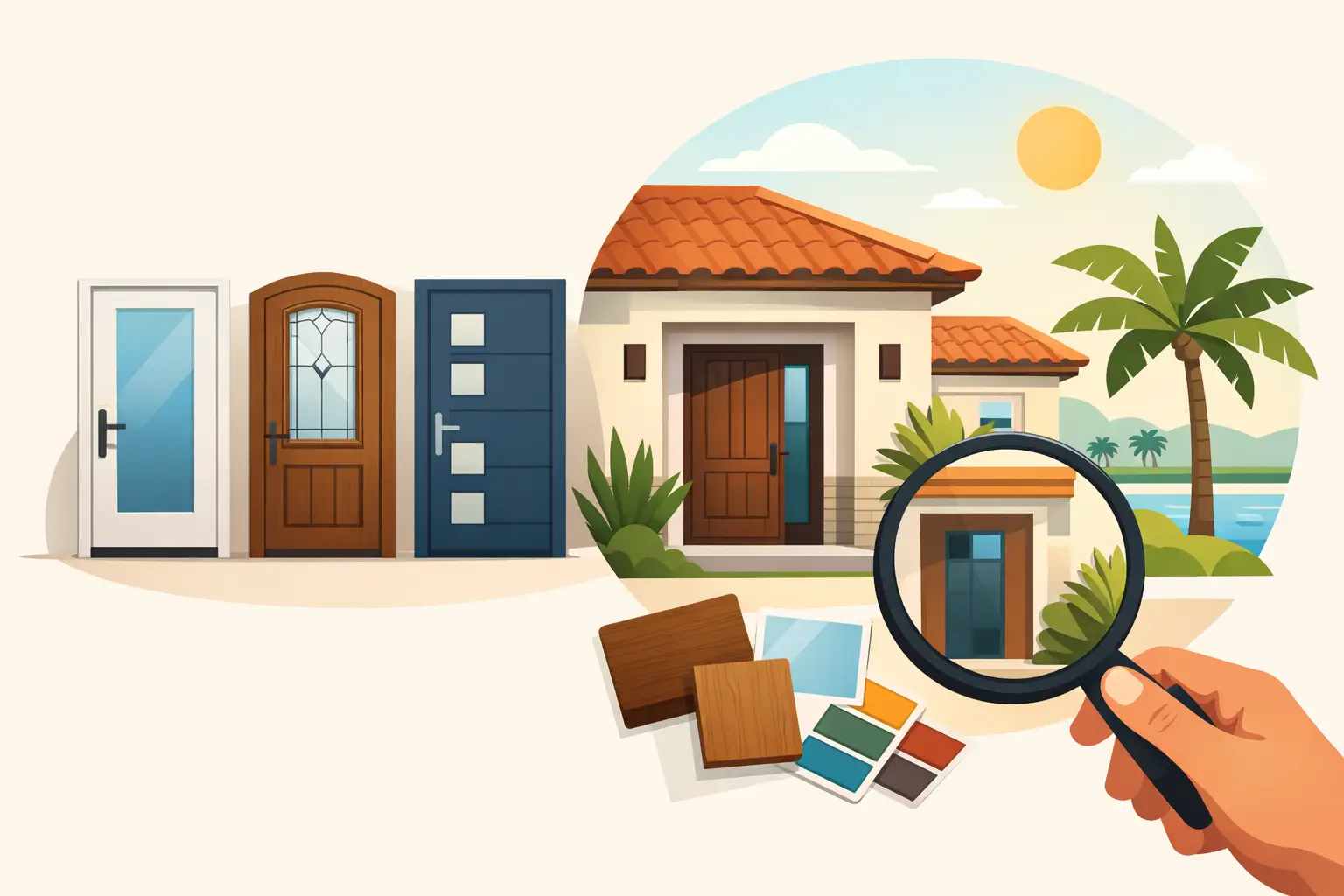
A front door in Florida does more than welcome guests. It stands between your home and wind-driven rain, intense sun, humidity, salt air, and potential storm damage. Knowing how to choose entry doors means looking beyond color and hardware to find a system that protects your property, performs efficiently, and fits the way you live.
For homeowners and property managers on the Treasure Coast, the right entry door is a long-term investment in security, comfort, curb appeal, and hurricane readiness. A beautiful door that is not properly rated or installed can become a weak point when severe weather arrives. The strongest choice balances appearance with proven performance.
Start With Florida Building Requirements
Florida homes face construction requirements that are different from those in many other parts of the country. Depending on your location, your new entry door may need to meet specific wind-pressure, impact-resistance, and product-approval standards. Coastal and storm-prone areas often have more demanding requirements because of the risk of hurricane-force winds and flying debris.
Before choosing a door style, confirm what your property requires. A qualified contractor can review the opening, local code requirements, and the exposure conditions around your home. This matters because a door system is more than the slab itself. The frame, hinges, threshold, glass, locks, fasteners, and installation method must work together as an approved assembly.
If your home is in a high-velocity hurricane zone or an area with significant wind exposure, impact-rated entry doors are often the practical choice. These systems are tested to withstand design pressures and, when applicable, impacts from debris. They can help protect the building envelope during a storm, reducing the chance of wind and water entering through a failed opening.
How to Choose Entry Doors by Material
The material you choose affects the door’s appearance, maintenance needs, strength, insulation, and long-term performance. There is no single best material for every Florida property. The right option depends on your home’s architecture, exposure to weather, desired maintenance level, and budget.
Fiberglass entry doors
Fiberglass is a popular option for Florida homes because it resists warping, denting, cracking, and moisture better than many traditional materials. It can be manufactured with a smooth finish or a wood-grain appearance, giving homeowners flexibility without the maintenance demands of real wood.
Quality fiberglass doors can also provide good insulation, especially when paired with an insulated core and properly sealed frame. For a front entrance exposed to direct sun, rain, and humidity, fiberglass is often a practical balance of durability and curb appeal.
Steel entry doors
Steel doors are valued for security, strength, and affordability. They are a smart consideration for side entries, garage-to-home doors, rental properties, and homeowners who prioritize a solid, secure feel. Many steel doors include insulated cores that support energy efficiency.
The trade-off is that steel can scratch or dent, and damaged finishes need prompt attention in coastal conditions. If bare metal becomes exposed, corrosion can develop over time. A durable factory finish and regular inspection are especially valuable near the ocean.
Wood entry doors
A real wood door can create a distinctive, high-end entrance, particularly for traditional, Mediterranean, or custom-designed homes. However, wood requires more maintenance in Florida’s heat and humidity. Sun exposure, moisture, and temperature changes can lead to fading, swelling, splitting, or finish deterioration if the door is not properly protected.
Wood can still be the right choice when it is carefully specified, properly finished, protected by a substantial overhang, and maintained consistently. It is generally less forgiving than fiberglass or steel in an exposed coastal location.
Aluminum and glass systems
For contemporary homes, aluminum-framed glass entry systems can deliver a clean, open look while bringing more natural light into the foyer. When engineered for local conditions, these systems can offer excellent strength and weather resistance. The glass must be selected with safety, privacy, energy performance, and impact requirements in mind.
Choose Hurricane Protection That Fits the Opening
An entry door should be evaluated as part of your home’s overall storm-protection plan. If the door includes glass, sidelights, or a transom, those components need the same level of careful consideration as the door itself. Standard decorative glass may look appealing, but it may not provide the impact protection required for your location.
Impact-rated glass is designed to remain in place after impact, even if the glass cracks. This helps limit the opening that can allow wind and rain into the home. For many Florida homeowners, an impact-rated door and glass package offers convenience because protection is built into the system rather than requiring panels or shutters to be installed before a storm.
That said, it depends on the property and the existing protection strategy. Some homeowners combine a non-impact door with approved storm panels, accordion shutters, or another code-compliant protection method. The key is making sure the complete opening meets applicable requirements, not assuming one product alone solves every issue.
Look Closely at Energy Efficiency and Sun Exposure
Florida’s cooling season is long, and a poorly insulated or poorly sealed entry door can make a noticeable difference in indoor comfort. Energy efficiency starts with the door material and core, but it also depends on weatherstripping, threshold design, glass selection, and precision installation.
For doors with glass, low-emissivity coatings and insulated glass can help reduce solar heat gain while still allowing daylight inside. This is particularly helpful for west- and south-facing entrances that receive strong afternoon sun. Tinted or obscured glass may also improve privacy, though darker glass can change the look of the exterior and reduce visible light indoors.
Do not judge efficiency only by a product label. A high-quality door that has gaps around the frame will not perform as intended. Proper shimming, flashing, sealing, and adjustment are essential to control air and water intrusion.
Make Security Part of the Design Conversation
Security should not be an afterthought. The strongest lock is only as effective as the door frame and strike area supporting it. Look for a solid frame, reinforced lock preparation, quality hinges, and a deadbolt designed for exterior use. If the door swings outward, security hinges or non-removable hinge pins may be appropriate.
Glass near the lock area deserves special attention. Decorative sidelights can brighten an entrance, but their placement and type should support both security and privacy. A skilled professional can help you choose a layout that creates a welcoming entry without making your home feel exposed.
For commercial properties, multifamily buildings, and frequently used entrances, durability of hardware is just as important as security. Higher traffic may call for commercial-grade closers, panic hardware, access control compatibility, or more durable finishes.
Get the Size, Swing, and Style Right
A replacement entry door is an opportunity to improve function, not just update the look. Consider whether the existing door width works for furniture, mobility needs, deliveries, and daily use. A wider single door, double-door configuration, or door with sidelights may make the entrance more practical and visually balanced.
Door swing matters, too. An inswing door protects hinges from the weather and is common in residential construction, while an outswing door may be useful where interior clearance is limited. Local requirements, wind exposure, drainage, and the existing opening all influence what is appropriate.
Style should complement the home rather than compete with it. Clean-lined glass panels often suit coastal contemporary homes. Raised panels and decorative glass may fit more traditional properties. Hardware finishes, exterior lighting, roof color, and nearby windows should all be considered together. A front door is a focal point, but it should feel like it belongs on the house.
Do Not Overlook Installation Quality
Even a premium-rated entry door can underperform if it is installed incorrectly. Improper installation can lead to water intrusion, difficult operation, failed inspections, air leaks, damaged finishes, and reduced storm performance. In Florida, details around the sill, flashing, anchoring, sealants, and frame alignment are critical.
Choose an installer with experience in coastal construction and the specific type of door system you are purchasing. Ask how the opening will be measured, how existing damage will be addressed, whether permits are needed, and what support is available after installation. A professional installation should include a careful inspection of the rough opening and a final check that the door seals, locks, and operates correctly.
Jensen Beach Aluminum & Windows helps property owners select and install entry door systems designed for Florida conditions, with attention to product performance, code compliance, and workmanship. The goal is not simply to replace a door. It is to create an entrance that looks right, works reliably, and helps protect your investment for years ahead.
Before making a final selection, take time to compare complete door systems rather than choosing based on a showroom appearance alone. The best entry door is one you can rely on when the weather turns, the sun is relentless, and your home needs to perform exactly as it should.