




Salt air does not need a direct oceanfront address to cause trouble. Across the Treasure Coast, moisture, airborne salt, fertilizer, and pooled water can gradually attack aluminum frames, pool cages, patio structures, windows, and doors. Knowing how to repair corroded aluminum early can preserve appearance and function, but the right fix depends on whether the damage is cosmetic or has begun to weaken the structure.
Aluminum is valued for resisting rust, but it is not maintenance-free. When its protective finish is scratched, worn down, or exposed to harsh coastal conditions, oxidation can appear as white, chalky residue, bubbling paint, pitting, or rough spots around fasteners and joints. Addressing these signs promptly helps protect your investment and prevents a minor repair from becoming a larger replacement project.
Why Aluminum Corrodes in Florida
Unlike steel, aluminum does not develop red rust. It oxidizes. A thin oxide layer naturally forms on aluminum and usually protects the metal underneath. Problems begin when salt deposits, standing water, cleaning chemicals, or contact with dissimilar metals compromise that layer.
Coastal humidity is a major factor. Salt can settle on frames and enclosures even miles from the water, then hold moisture against the surface. Pool chemicals, lawn irrigation, and fertilizer overspray can add to the damage. On screen enclosures, carports, and awnings, corrosion often starts near the base of posts, roof connections, screws, corners, and areas where water does not drain properly.
Galvanic corrosion is another concern. This occurs when aluminum touches a different metal, such as untreated steel, while moisture is present. The reaction can cause fasteners to corrode, stain the surrounding frame, or create pitting around the connection. A proper repair needs to address the source of the reaction, not simply cover the visible mark.
Inspect the Damage Before You Repair Corroded Aluminum
Start with a close inspection in good daylight. Wipe away surface dirt with a soft cloth and mild soap solution so you can see the actual condition of the finish and metal. Look for chalking, discoloration, blistering paint, white powder, pits, loose screws, cracked sealant, and water stains.
Surface oxidation is usually manageable. If the aluminum feels solid, the pitting is shallow, and the protective coating remains mostly intact, cleaning and refinishing may be enough. Deeper corrosion requires more caution. A frame that has holes, flaking metal, soft spots, severe pitting around fasteners, or movement at a connection may no longer have the strength needed for its intended use.
That distinction matters on Florida properties. A lightly corroded patio chair is one thing. A compromised pool cage beam, storm shutter track, window frame, or carport connection is another. These components may be exposed to high winds, wind-driven rain, and repeated daily use. Cosmetic repair cannot restore lost structural capacity.
How to Repair Light Surface Corrosion
For limited, non-structural corrosion, work slowly and use products that are safe for aluminum. Avoid harsh abrasives and aggressive acidic cleaners unless the manufacturer specifically approves them. They may make the surface look clean temporarily while removing more of the protective finish.
Begin by rinsing the aluminum with fresh water. This removes loose salt and debris that could scratch the surface during cleaning. Wash the affected area using mild dish soap, water, and a soft sponge or microfiber cloth. For stubborn white oxidation, use a non-abrasive aluminum cleaner according to its instructions, testing it first in a less visible location.
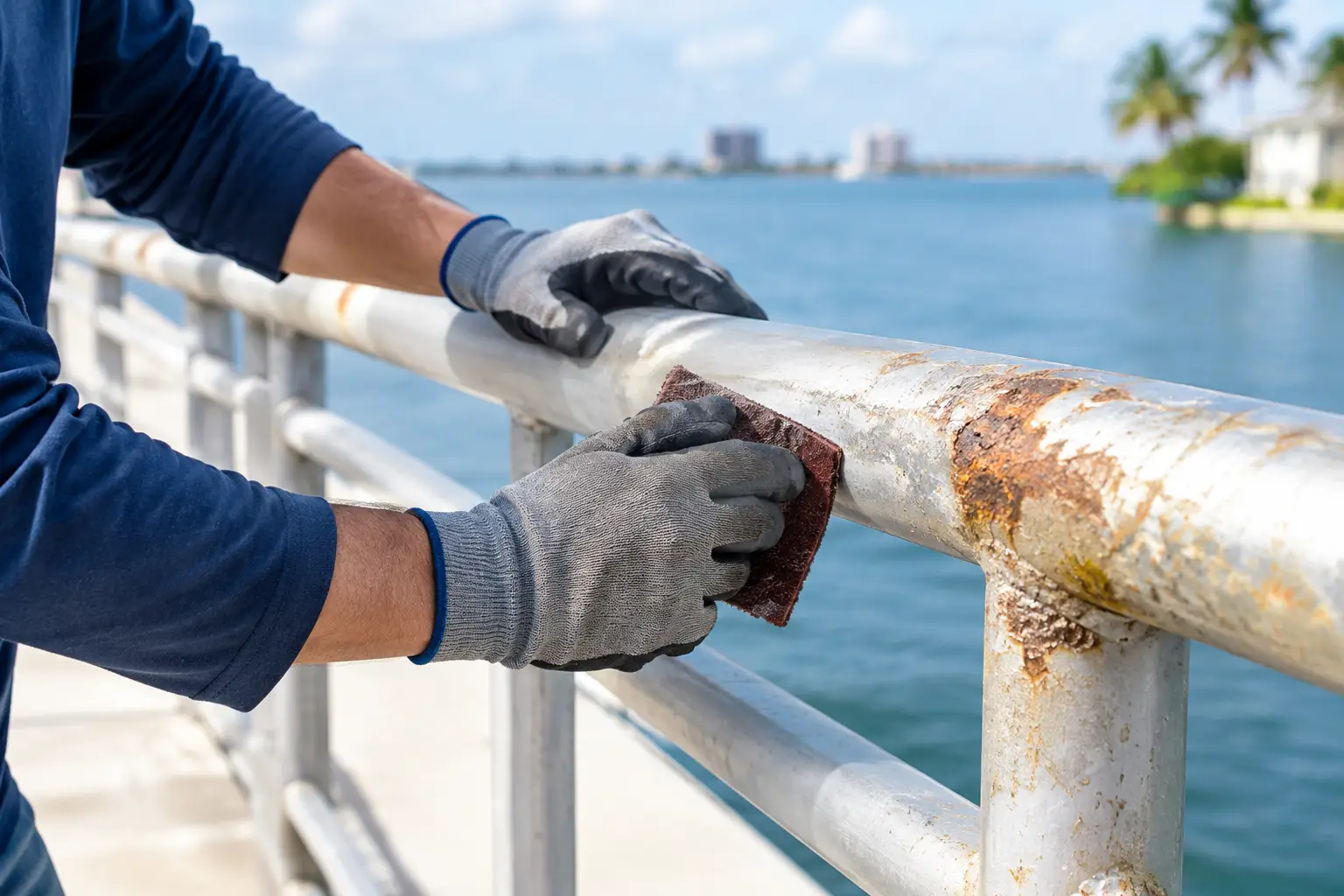
After cleaning, rinse thoroughly and allow the surface to dry completely. Light oxidation can sometimes be lifted with a fine nonwoven abrasive pad or very fine sandpaper, but use minimal pressure. The goal is to remove loose oxidation without gouging the metal or enlarging existing pits. Sand only the damaged area and feather the edges into the surrounding finish.
If the original coating has been removed or damaged, apply a compatible aluminum primer followed by an exterior-grade topcoat designed for metal. Match the coating system to the application whenever possible. A decorative patio component and a powder-coated architectural frame may require different products and preparation methods. Painting over trapped moisture, salt residue, or active corrosion will lead to early peeling.
Repairing Pitting, Paint Failure, and Fastener Damage
Pitting is more than a stain. Each small crater indicates that corrosion has eaten into the metal. Shallow pitting on a non-load-bearing surface can often be cleaned, sanded, primed, and refinished. Deeper pits may require an exterior-rated metal filler before priming, provided the affected component is not structural.
Do not use filler to disguise damage on an aluminum beam, support post, shutter track, door frame, or window frame without a professional evaluation. It can improve appearance, but it does not restore the original metal thickness or engineering strength.
Corroded screws and fasteners should also be addressed. If a fastener is seized, stripped, or heavily rusted, forcing it out can distort the aluminum around it. A qualified installer can remove and replace it with compatible hardware and isolating materials where needed. This is especially valuable for pool enclosures, awnings, storm protection systems, and exterior doors, where the connection itself is critical.
When corrosion is concentrated at the bottom of a frame or post, check for drainage issues. Water should not remain trapped against aluminum. Clearing blocked weep holes, improving grading, correcting sprinkler direction, and replacing failed sealant may do more for long-term durability than repainting alone.
When Repair Is Not the Right Answer
Replacement is often the better value when corrosion has moved beyond the finish. Consider a professional assessment if you see holes through the aluminum, extensive bubbling or flaking coating, recurring corrosion after previous repairs, loose structural members, or damage around anchors and attachment points.
Windows and doors deserve particular attention. Corrosion around their frames can affect operation, weather resistance, glazing support, and water management. On coastal homes, a damaged frame may also reduce the performance of impact-rated products during a storm. A patch that looks acceptable from the outside can still allow water intrusion behind the wall system.
The same applies to pool cages, lanais, carports, pergolas, and awnings. If corrosion affects load-bearing components or major connections, replacement of the affected member or a larger restoration may be safer than repeated spot repairs. The best solution depends on the age of the structure, the extent of damage, current code requirements, and whether other upgrades are already needed.
Preventing Aluminum Corrosion From Returning
The most effective maintenance habit is simple: rinse exterior aluminum regularly with fresh water. Homes near the coast benefit from more frequent rinsing, particularly after windy conditions or storms that carry salt spray inland. A gentle wash every few months removes contaminants before they can remain on the finish.
Keep irrigation heads pointed away from frames and enclosures. Avoid allowing fertilizer, pool chemicals, or strong cleaning solutions to dry on aluminum. Trim landscaping so wet leaves and vines do not hold moisture against posts or tracks. Check drainage paths around window and door frames, and keep pool cage gutters and roof channels clear.
Inspect painted or powder-coated surfaces at least once a year. Small scratches and chips are easier to touch up before corrosion spreads beneath the coating. During the inspection, pay close attention to corners, fasteners, lower rails, and locations where different materials meet.
Choose a Repair That Protects the Whole Property
A careful cleaning and finish repair can extend the life of aluminum with minor surface oxidation. But coastal aluminum systems are part of your home’s weather protection, curb appeal, and daily comfort. When corrosion affects a window, door, enclosure, or outdoor structure, professional guidance can prevent an attractive short-term repair from becoming an expensive long-term problem.
Jensen Beach Aluminum & Windows helps property owners evaluate exterior aluminum components with the demands of Florida weather in mind. If the damage raises questions about safety, water intrusion, storm readiness, or replacement options, have a skilled professional inspect the affected area before the next season of heavy rain and high winds.