




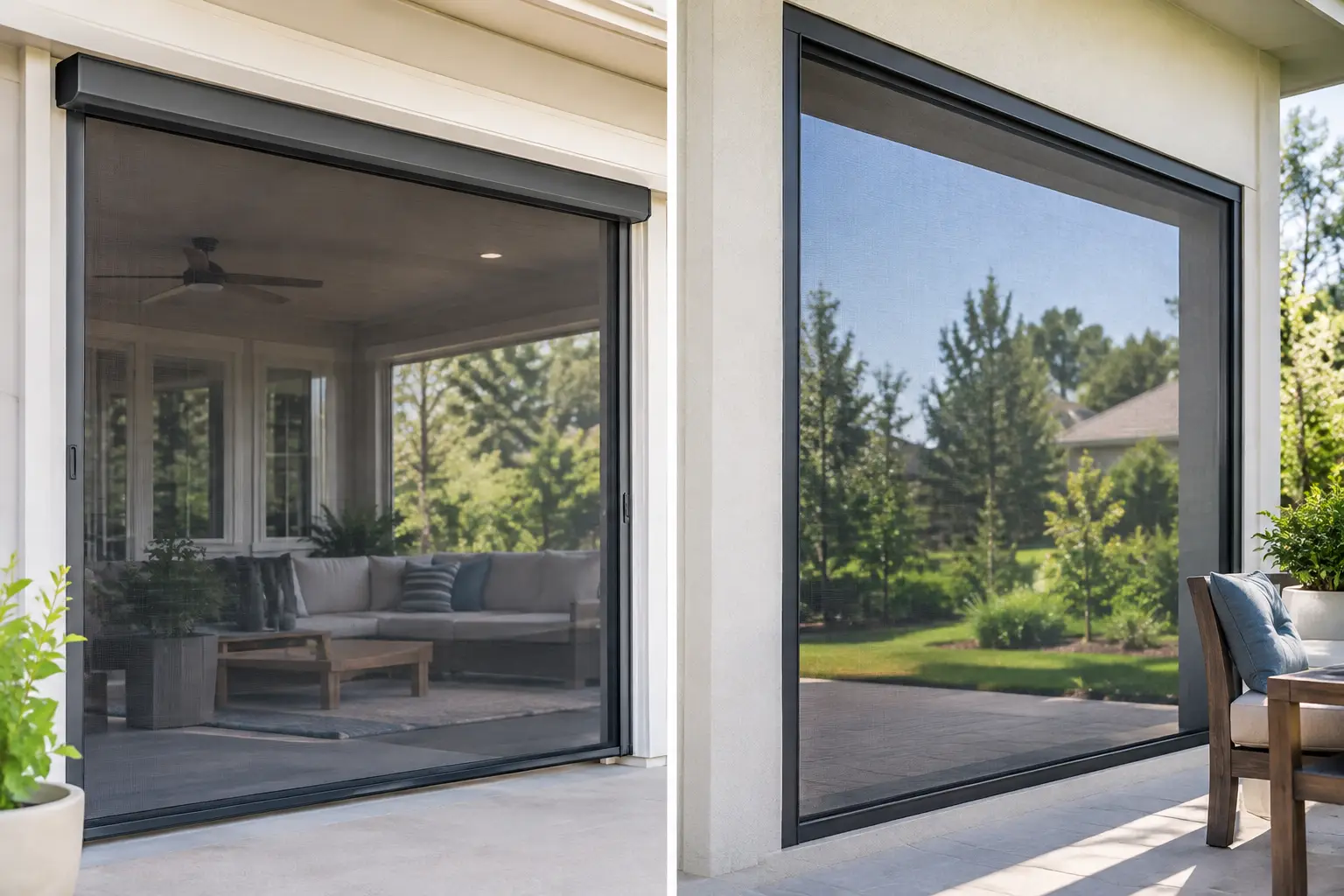
A screen can determine whether a patio door, lanai, or outdoor living area feels open and inviting or closed off from the view. When weighing retractable screens versus fixed screens, Florida property owners need more than a style preference. The right choice should fit the opening, how the space is used, exposure to wind and salt air, maintenance expectations, and the level of protection required.
Retractable and fixed screens both help reduce insects, glare, and windblown debris while improving comfort around doors, patios, porches, and outdoor structures. Their performance, appearance, and long-term value are different. A professional site evaluation helps ensure the screen system is properly matched to your property rather than simply chosen from a catalog.
What Is the Difference Between Retractable and Fixed Screens?
A fixed screen is installed permanently within a frame. It stays in place year-round and is commonly used on windows, porch openings, pool enclosures, lanais, and screen doors. Because the screen is always deployed, it provides continuous insect protection and is generally a straightforward, durable solution for openings that do not need to be fully open.
A retractable screen is housed in a protective cassette when not in use. Depending on the system, it may glide horizontally across a door opening or move vertically to cover a patio, lanai, or large outdoor area. When the screen is retracted, it is largely out of sight, preserving a clear opening and unobstructed views.
The central decision is simple: do you want screening in place all the time, or only when you need it? The practical answer depends on the space.
When Retractable Screens Are the Better Choice
Retractable screens are especially effective where flexibility and appearance matter. They are a popular option for French doors, sliding glass doors, folding or multi-panel doors, covered patios, and outdoor kitchens. These are areas where a traditional fixed screen may interfere with traffic flow, change the look of the opening, or block the view when insect protection is unnecessary.
For many Florida homeowners, the appeal is being able to enjoy a wide-open connection to the pool, landscape, or waterfront on pleasant days. When mosquitoes become active or the sun is low, the screen can be pulled into position. This makes the outdoor space more usable without permanently enclosing it.
Retractable systems can also be designed with specialty mesh options. Solar mesh can reduce glare and heat gain, while privacy mesh can limit visibility from neighboring properties. Motorized retractable screens offer convenient operation for larger openings and are particularly useful for patios or commercial spaces where manual handling would be inconvenient.
There are trade-offs. Retractable screens have moving parts, tracks, and a housing assembly that require correct alignment and professional installation. They typically cost more than a basic fixed screen, particularly for oversized, motorized, or custom-configured openings. The screen must also be retracted carefully during severe weather unless the specific system and installation are rated for the conditions involved.
When Fixed Screens Make More Sense
Fixed screens are often the dependable choice for spaces that need constant protection from insects. A screened porch, pool cage, lanai, window opening, or permanent enclosure benefits from a screen that is always in place. There is no need to deploy it before use, and there are fewer mechanical components to maintain.
They are also a practical solution when budget and coverage are the primary priorities. Fixed screens can cover broad areas efficiently, making them well suited to rescreening projects and outdoor enclosures. With the right mesh and a properly built frame, they provide reliable daily performance for years.
For coastal properties, material selection matters. Screen mesh, frame components, fasteners, and installation methods should be selected with humidity, salt air, and wind exposure in mind. A lower-cost screen installed with unsuitable hardware can corrode, sag, or require repair sooner than expected. Skilled installation protects the value of the project.
The limitation is visibility and access. A fixed screen remains visible at all times, even when you want a fully open doorway or an unobstructed view. It may also be less convenient around high-traffic doorways, where people are constantly moving items, pets, or guests between the house and patio.
Retractable Screens Versus Fixed Screens for Florida Homes
Florida’s climate makes screening a functional investment, not just an accessory. Warm temperatures and high humidity support year-round outdoor living, but they also bring mosquitoes, no-see-ums, seasonal pollen, rain, and strong sun. Coastal conditions add salt exposure and the possibility of tropical weather.
For doorways leading to patios or outdoor kitchens, retractable screens are often the more refined solution. They allow the opening to remain visually clean when the screen is not needed, yet they can quickly create an insect barrier when entertaining or relaxing outdoors.
For lanais, porches, and pool enclosures, fixed screens are usually the workhorse option. These areas are designed to be screened consistently, and a permanent system creates an enclosed environment that supports daily use. If a large lanai has one or two openings that need flexible access, a combination of fixed enclosure screening and retractable door screens may be the best design.
It is also worth separating comfort screens from storm protection. Standard retractable and fixed insect screens are not a substitute for hurricane shutters, impact-rated windows and doors, or approved storm protection systems. Property owners should never assume a screen will protect a door or window during a hurricane. A qualified contractor can help coordinate screening with the appropriate protection strategy for the home.
Comparing Cost, Maintenance, and Durability
Fixed screens generally have a lower upfront cost because their construction is simpler. Maintenance usually involves rinsing away debris, cleaning the frame, and repairing mesh if it tears or becomes loose. In a screen enclosure, periodic rescreening may eventually be needed due to sun exposure, weather, pets, or normal wear.
Retractable screens require a larger initial investment, but they can offer substantial lifestyle value at prominent openings. Keeping the screen retracted when it is not needed can help protect the mesh from constant exposure. Homeowners should periodically clean the tracks, remove sand and debris, and avoid forcing the screen if it does not glide smoothly.
Durability in either system comes down to three factors: product quality, the demands of the location, and installation precision. Measurements must be accurate, mounting surfaces must be sound, and the screen must be properly tensioned and aligned. Those details affect operation on day one and reliability years later.
Questions to Ask Before Choosing a Screen System
Start with how the opening is used. A patio doorway used several times each day has different needs than a porch opening that stays enclosed year-round. Consider whether you want to preserve a view, whether the opening is exposed to strong wind, and whether children or pets will regularly interact with the screen.
Also think beyond the screen itself. A retractable screen should complement the style and finish of the door system, patio structure, or pergola. A fixed screen should be sized and framed to look intentional, not added as an afterthought. For investment properties and commercial locations, ease of use and long-term service needs should carry extra weight.
Jensen Beach Aluminum & Windows helps property owners evaluate screen options as part of a larger outdoor living and exterior improvement plan. From custom measurements through professional installation and service, the goal is a system that performs properly in Florida conditions and fits the way you use your property.
A screen should make your home easier to enjoy, not create another obstacle at the door. Choose fixed screening when you want dependable, constant coverage, and choose retractable screening when flexible access and open views are part of the experience you want to protect.