




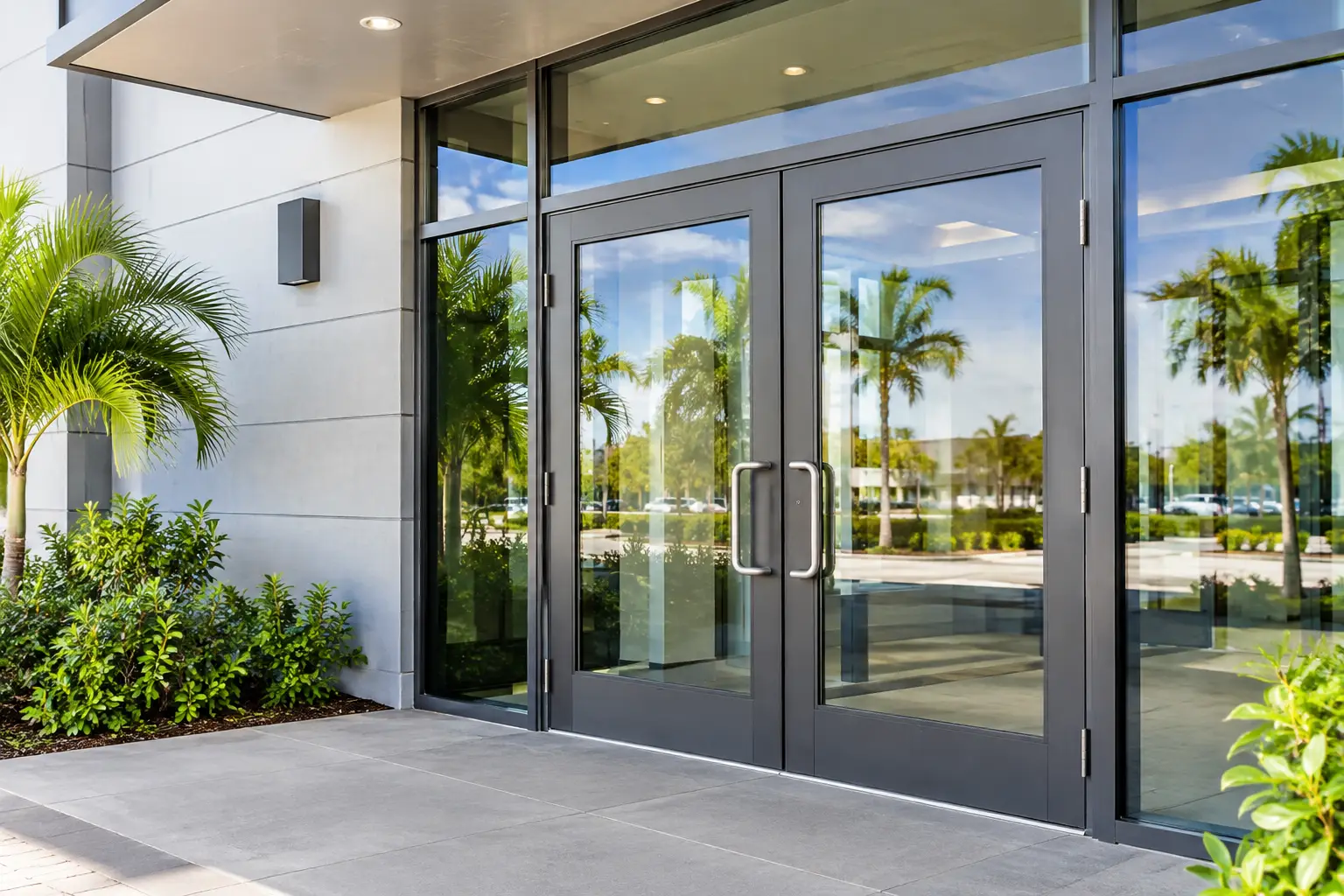
A commercial entry door does more than mark the front of a building. For a Florida storefront, office, condominium, medical practice, or multifamily property, it must manage daily traffic, present the right image, support security, and stand up to wind-driven rain, salt air, and storm conditions. The best commercial entry door types balance those demands rather than solving only one of them.
The right choice depends on how the entrance is used, the building’s exposure, the required level of hurricane protection, and the existing storefront or wall system. A door that looks appropriate for a small retail suite may not be the right fit for a busy waterfront lobby or a service entrance with heavy deliveries. Starting with the use of the opening helps property managers make a decision that lasts.
What a Commercial Entry Door Must Handle in Florida
Commercial doors in coastal Florida face more than routine wear. Moisture, ultraviolet exposure, airborne salt, shifting temperature, and severe weather can all affect frames, hardware, glazing, finishes, and weather seals. At the same time, entrances need to meet applicable building-code, accessibility, egress, and fire-rating requirements.
A quality door system is not just the slab or glass panel. The frame, hinges or pivots, panic hardware, closers, thresholds, locks, and weatherstripping all influence performance. Precision installation is equally important. Even premium materials can fall short when the opening is out of square, the hardware is not properly adjusted, or the system is not designed for the building’s wind exposure.
Best Commercial Entry Door Types for Different Properties
Aluminum Storefront Doors
Aluminum storefront doors are among the most common choices for retail centers, offices, restaurants, salons, and professional buildings. They are typically paired with narrow-profile aluminum framing and large glass areas, creating a clean, open entrance that brings natural light into the space.
For many Florida businesses, aluminum is a practical material because it is lightweight, corrosion resistant, and well suited to frequent use when paired with commercial-grade hardware. It can be finished in a range of colors to match an existing storefront, while glazed panels preserve visibility for signage, displays, and customer wayfinding.
The trade-off is that a standard storefront system is not automatically designed for high-wind or impact-zone conditions. Coastal projects may require a tested impact-rated system with the appropriate glazing, frame, anchoring, and hardware. The full assembly matters, not simply whether the door frame is aluminum.
Impact-Rated Glass Entry Doors
Impact-rated glass entry doors are a strong option for properties that need daylight and visibility without giving up storm protection. These systems are commonly used at coastal retail spaces, clubhouses, office entries, hotels, and multifamily lobbies where curb appeal and resilience must work together.
Impact glass is designed to resist windborne debris under its specified testing requirements. If the outer glass layer breaks during a severe storm, the interlayer helps hold the glass in place. This can help maintain the building envelope and reduce the risk of sudden pressurization inside the structure.
Not every commercial property requires impact-rated doors, and requirements vary by location, exposure, opening size, and local code. Still, for many Treasure Coast properties, impact-rated entry systems offer valuable peace of mind and can eliminate the need to install separate storm panels over the entrance before a storm.
Hollow Metal Steel Doors
Hollow metal steel doors are built for demanding service areas. They are often used at back entrances, mechanical rooms, storage areas, stairwells, warehouses, schools, and other openings where durability, security, and fire-rating options take priority over visibility.
A properly specified steel door and frame can withstand hard daily use and support heavy-duty hardware. It is often the preferred choice where a solid, secure door is needed, especially when a fire-rated assembly is required. Steel doors can also be insulated and fitted with a vision lite when staff need limited visibility through the opening.
For exposed coastal locations, finish quality and maintenance deserve close attention. Damaged paint or coatings can create opportunities for corrosion, particularly near the ocean. Galvanized materials, suitable coatings, and routine inspections help extend service life. A steel door may be ideal for a secured service entrance but feel too industrial for a customer-facing main entry.
Fiberglass Commercial Doors
Fiberglass doors offer a useful middle ground for some commercial applications. They resist dents, moisture, and rot, and they can provide a more finished appearance than a typical service door. They are often considered for offices, churches, clubhouses, condominium common areas, and low-to-moderate traffic entries.
Because fiberglass is not prone to rust, it can be an attractive option in humid and salt-air environments. Insulated fiberglass doors can also contribute to better thermal performance than an uninsulated metal door. Many styles can be configured with decorative or privacy glass, which gives property owners more design flexibility.
However, fiberglass is not a one-size-fits-all substitute for steel or aluminum storefront doors. It must be rated and reinforced appropriately for the opening, hardware, and required wind pressure. High-traffic commercial locations may still benefit from a more specialized aluminum or hollow metal system.
Glass Door Systems With Automatic Operation
Automatic sliding or swinging glass doors are designed for high-traffic entrances where convenience and accessibility are major priorities. They are common at healthcare facilities, grocery stores, hotels, larger office buildings, and condominium lobbies. They reduce the effort of opening the door and can improve traffic flow for customers using carts, wheelchairs, walkers, or deliveries.
For Florida properties, the system should be selected with weather exposure in mind. Automatic doors require properly designed headers, sensors, safety features, glazing, and weather protection. In a hurricane-prone area, the door package must also meet the applicable structural and impact requirements for the site.
These systems cost more than a standard manual entry, and they require ongoing maintenance. For the right high-volume property, though, the improved accessibility and professional appearance can justify the investment.
Selecting the Right Glass, Hardware, and Security Features
The door type is only part of the decision. Glass selection affects privacy, solar heat gain, visibility, and storm performance. Clear glass may suit a retail entrance, while tinted, insulated, frosted, or low-emissivity glass may be more appropriate for offices, medical facilities, or west-facing exposures.
Hardware should match the building’s traffic level and security plan. A busy entrance may need continuous hinges, commercial closers, panic devices, access control, and durable pull handles. A secure office entrance may use electrified locks, card access, or keypad entry. For life safety, required egress hardware must allow occupants to exit quickly and reliably.
Do not overlook thresholds and weather seals. Water infiltration around a commercial door can damage flooring, create slip hazards, and lead to costly repairs. Proper sill conditions, drainage, flashing, and weatherstripping are especially important at entrances exposed to driving rain.
Questions to Ask Before Replacing a Commercial Door
Before choosing a replacement, confirm how many people use the entrance each day and whether the opening serves customers, residents, employees, or deliveries. Consider the door’s exposure to sun, salt air, rain, and wind. Determine whether the property is within a wind-borne debris region or has impact requirements, and verify whether the opening requires a fire-rated assembly.
It is also wise to evaluate accessibility, security, glazing needs, and the condition of the surrounding frame or storefront. Replacing only the door leaf may not solve a problem caused by a deteriorated frame, failed anchors, poor drainage, or worn hardware. A site-specific assessment can identify the complete scope before work begins.
For commercial property owners along the Treasure Coast, Jensen Beach Aluminum & Windows helps match premium door systems to the building, local conditions, and long-term maintenance expectations. Skilled installation professionals can help ensure the finished entrance looks right, operates reliably, and supports the protection your property needs.
A commercial entry is one of the few building components that every visitor touches. Choose a door system built for the traffic, weather, and security demands of your property, then give the installation and hardware the same careful attention as the door itself.