




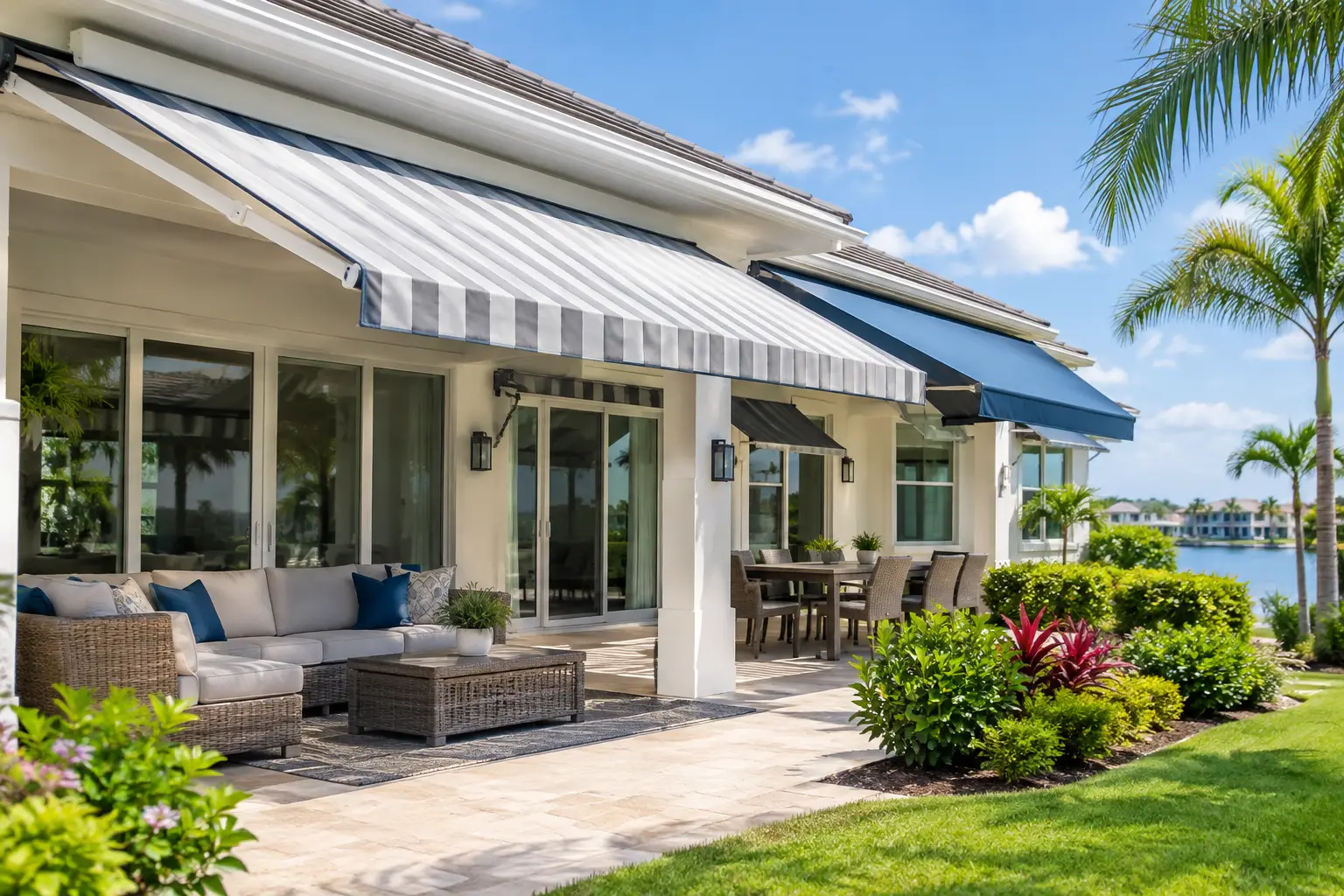
A west-facing patio can become unusable long before dinner, while an unshaded window can send heat straight into a room that is already working hard to stay cool. The right awning options for homes address both problems without closing off the outdoor character that makes Florida living appealing. The key is choosing a system designed for the location, the exposure, and the way you plan to use the space.
For Treasure Coast homeowners, an awning is not simply a decorative accessory. It is an exterior structure that must handle intense UV exposure, heavy rain, salt air near the coast, and seasonal wind. A good decision starts with the function you need most: dependable shade, rain coverage, lower solar heat gain, a more comfortable entry, or a larger outdoor living area.
Awning Options for Homes: Start With the Space
Awnings are often discussed as one category, but the best solution changes considerably between a front entry, a bedroom window, a poolside patio, and a commercial storefront. Size, attachment point, drainage, wind exposure, and nearby doors or screens all affect the right design.
For example, a small fixed awning over a side door may primarily keep rain off the threshold and protect the finish on the door. A patio cover needs to create meaningful shade through the hottest part of the day, provide a stable drainage path, and complement the home’s roofline. Treating both projects the same can lead to a cover that looks acceptable but does not perform as expected.
Before selecting materials or colors, consider where the afternoon sun hits, how much open-air space you want to preserve, whether the awning will tie into an existing lanai or screen enclosure, and what wind exposure the property receives. A professional site review can identify structural and permitting details that are easy to miss when shopping from photos alone.
Fixed Aluminum Awnings for Lasting Coverage
Fixed aluminum awnings remain a practical choice for Florida properties because they provide permanent overhead coverage with relatively low maintenance. They are well suited to patios, walkways, carports, windows, doors, and outdoor equipment areas where you want protection available every day rather than only when conditions are calm.
Quality aluminum construction resists rot and insect damage, which makes it a strong alternative to wood in humid conditions. It also gives homeowners flexibility in profile, support layout, and finish. A clean white structure can brighten a smaller patio, while a bronze or custom color may better match darker window frames, gutters, or pavers.
The trade-off is permanence. A fixed awning is always part of the exterior elevation, so its size and appearance deserve careful planning. It also needs proper pitch and guttering so rainwater is directed away from doors, foundations, pool decks, and high-traffic areas. When designed around the home rather than added as an afterthought, a fixed aluminum awning can look integrated and provide years of useful coverage.
Insulated Roof Panels for Greater Comfort
For larger patios and outdoor living areas, insulated aluminum roof panels can offer more than simple shade. Their foam core helps reduce heat transfer from the roof surface, which can make a noticeable difference beneath the structure during direct sun. They also provide a more finished feel for spaces used for outdoor dining, grilling, or relaxing.
Insulated panels are especially worthwhile when a patio is directly adjacent to the home and used frequently. They cost more than lighter single-skin panels, but they can deliver a more comfortable environment and a substantial, finished appearance. The correct span, support spacing, and connection to the home must be engineered for the site and applicable code requirements.
Retractable Awnings: Flexible Shade When Conditions Allow
Retractable awnings appeal to homeowners who want shade on demand and open sky when they do not need it. At the touch of a motorized control or with a manual mechanism, the fabric canopy extends over a patio or deck and retracts when you want more sunlight or a clear view upward.
This flexibility is valuable for smaller outdoor spaces and homeowners who prefer a less permanent visual footprint. Modern fabrics are available in many colors and patterns, with options designed to resist fading and mildew. A properly selected retractable system can make a sunny patio more usable for morning coffee, lunch, or early evening gatherings.
However, a retractable awning is not the right choice for every exposure. Fabric systems should be retracted in high winds, storms, and when the property is unattended. They are not hurricane protection, and they should never be treated as a substitute for approved shutters, impact-rated windows, or other storm protection measures. Wind sensors can add a helpful layer of convenience, but homeowners should understand the operating limits of the product and follow manufacturer guidance.
Retractable awnings work best when shade flexibility is the priority and the homeowner is comfortable managing the system responsibly. In highly exposed coastal locations, a fixed aluminum structure may be the more dependable long-term choice.
Window and Door Awnings Can Reduce Heat and Weather Exposure
Smaller awnings over windows and exterior doors are often overlooked, yet they can provide practical benefits throughout the year. By intercepting direct sunlight before it reaches the glass, a window awning can help reduce solar heat entering the home. This is especially useful on west- and south-facing elevations, where afternoon sun can create glare and put extra demand on air conditioning.
Door awnings protect entryways from rain, help keep wet shoes outside rather than on interior floors, and offer guests a covered place to stand while unlocking the door. For rental homes and commercial properties, this small improvement can also make entrances feel more welcoming and maintained.
The design needs to respect clearance around doors, outward swings, lighting fixtures, gutters, and hurricane shutters. On Florida homes, coordination matters. An awning that interferes with an accordion shutter or blocks access to a storm panel creates an avoidable problem when a storm is approaching.
Fabric, Aluminum, and Structure: What Matters Most
Material selection should reflect performance first and aesthetics second. Fabric awnings provide visual softness and flexible coverage, but they require regular care and are more sensitive to wind. Aluminum offers long-term durability, low maintenance, and the structural capability needed for permanent patio covers and carports.
The frame and attachment system matter just as much as the visible roof. Fasteners, flashings, support posts, footings, and wall connections must be selected for the structure and conditions at the property. A cover mounted to a home with improper flashing can contribute to water intrusion. Posts without adequate footings can shift over time. These issues are rarely obvious on installation day, which is why skilled installation is as important as premium materials.
Coastal homeowners should also ask how the chosen finish and hardware will stand up to salt air. Regular rinsing and basic maintenance help, but selecting corrosion-resistant components from the beginning supports a longer service life.
Plan Around Florida Codes and Storm Readiness
Florida construction requirements are not a formality. A permitted awning or patio cover may need to meet local wind-load criteria, setbacks, drainage rules, and structural attachment requirements. Requirements can differ by municipality, neighborhood, and property type, so a design appropriate in one location is not automatically appropriate in another.
An experienced contractor will evaluate the existing structure, explain the available options, prepare the project appropriately, and install the system with attention to local conditions. This is particularly important when an awning connects to an existing roof, screen enclosure, or concrete slab.
Homeowners should also keep the purpose of each exterior upgrade clear. A patio cover provides shade and rain protection. Hurricane-rated windows, doors, and shutters are designed for storm protection. Combining the right systems can improve daily comfort while helping the property prepare for severe weather, but one product should not be expected to do the job of another.
Choose an Awning That Supports How You Live
The most successful awning projects solve a specific problem. A fixed aluminum cover may turn an exposed patio into a dependable extension of the home. An insulated roof system may make an outdoor kitchen comfortable more months of the year. A retractable awning may offer the right balance for a homeowner who values flexible shade, while window awnings can improve comfort room by room.
Jensen Beach Aluminum & Windows helps property owners evaluate these details with the same focus on craftsmanship, protection, and long-term performance that coastal homes require. A professional quote should account for your sun exposure, structure, drainage, desired coverage, and local code considerations – not just the dimensions of the area.
The best next step is to stand in the space at the time of day you use it most. Notice where the sun, heat, and rain are actually reaching you, then choose an awning designed to improve that exact experience for years to come.