




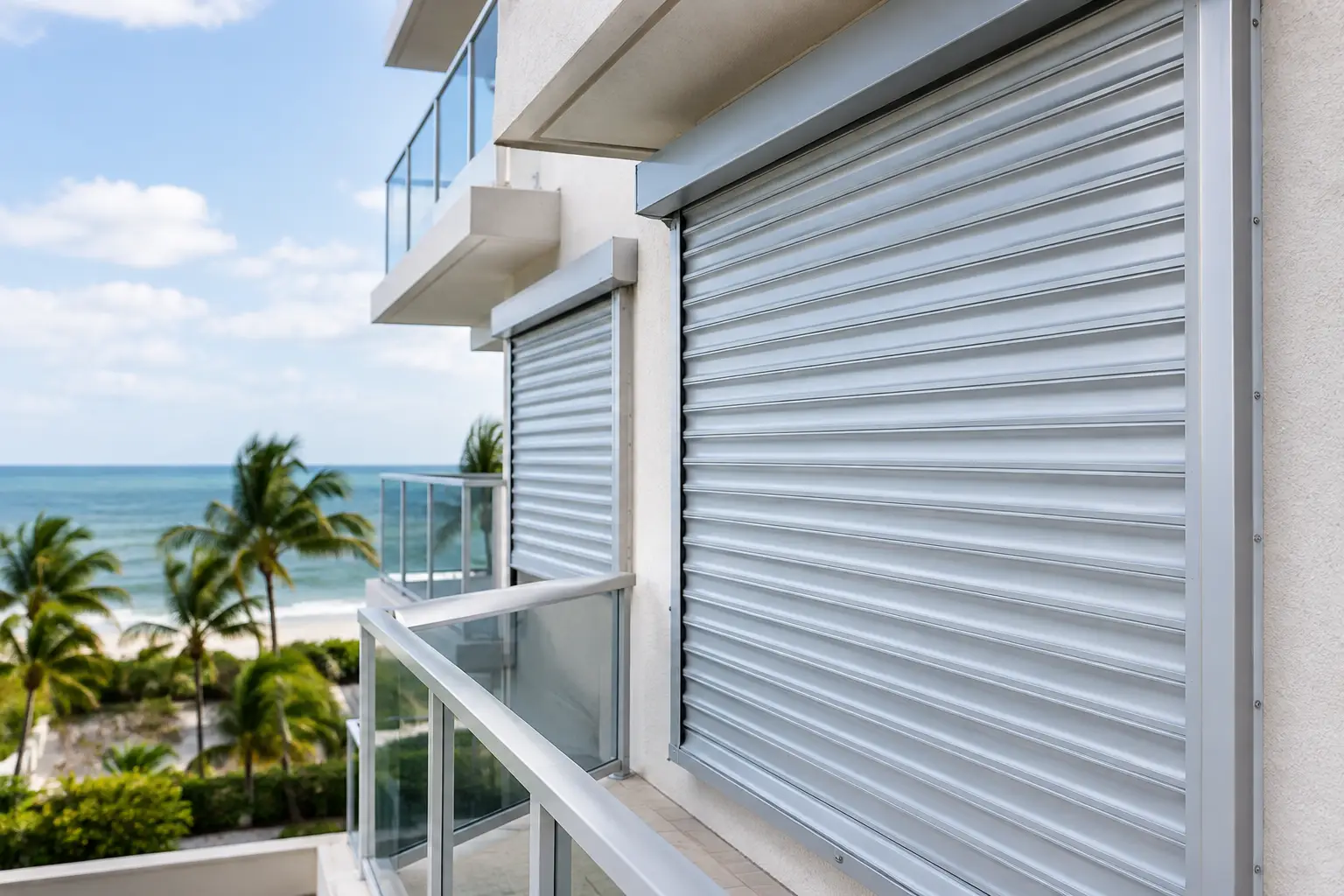
A hurricane warning is not the time to learn that your balcony panels do not fit, the tracks are corroded, or your association requires a shutter style you did not order. Condo hurricane shutters have to protect the unit while meeting building standards, association rules, and the practical realities of multi-story coastal living.
For condo owners and property managers on Florida’s Treasure Coast, the right system is not simply the one that looks strongest. It is the one engineered for the opening, installed correctly, approved through the proper process, and maintained well enough to perform when a storm is approaching.
Why Condo Storm Protection Is Different
A single-family homeowner often has broad control over exterior improvements. In a condominium, windows, doors, balconies, exterior walls, and shutter systems may fall under common elements or limited common elements. That distinction affects who selects the product, who approves the installation, and who is responsible for ongoing repairs.
Before choosing a shutter, review your condominium documents and speak with the association or property manager. Many communities require a formal architectural review, specific colors, approved manufacturers, or a uniform shutter style across the building. Some associations maintain a building-wide storm protection program, while others leave installation and maintenance to individual owners.
This is not paperwork for paperwork’s sake. A mismatched system can affect the building’s appearance, create installation conflicts, or leave portions of the property protected to different standards. Clear approval before work begins helps prevent delays, fines, and costly removal or replacement later.
Choosing Condo Hurricane Shutters That Fit the Building
The best shutter option depends on the unit’s exposure, floor level, opening size, balcony access, local code requirements, and the association’s design standards. A first-floor patio opening has different needs than a sliding glass door twenty stories above grade.
Accordion Shutters
Accordion shutters are permanently mounted beside an opening and pull across when needed. They are a popular choice for condos because they are readily available, convenient to close, and do not require storing large panels inside the unit. They can work well on balconies, lanais, windows, and sliding glass doors when the surrounding walls and access allow proper installation.
Their trade-off is visibility. Because the folded shutter stacks remain beside the opening year-round, some communities prefer a particular profile or color to keep the building exterior consistent. Quality tracks, locks, fasteners, and professional alignment matter. A difficult-to-operate accordion shutter is often a sign that it needs service before storm season.
Roll-Down Shutters
Roll-down shutters provide fast deployment and a clean appearance when open. They are often selected for large openings, elevated units, and owners who want greater convenience. Motorized systems can be especially helpful for residents with limited mobility or for properties that need a centralized approach to storm preparation.
The investment is typically higher than manual options, and the system needs reliable electrical planning, manual override capability, and regular maintenance. A motorized shutter should never be treated as maintenance-free. Batteries, controls, motors, and tracks need inspection so the system does not fail when access and time are limited.
Storm Panels and Other Removable Options
Aluminum or clear storm panels can be a practical choice where permanent shutters are not permitted or budget is the primary concern. Clear panels can preserve daylight, while aluminum panels offer durable impact protection when stored and installed correctly.
The challenge is logistics. Panels need a designated storage location, correct labeling, complete hardware, and enough time for installation before conditions deteriorate. For a condo owner who lives out of state, removable panels can be difficult unless a dependable service plan is in place. They may also be less convenient for upper-floor openings that require safe exterior access.
Verify Ratings, Permits, and Installation Details
A shutter is only as dependable as its approval, attachment, and installation. Florida buildings face extreme wind pressure, windborne debris exposure, salt air, and changing code requirements. The system must be suitable for the exact opening and installed according to its approved design.
Ask your contractor to confirm the product approval, applicable design pressures, anchoring method, and permit requirements for the property. Large glass openings, corner units, upper floors, and waterfront-facing elevations can experience greater wind loads than sheltered openings. One shutter specification does not automatically fit every location on the building.
Professional installers also evaluate conditions that are easy to overlook. These include the substrate behind the wall finish, the condition of existing fasteners, clearance around door handles, drainage at bottom tracks, and whether balcony railings interfere with operation. Precision installation protects both performance and the appearance of the unit.
At Jensen Beach Aluminum & Windows, skilled professionals help property owners evaluate approved storm protection options and install premium materials designed for Florida conditions. The goal is a solution that works correctly, looks appropriate for the property, and remains serviceable for years to come.
Coordinate the Project With Your Association
For individual owners, the approval process should begin before ordering materials. Submit the requested drawings, product information, color selections, and installation details to the association. Confirm whether the board requires its own contractor review, proof of insurance, permits, or scheduling limits for work on balconies and exterior elevations.
For associations and commercial property managers, consistency is usually the priority. A building-wide standard can simplify future repairs, preserve curb appeal, and make storm preparation more predictable. It can also help avoid a patchwork of products with different profiles, mounting methods, replacement parts, and operating instructions.
Budget decisions deserve the same level of planning. The lowest initial price may not be the best value if the system is difficult to maintain, requires frequent replacement components, or does not fit the community’s long-term appearance standards. Compare the full scope: product quality, engineering, installation, warranty coverage, maintenance expectations, and available service after the project is complete.
Plan for Access and Everyday Use
Condo shutters must work for the people who will operate them. This is particularly important for seasonal residents, older homeowners, rental units, and properties managed from another state. A system that requires heavy lifting, exterior ladder access, or several people to install may not be realistic when a storm is approaching.
Consider who will close the shutters if an evacuation order is issued. If the owner is away, does the association offer assistance? Does a property manager have authorization and access? Are instructions available for tenants? These questions should be answered well before hurricane season.
Life safety also matters. Shutters can limit visibility and block natural light when closed, so residents should understand which openings are designated for emergency egress and how the chosen system operates from inside the unit. Never assume a shutter can be locked down in the same way on every door or window. The installation should follow the product’s approved use and applicable code requirements.
Maintenance Protects Your Investment
Salt air, wind-driven rain, sand, and daily use can wear down even premium shutter systems. A simple inspection before hurricane season can prevent many operational problems. Open and close each shutter fully, clean tracks and drainage areas, check for corrosion or loose hardware, and make sure locks engage properly.
Do not force a shutter that binds or drags. Forcing it can damage tracks, panels, or fasteners, turning a manageable adjustment into a larger repair. A qualified technician can identify alignment issues, worn components, damaged anchors, and signs of water intrusion around mounting points.
Associations should keep records of inspections, repairs, and approved product specifications. Those records are useful when units change ownership, replacement parts are needed, or the building plans future upgrades. Individual owners should also keep copies of permits, approvals, warranties, and operating instructions.
A Better Time to Start Is Before the Forecast Changes
Storm protection is easier to select, approve, permit, and install when the weather is calm. Waiting until a named storm enters the forecast often means limited availability, rushed decisions, and less time to coordinate with the association.
A thoughtful shutter plan gives condo owners confidence and gives property managers a clearer path to protecting the building. Start with your association requirements, choose a professionally approved system suited to the unit, and arrange service early enough to make hurricane readiness a routine part of owning coastal property.