


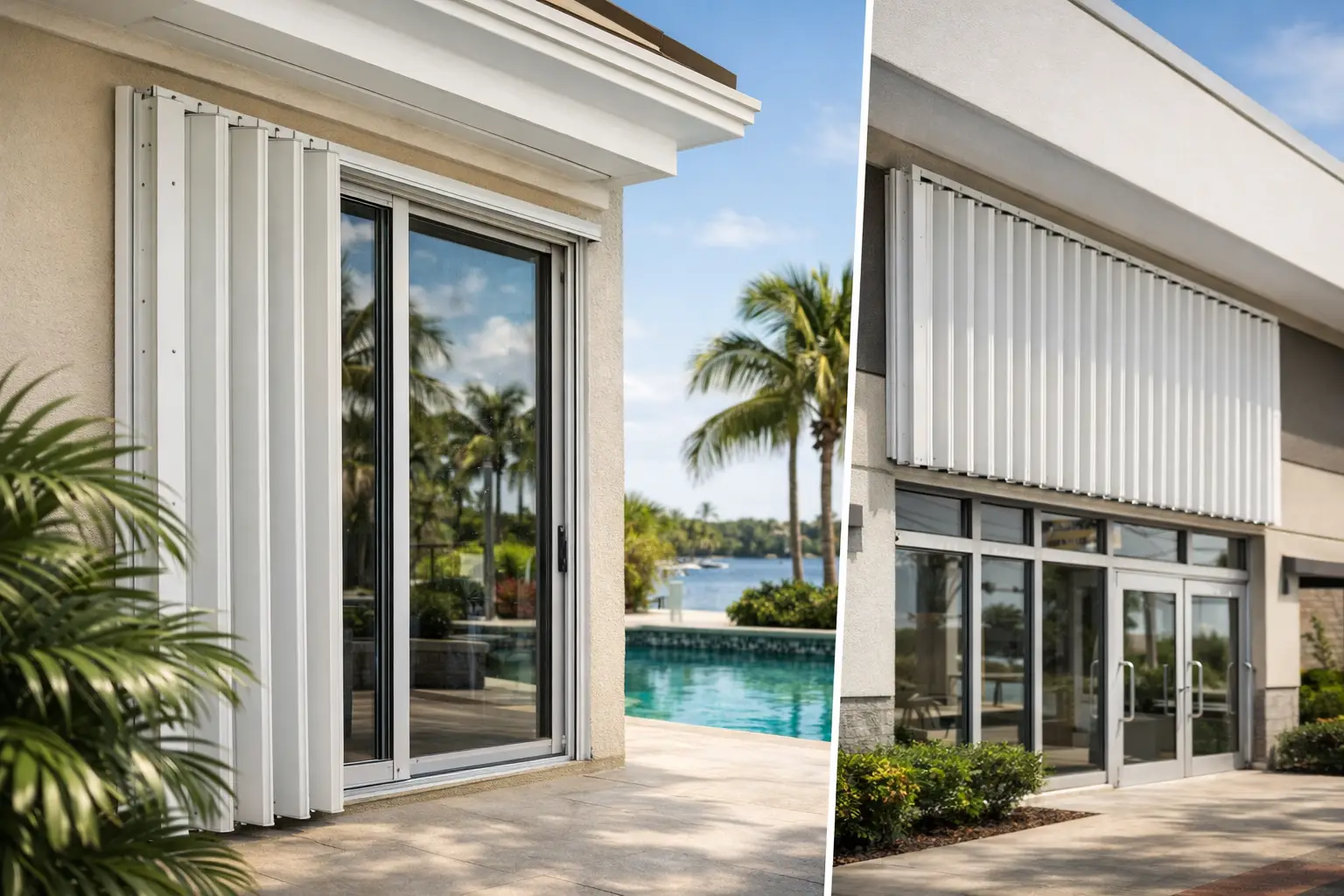
When a named storm is approaching the Treasure Coast, the hours before landfall are not the time to search for plywood, schedule a crew, or hope temporary panels are still in good condition. Accordion shutters give Florida property owners a permanent, accessible form of opening protection that can be closed when conditions demand it.
For homes, rental properties, storefronts, and multifamily buildings, the right shutter system can make storm preparation faster while adding privacy and security throughout the year. The key is selecting a product designed for the opening, installed to the proper requirements, and maintained by professionals who understand Florida’s coastal environment.
What Are Accordion Shutters?
Accordion shutters are permanently mounted, interlocking aluminum shutter panels that fold neatly to the sides of a window, door, lanai opening, or patio enclosure when not in use. When closed, the panels pull across the opening and lock together, creating a protective barrier over the glass or screen area.
Their name comes from the way the panels stack and expand. Unlike removable storm panels, they stay attached to the structure year-round. Unlike roll-down shutters, they do not require a housing box above the opening or motorized operation. That combination makes them a practical choice for many Florida properties, especially where owners want reliable storm protection without storing separate materials.
A properly specified system is built around the dimensions and conditions of each opening. Large sliders, corner openings, single windows, and entry doors may require different configurations, track layouts, locking methods, and anchoring details.
Why Florida Property Owners Choose Accordion Shutters
The primary reason is hurricane readiness. With accordion shutters installed, preparing an opening usually means unlocking the system, pulling the panels across, and securing them in place. This is significantly more convenient than lifting and fastening individual panels during a storm watch.
That convenience matters for seasonal residents, older homeowners, busy families, and property managers responsible for multiple units. A permanent shutter system can reduce the number of moving parts in a storm-preparation plan. It also makes it easier to secure a property before traveling or when a hurricane may affect the coast while the owner is away.
Accordion shutters can provide other useful benefits as well. Closed shutters add a layer of privacy for street-facing rooms, vacation homes, and commercial properties. They can also help discourage unauthorized access when a building is vacant. While shutters should not replace a dedicated security system, they create a visible physical barrier that many owners value.
For sun-exposed openings, closing the shutters during extended vacancies can help limit direct sunlight entering a room. That may reduce glare and help protect furnishings from prolonged exposure. The day-to-day energy benefit depends on the building, window performance, exposure, and how often shutters are closed, so it should not be the only reason to invest in them.
A Strong Option, But Not the Same as Every Other Shutter
No storm-protection product is the best fit for every property. Accordion shutters are easy to operate and remain on-site, but their stacked panels are visible beside the opening. Some homeowners prefer the cleaner appearance of roll-down shutters or Bahama shutters, particularly on highly visible front elevations.
Roll-down systems offer a more concealed look when open and may be motorized, but they generally cost more and require a head box. Storm panels may have a lower initial price, yet they require storage, handling, and installation every time a storm approaches. Impact-rated windows and doors offer continuous glass protection, but replacing every opening can be a larger investment.
The right choice depends on the opening size, architecture, budget, accessibility, local code requirements, and how quickly the property needs to be secured. Many properties use more than one solution. For example, a homeowner may install impact windows at the front of the house and accordion shutters across large rear sliders or a lanai.
What Determines Shutter Performance
Accordion shutters are only as dependable as the product, engineering, and installation behind them. Florida wind events can place substantial pressure on windows and doors, especially on upper stories, wide openings, and coastal-facing elevations. A shutter cannot perform as intended if it is improperly sized, anchored into unsuitable material, or installed without the correct track and fastening details.
Look for shutters with the appropriate approvals or testing documentation for the intended application. Your installer should evaluate the opening, wall construction, mounting surface, and location before recommending a system. Requirements can vary by municipality and wind zone, and certain projects may require permits and inspections.
This is also where professional measurements matter. An opening that looks square may not be square. Uneven stucco, masonry, trim, thresholds, soffits, and door hardware can all affect how a shutter tracks, closes, and locks. Skilled professionals account for these conditions before fabrication and installation rather than trying to force a standard-size product into place.
For commercial properties, operation deserves special attention. Property managers should consider who will be responsible for closing the shutters, where keys will be kept, and whether the system can be operated safely across all openings. A practical protection plan is one that the staff or owner can actually carry out under time pressure.
Selecting Accordion Shutters for Your Property
Start by identifying which openings need protection and how the building is used. A primary residence may prioritize easy access and curb appeal. A seasonal home may prioritize quick closure before departure. A commercial building may need a consistent system that protects broad storefront openings without complicating routine operations.
During a professional consultation, expect the conversation to cover opening dimensions, the condition of existing windows and doors, wall material, access around the property, and desired use. Color selection can also matter. Neutral finishes may blend more easily with trim or exterior paint, while a contrasting color can make the shutter system a more visible design element.
Do not assume every opening needs the same configuration. Sliding glass doors may benefit from shutters that stack to the side with the best clearance. Windows near gates, landscaping, utility equipment, or outdoor furniture may need a layout that remains accessible. Doors used for daily entry require special consideration so the system does not interfere with normal movement.
Ask how the shutters lock, whether the locking points can be accessed from the desired side, and how they will stack when open. It is better to resolve those details during planning than after the installation is complete.
Professional Installation Protects the Investment
A shutter installation should begin with a site-specific assessment, accurate measurements, and a clear scope of work. The installer should explain where tracks and fasteners will be placed, how the system will operate, and what preparation may be needed around each opening.
After installation, each shutter should be opened and closed to confirm smooth movement and secure engagement. The homeowner or property manager should receive a hands-on demonstration. Knowing how to release, pull, align, lock, and reopen the panels is essential. If multiple people may need to operate the system, make sure each person understands the process.
Premium materials and precision installation work together. Aluminum is well suited to Florida conditions, but coastal salt air, wind-driven debris, moisture, and everyday use still require a system that is correctly installed and cared for over time. Choosing an experienced local contractor helps ensure the work reflects real conditions on the property, not a one-size-fits-all approach.
Maintaining Accordion Shutters Near the Coast
Accordion shutters do not require extensive upkeep, but they should not be ignored until a hurricane warning is issued. Test them at least once or twice a year, ideally before the start of hurricane season and again after the season. Open and close each unit fully to identify sticking, binding, damaged locks, loose fasteners, or track obstructions.
Rinse away salt, dirt, leaves, and debris with fresh water as needed, particularly for properties close to the ocean or river. Keep the tracks clear and follow the manufacturer’s guidance for cleaning or lubrication. Avoid using harsh cleaners or applying products that attract grit into the track.
If a shutter becomes difficult to operate, do not force it. A small alignment issue, worn component, or loose mounting point can become more serious under storm conditions. Schedule service before the system is needed. This is especially important after construction work, landscaping changes, or any event that may have affected the tracks or panels.
Before hurricane season, confirm that keys, handles, and any required tools are accessible. For rentals and commercial sites, document the closing procedure and assign responsibility in advance. A well-maintained shutter system is most valuable when it can be secured without confusion.
Plan Protection Before the Forecast Changes
Storm protection is not a last-minute purchase. It is a property decision that should account for the way you live, the exposure of your building, and the reliability you expect from every opening. Jensen Beach Aluminum & Windows can help property owners evaluate custom accordion shutter options, professional installation needs, and the details that support lasting performance.
A thoughtful consultation now can give you more confidence when the forecast turns, while helping your home or business remain protected, functional, and ready for the seasons ahead.