


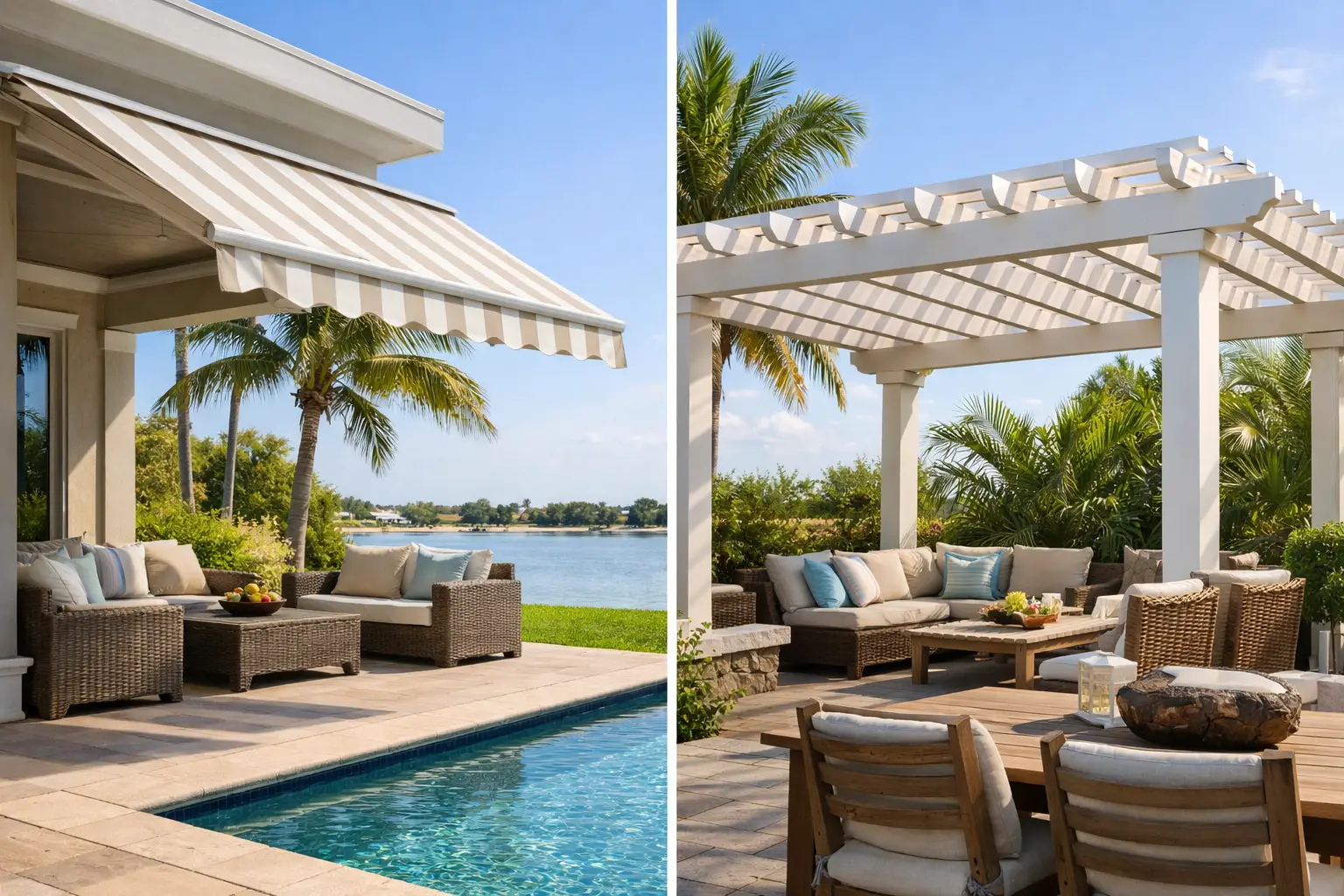
A Florida patio can be bright and beautiful at 9 a.m., then too hot to enjoy by lunchtime. Add a passing rain shower or a strong coastal breeze, and the structure above your outdoor space matters as much as the furniture below it. When comparing an awning versus pergola patio cover, the right choice depends on how you use the space, how much weather protection you need, and what your property can support.
An awning and a pergola can both make a patio more comfortable, but they do different jobs. A properly selected and professionally installed cover should provide practical shade, fit the architecture of the home, and stand up to Florida’s demanding sun, humidity, and wind conditions.
Awning Versus Pergola Patio Cover: The Core Difference
An awning is generally a shade structure that projects from a building or stands on its own support system. It may be fixed or retractable, fabric or aluminum, and it is typically designed to cover a defined area near a door, window, patio, or pool deck. Its main benefit is direct overhead shade with a relatively clean, low-profile appearance.
A pergola is a freestanding or attached outdoor framework with posts and overhead beams. Traditional pergolas have an open-slat roof that creates filtered shade rather than complete coverage. Modern aluminum pergolas can be fitted with adjustable louvers, solid roof panels, retractable screens, lighting, fans, and other features that turn an open patio into a more finished outdoor room.
That distinction shapes nearly every part of the decision. If you want straightforward shade over a small-to-medium area, an awning may be the practical answer. If you want to define a larger gathering space, create an architectural focal point, or add flexible weather control, a pergola or louvered roof system may be a better investment.
Shade and Rain Protection Are Not the Same
The first question is not simply, “Which one provides more shade?” It is, “How do we want to use this patio?”
A fixed aluminum awning provides dependable shade throughout the day and can also provide solid cover during rain, depending on its design, slope, drainage, and connection to the home. This makes it a strong choice for a grilling area, a side patio, or a location where you want consistent protection without adjusting the structure. It can also reduce direct sun entering nearby windows and doors.
Retractable awnings give homeowners more control. Extend the canopy when the patio is sunny, then retract it when you want open sky or when conditions require it. They are useful for homeowners who value flexibility, but the fabric, frame, motor, and mounting system all need to be selected for the environment. In Florida, proper operation during windy weather matters. A retractable awning should never be treated as a hurricane protection product.
A traditional open-roof pergola creates partial shade, especially when the sun is high. It can feel airy and attractive, but it will not keep a patio dry during a typical Florida rainstorm. Some homeowners add shade fabric or a canopy, although those additions require thoughtful design and may need to be removed or secured before severe weather.
A louvered pergola changes the equation. Adjustable aluminum louvers can open for sunlight and airflow, tilt to block harsh overhead sun, and close to help manage rain. When designed with an integrated gutter system, a louvered roof can direct water away from the seating area. It offers more control than a conventional pergola, although performance depends on the specific system, installation quality, drainage plan, and weather conditions.
What Florida Weather Demands From a Patio Cover
Florida outdoor structures face year-round UV exposure, salt air in coastal areas, heavy rain, high humidity, and hurricane-season wind events. The best-looking option on day one is not necessarily the best option after years of exposure.
Aluminum awnings and aluminum pergola systems are popular because they resist rot, do not require the frequent painting associated with wood, and can be engineered for local conditions. Premium finishes also help the structure retain its appearance under constant sun. For homes near Jensen Beach, Stuart, and other coastal communities, material quality and corrosion resistance deserve close attention.
Wind is where a professional consultation becomes especially valuable. The size of the cover, the span, the post layout, attachment points, foundation conditions, roofline, and local code requirements all affect what can be installed safely. A patio cover should be designed for the property, not selected solely from a photo or a standard package.
No open outdoor structure eliminates the need for storm preparation. Retractable units should be retracted as directed. Loose furniture and accessories should be secured. For pergolas, screens, fabric panels, and accessories, follow the manufacturer’s storm guidance. Skilled professionals can explain the limits of each product clearly and help avoid choices that create unnecessary risk.
Appearance, Privacy, and Outdoor Living
An awning is often the more understated choice. It can blend into the home’s roofline and provide useful coverage without changing the overall look of the backyard. This makes it particularly effective for compact patios, condo spaces, restaurant seating areas, and areas where preserving an open view is a priority.
A pergola makes more of a visual statement. Its posts and beams create a destination within the yard, which can be valuable when the patio currently feels disconnected from the pool, garden, or home. It also gives you a framework for integrated lighting, ceiling fans, motorized screens, and privacy elements.
For homeowners looking to entertain, a pergola can make the backyard feel more intentional. The trade-off is that it has a larger visual and physical footprint. Posts need to be placed carefully so they do not interfere with traffic flow, views, doors, pool access, or existing pavers.
Privacy is another deciding factor. An awning primarily solves overhead sun exposure. A pergola can be paired with retractable screens or side panels to help manage low-angle sun, insects, and visibility from neighboring properties. However, enclosing a structure too heavily can affect airflow and may change permitting requirements. The best design balances privacy with Florida’s need for ventilation.
Installation, Maintenance, and Long-Term Value
The installed cost of an awning versus a pergola patio cover varies widely. Size, materials, engineering, electrical work, site access, foundation needs, screens, drainage, and custom finishes can all affect the final quote. A basic awning often has a lower upfront cost than a custom pergola, particularly a motorized louvered system. That does not automatically make it the better value.
A cover that allows your family to use the patio more often can improve the day-to-day value of the property. For rental homes and commercial properties, a defined covered outdoor area may also improve tenant or guest appeal. The right choice is the one that delivers useful space without introducing maintenance demands that do not fit your plans.
Maintenance requirements should be discussed before installation. Aluminum systems generally need periodic cleaning to remove dirt, pollen, salt residue, and debris. Gutters and drainage paths should remain clear. Fabric awnings need care according to the manufacturer’s recommendations, and retractable models should be inspected for proper operation. Wood pergolas can be beautiful, but they require more ongoing attention in humid, termite-prone conditions.
Professional installation is not a detail to leave until the end. Precise measurements, secure attachment, proper flashing where needed, correct post footings, and code-aware planning protect the investment. They also help prevent water intrusion, drainage problems, and structural issues that can be expensive to correct later.
How to Choose the Right Patio Cover
Choose an awning when your primary goal is practical shade, a lower-profile look, and efficient coverage near the home. A fixed aluminum awning is particularly well suited to homeowners who want reliable overhead protection with minimal moving parts. A retractable model suits those who want shade on demand and are prepared to follow operating guidance in changing weather.
Choose a traditional pergola when you want an attractive outdoor framework, filtered light, and a place to gather without fully closing in the patio. It works best for homeowners who enjoy an open-air setting and understand that it offers limited rain protection unless additional roofing features are included.
Consider a louvered pergola when you want the flexibility to manage sun, airflow, and light rain from the same structure. It is a more substantial investment, but it can provide a highly customized outdoor living area when properly designed for the site.
Before deciding, stand in the patio at different times of day. Notice where the sun moves, where rainwater drains, how wind travels through the yard, and which views you want to keep. A site-specific assessment from experienced professionals can turn those observations into a patio cover that feels right in every season, not just on the day it is installed.