


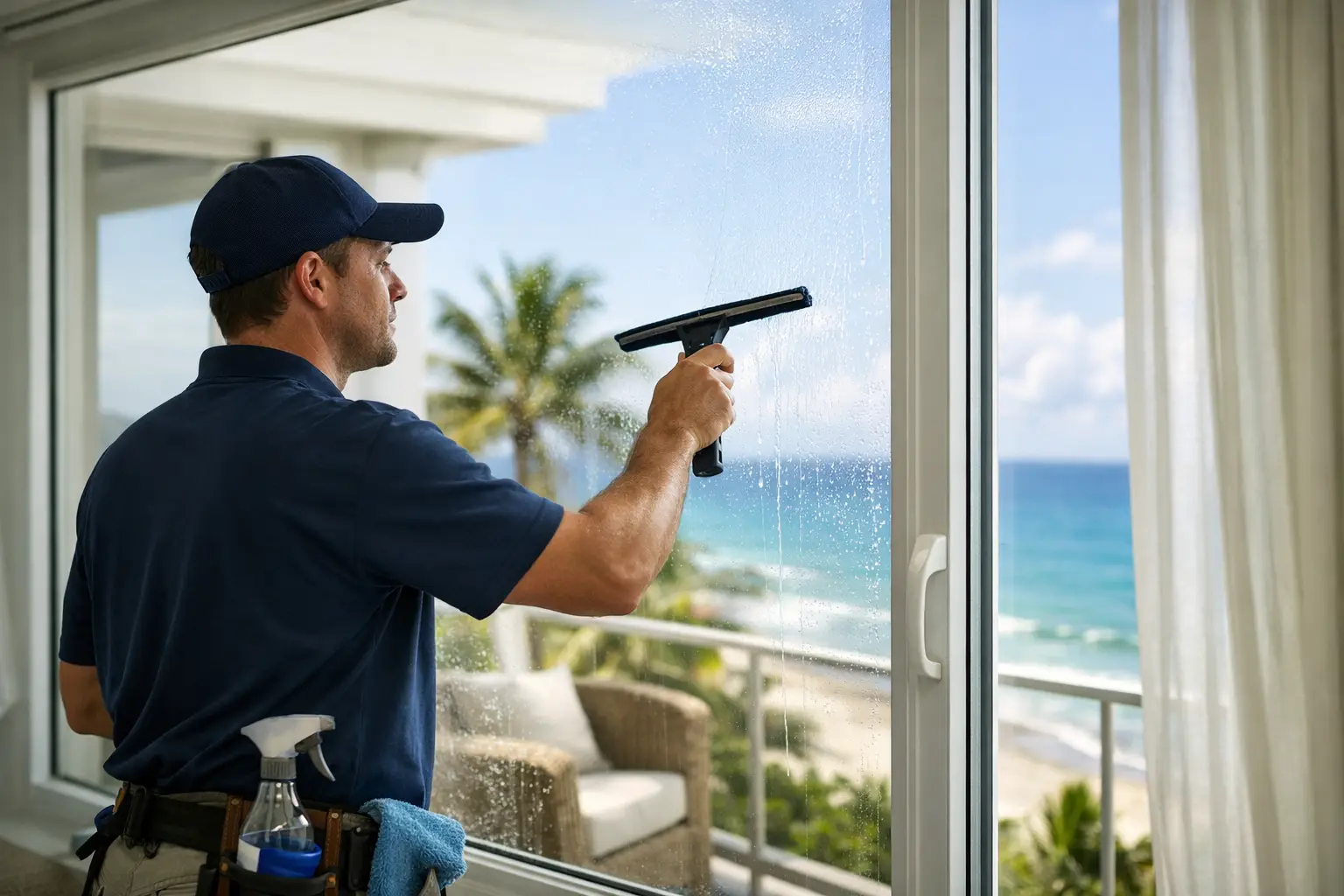
Salt spray does not need to land directly on your glass to affect your windows. Along Florida’s Treasure Coast, airborne salt, wind-driven rain, humidity, and intense sun can work into tracks, hardware, seals, and frames over time. This coastal window maintenance guide gives homeowners and property managers a practical way to protect an investment that supports comfort, energy efficiency, security, and hurricane readiness.
Well-maintained windows operate more smoothly, shed water properly, and are easier to secure before a storm. Just as importantly, routine care helps you spot small concerns before corroded hardware, failed seals, or water intrusion turn into a larger repair project.
Why Coastal Windows Need Different Care
A window that performs well inland may face much harsher conditions near the coast. Salt residue attracts moisture and can accelerate corrosion on exposed metal components. High humidity encourages mildew in tracks and around weatherstripping, while ultraviolet exposure can gradually dry or crack certain sealants and gaskets.
Storm season adds another layer of stress. Debris impacts, pressure changes, and heavy rain test the entire window opening, not just the glass. Even premium impact-rated windows depend on properly functioning locks, drainage channels, frame seals, and surrounding exterior finishes to do their job.
The maintenance schedule depends on your location and exposure. A home directly on the water or near an inlet generally needs more frequent attention than a property several miles inland. Homes that are vacant part of the year also deserve a careful inspection before and after extended closures.
Coastal Window Maintenance Guide: A Simple Schedule
For most Florida homes, a light cleaning every month or two and a more detailed inspection twice a year is a sensible starting point. Increase that frequency after tropical storms, days of heavy salt spray, nearby construction, or a period when windows have been closed tightly for months.
Rinse Away Salt Before It Builds Up
Use a garden hose with gentle water pressure to rinse exterior glass, frames, screens, and sill areas. Do not use a pressure washer on windows. High pressure can force water past seals, damage screens, dislodge caulk, or drive debris deeper into drainage paths.
After rinsing, clean the glass and frames with mild soap, water, and a soft cloth or nonabrasive sponge. Avoid steel wool, harsh scouring pads, and aggressive chemical cleaners. They can scratch glass coatings, dull aluminum finishes, or compromise protective surface treatments.
Pay close attention to the lower frame, corners, and areas behind screens. These are common places for salt, pollen, sand, and organic debris to collect. A clean frame is not only about appearance. It also allows water to move where it is designed to go.
Keep Tracks and Weep Holes Clear
Sliding windows and doors collect more debris in their tracks than many owners realize. Vacuum loose sand and dirt, then wipe the track with a damp cloth. If buildup is stubborn, use a soft nylon brush and mild soapy water. Dry the area afterward so you can see whether any debris remains.
Check the small drainage openings, often called weep holes, along the bottom exterior portion of the frame. These channels allow incidental water to exit. Never seal them with caulk or paint, even if they seem small or inconvenient. If water remains in the track after rain, a blocked weep path may be the reason.
A toothpick or soft plastic tool can remove visible debris without damaging the opening. Avoid metal objects that may scratch the frame or enlarge the hole. If drainage still appears poor, schedule a professional evaluation rather than forcing the issue.
Inspect Hardware, Locks, and Hinges
Open and close each window slowly. It should move without grinding, binding, or requiring excessive force. Test locks to confirm they engage fully and hold the sash securely. Windows that do not lock properly can reduce both security and storm preparedness.
Look for discoloration, pitting, rust, loose fasteners, or white powdery corrosion around hardware and aluminum components. Light surface residue can often be cleaned during routine care, but hardware that is heavily corroded or loose should be assessed promptly. Replacing a worn latch or roller early is usually far simpler than waiting for a window to become difficult to operate.
Lubricants are useful, but only when selected carefully. Use a manufacturer-approved dry silicone lubricant on moving parts when needed. Oil-based products can attract sand and dirt, creating a sticky track that worsens operation. Do not lubricate locks or hinges until dirt and salt residue have been cleaned away.
Check Seals, Caulk, and Glass Condition
Walk around the interior and exterior of each window at least twice a year. Look for cracked, shrunken, missing, or separated caulk where the window meets the surrounding wall. Exterior sealant is a critical water-management detail, especially during wind-driven rain.
Caulk should not be treated as a quick cosmetic fix. The right product, joint preparation, and application method matter. If you see widespread cracking, gaps around the frame, or staining below a window, it is worth having a skilled professional identify the source before applying new sealant. Water may be entering from trim, stucco, roofing, or another area above the opening.
Inside the home, inspect for soft drywall, bubbling paint, musty odors, or discoloration near window corners and sills. These signs do not always mean the window itself has failed, but they do call for timely investigation.
Also examine the glass. Fogging or moisture between panes of insulated glass can indicate a failed seal. Small edge cracks, chips, or impact damage should not be ignored, particularly before hurricane season. The repair path depends on the window type, the extent of damage, and whether the unit is impact rated.
Do Not Forget Screens and Exterior Protection
Screens help keep insects out, but they also trap salt, pollen, and fine debris against the window area. Remove and rinse screens carefully when the design allows. Clean both sides with mild soap and water, then let them dry fully before reinstalling. Check for torn mesh, bent frames, damaged spline, or loose screen hardware.
If your property uses accordion shutters, roll-down protection, or other storm panels, maintain those systems on their own schedule. Operate shutters before storm season, clear debris from tracks, and inspect fasteners and locking points. A window may be in excellent condition, but storm protection is only reliable when it can be deployed without delay.
For homes with impact windows, do not assume maintenance is unnecessary. Impact-rated products are designed for demanding conditions, yet their long-term performance still relies on clean drainage, intact seals, secure hardware, and proper installation.
Prepare Windows Before Hurricane Season
Do not wait until a named storm is approaching to test every opening. In late spring, confirm that each window locks, slides, or opens as intended. Make sure shutters or panels can be located and installed, and remove landscape debris or outdoor items that could become windborne hazards.
Take clear photos of windows, doors, screens, and exterior finishes before storm season. If damage occurs later, current photos can be helpful for insurance documentation and repair planning. Keep copies of product paperwork, permits, and prior service records in a dry, accessible location.
After a storm, inspect windows from a safe distance first. Look for cracked glass, damaged screens, bent frames, missing caulk, and water around interior sills. Do not operate a window that appears structurally damaged. If you suspect water intrusion or impact damage, arrange a professional inspection before another rain event exposes the opening further.
When Professional Service Is the Better Choice
Routine washing and basic debris removal are appropriate for many owners. However, some conditions need more than maintenance. Persistent water intrusion, recurring condensation between panes, severe corrosion, loose frames, damaged impact glass, or windows that no longer lock should be evaluated by trained installers.
Professional service is especially valuable when a property has older windows, complex exterior access, or a history of storm damage. A qualified team can inspect the window, the attachment points, drainage details, surrounding caulk, and the condition of associated storm protection. This broader view helps avoid repairs that address the visible symptom but miss the real cause.
Jensen Beach Aluminum & Windows works with Florida property owners who need dependable guidance on window condition, replacement options, impact protection, and long-term exterior care. The right recommendation should match the home’s exposure, window age, performance needs, and budget rather than relying on a one-size-fits-all fix.
A few minutes of care after salty weather and a careful seasonal inspection can preserve more than a clean view. They give you a better chance to address wear early, keep your home protected, and head into the next storm season with confidence.